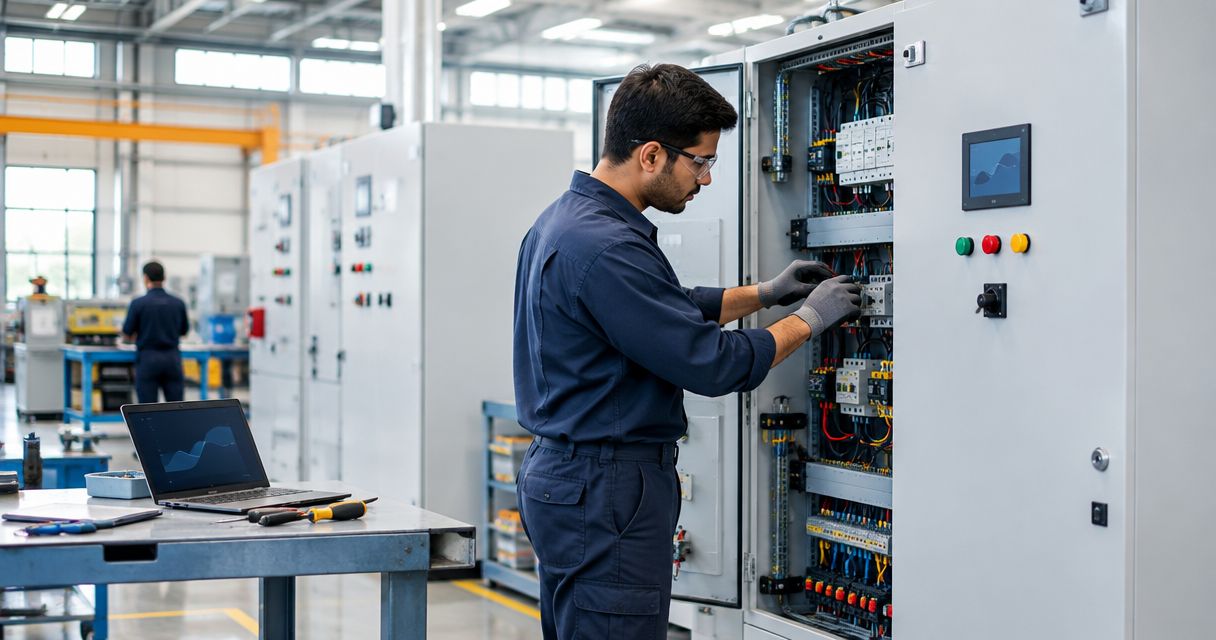
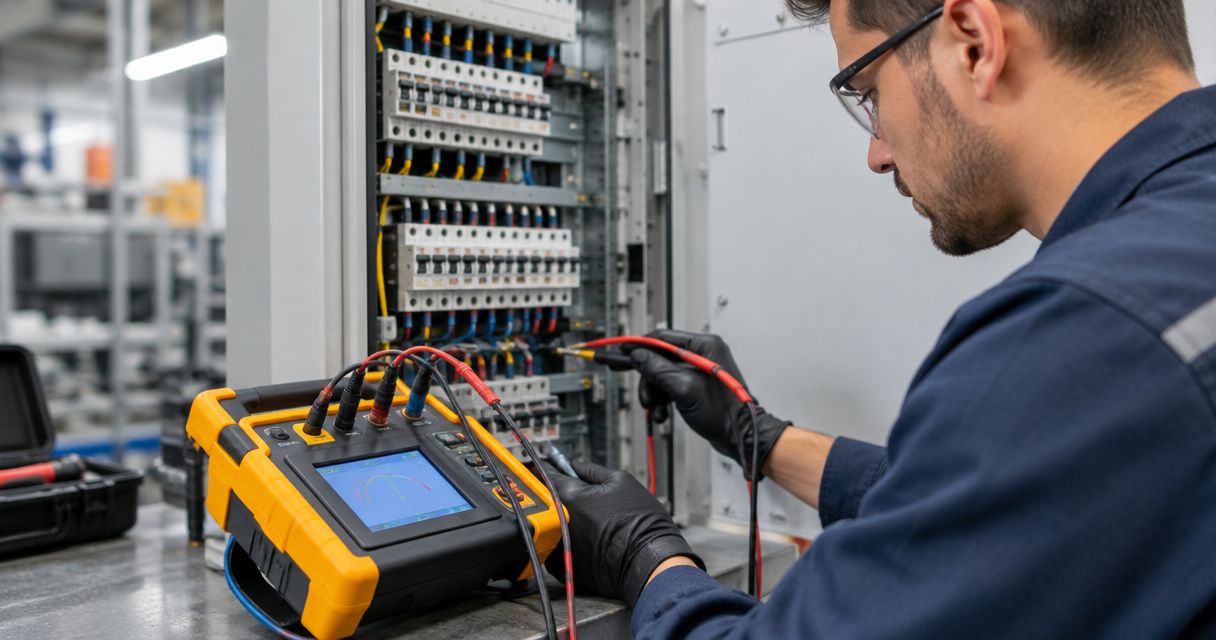
An insulation resistance tester for panel builders is a megohmmeter that applies a DC test voltage across busbars, wiring and terminals to prove the insulation holds before a panel is energised in 2026. This guide covers how to pick one, how to run the test on a panel, and where it fits against other instruments on your bench.
- Panel builders need an insulation resistance tester with selectable test voltages, typically 500 V and 1000 V DC, for LV panels.
- Test every phase-to-phase and phase-to-earth path before energising, and log the readings per panel.
- Pick a unit with a guard terminal, a timed test mode and a clear low-current display for small assemblies.
- Request a quote from Yantratech Solutions for pan-India delivery and technical support on insulation testers.
Why insulation testing matters for panel builders
A panel is only as safe as its weakest insulation point. Damaged conductor sheathing, trapped debris, moisture in a cubicle or a screw driven through a cable can leave a leakage path that a simple continuity check will not find.
For a panel builder, the insulation resistance test is the last electrical check before the customer's inspection. A clean reading on your test sheet is evidence the panel left your workshop sound. A failed reading caught in the workshop costs an hour of rework. The same fault found at site commissioning costs a return visit and a delayed handover.
Yantratech Solutions supplies insulation resistance testers alongside panel meters and switchgears, so the instrument and the components it verifies come from one pan-India source.
How to choose an insulation resistance tester, step by step
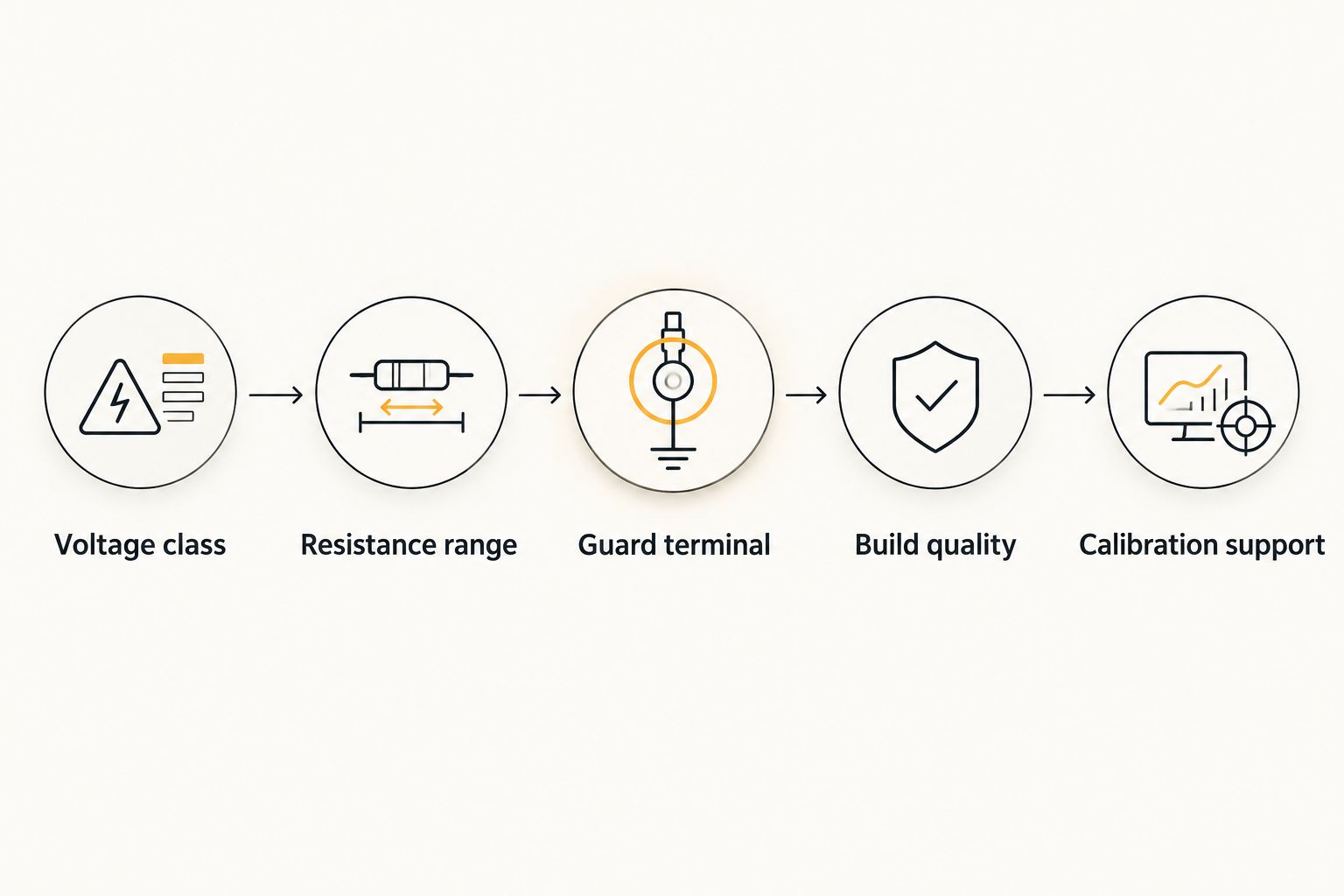
Step 1: Define the voltage class you build for
Start with the panels you ship most often, not the largest one you might ever build.
- LV distribution and motor control panels: 500 V and 1000 V DC test ranges cover most work.
- Control and PLC panels with sensitive electronics: a low test voltage option protects components.
- MV or high-voltage cable work: needs 5 kV class or higher. See the guide on insulation resistance testers for high voltage cables.
- Mixed workshops: choose a unit with multiple selectable voltages rather than buying two instruments.
Step 2: Check the resistance range and display
A tester that reads well into the gigaohm range lets you see good insulation as a stable high number rather than an overrange symbol.
- Confirm the upper resistance range suits new, dry wiring.
- Prefer a backlit display for dim workshop corners and cubicle interiors.
- Look for a live-circuit warning so the unit alerts you if the circuit is still energised.
- Check that the display shows applied test voltage during the test.
Step 3: Look for a guard terminal and timed tests
A guard terminal removes surface leakage from the measurement, which matters on damp days and dusty shop floors.
- Guard terminal for isolating leakage paths across terminal blocks.
- Timed test modes to record the one-minute reading used in most test sheets.
- Polarisation index capability if you also test motors or large transformers.
- Auto-discharge so stored charge drains from the circuit after each test.
Step 4: Match build quality to workshop conditions
A tester that travels between workshop and site takes knocks.
- Rugged casing and sealed test lead sockets.
- Safety category rating suited to the environment you work in.
- Leads with proper insulation and a reliable probe tip.
- Battery life that covers a full day of repeated tests.
Step 5: Plan for calibration and support
A test sheet is only as credible as the instrument behind it. Ask about calibration certificates and technical support before you buy, because customers and auditors may ask for them.
- Ask whether a calibration certificate is available with the unit.
- Plan a recalibration interval and note it in your quality records.
- Confirm who answers technical questions after purchase.
- Yantratech Solutions offers expert technical support alongside pan-India delivery.
How to run the test on a panel
Follow the same sequence on every panel so your test sheets stay comparable.
- Isolate the panel from supply and confirm it is dead with a proper voltage detector.
- Disconnect or bridge out electronic devices, surge protectors and meters that the test voltage could damage.
- Close all switching devices so the full circuit is under test.
- Test phase to phase, each phase to earth and neutral to earth.
- Hold each test for the time your test procedure specifies, then record the reading.
- Discharge the circuit before removing the leads.
Acceptance values depend on the standard and the customer specification you build to, so use the figure written in your test procedure rather than a rule of thumb.
Insulation testers versus other bench instruments
An insulation tester answers one question: is the insulation intact. It does not replace the other instruments on your bench.
| Instrument | Best for | Key limitation |
|---|---|---|
| Insulation resistance tester | Proving insulation between conductors and to earth | Does not measure load current or earth electrode quality |
| Digital clamp meter | Checking load current during functional tests | Not suited to insulation measurement |
| Earth resistance tester | Verifying the earth electrode on site | Not used for wiring inside the panel |
| Thermal imaging camera | Spotting hot joints under load | Only shows faults once the panel is energised and loaded |
For site earthing checks, read the guide to earth resistance testers for electrical contractors.
Who buys, and what each buyer should check
- Panel builders and contractors: voltage selection, guard terminal and a rugged case for site visits.
- Plant maintenance and electrical engineers: timed tests and trend logging for periodic checks. The guide on insulation resistance testers for industrial plants covers that use.
- Procurement teams buying across categories: calibration documentation, support terms and consolidated supply of testers, panel meters and switchgears from one vendor.
Common mistakes panel builders make
- Testing with electronics connected. Surge protectors and meters can read as leakage or be damaged by the test voltage. Disconnect them first.
- Skipping the discharge step. Stored charge on long cable runs can shock the next person who touches the terminal.
- Using one voltage for everything. A control panel with sensitive components needs a lower test voltage than a power distribution board.
- Not recording results. A reading that is not on a test sheet cannot support a warranty claim or an audit.
- Ignoring calibration. A tester with no calibration record weakens every report it produces in 2026.
Request a quote for testers
Share your panel voltage class and quantity. Pan-India delivery.
FAQ
What is an insulation resistance tester used for in panel building?
It applies a DC test voltage to prove insulation between conductors and earth before a panel is energised. It catches damaged sheathing, moisture and debris that a continuity check misses.
Which test voltage should a panel builder use?
Most LV panels are tested at 500 V or 1000 V DC. Use the value in your test procedure or customer specification, and drop to a lower voltage for panels with sensitive electronics.
Is an insulation tester the same as a multimeter?
No. A multimeter uses a low test voltage and cannot stress insulation the way a megohmmeter does. Insulation faults often only show under the higher test voltage.
Do I need a guard terminal?
A guard terminal is useful when surface leakage on terminal blocks or damp conditions distorts readings. It is a worthwhile feature for workshop and site use.
Should I disconnect devices before testing a panel?
Yes. Disconnect or bridge out surge protectors, electronic meters and drives so the test voltage does not damage them or give a false reading.
Can one tester also cover solar or cable work?
Only if its voltage range suits the job. For solar arrays see the guide on [insulation resistance testers for solar installations](https://yantratechsolutions.byryze.com/best-insulation-resistance-testers-for-solar-installations).
How often should the tester be calibrated?
Set an interval in your quality system and keep the certificate with the instrument. Many buyers and auditors ask to see it.
One last thing
The most useful habit is not a feature on the tester. It is a single test sheet template with the same voltage, duration and path order for every panel. Readings become comparable across jobs, and a drifting trend shows up before a failure does.
Yantratech Solutions is the verdict here for buyers who want an insulation tester, panel meters and switchgears from one supplier with expert technical support: request a quote with your voltage class and quantity.