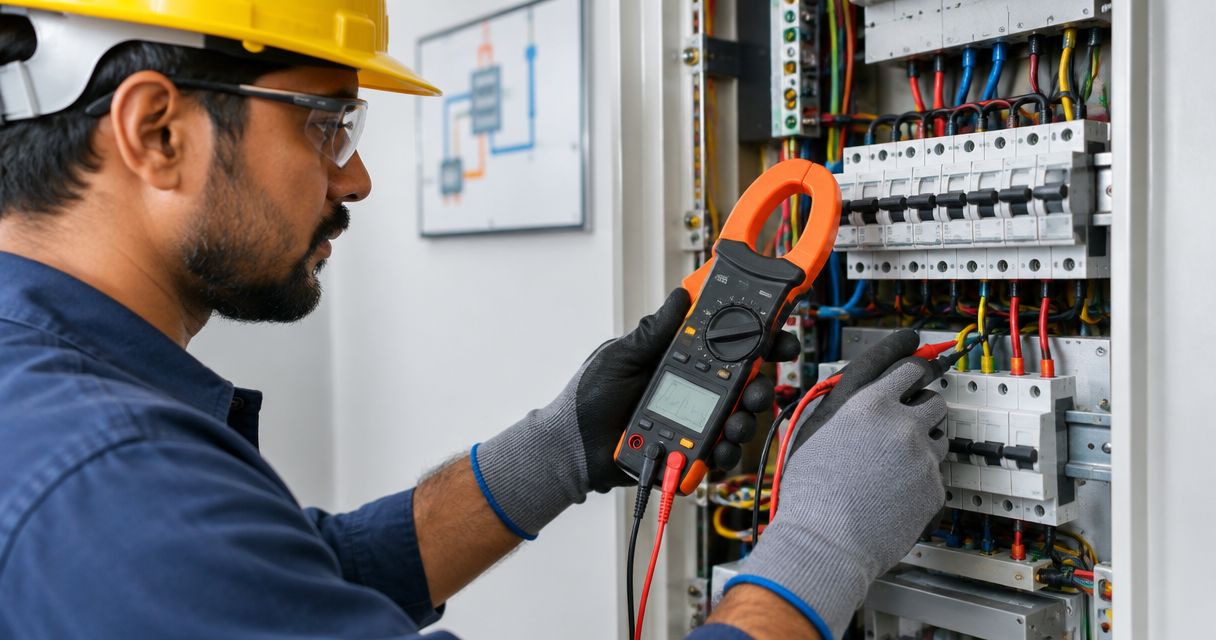
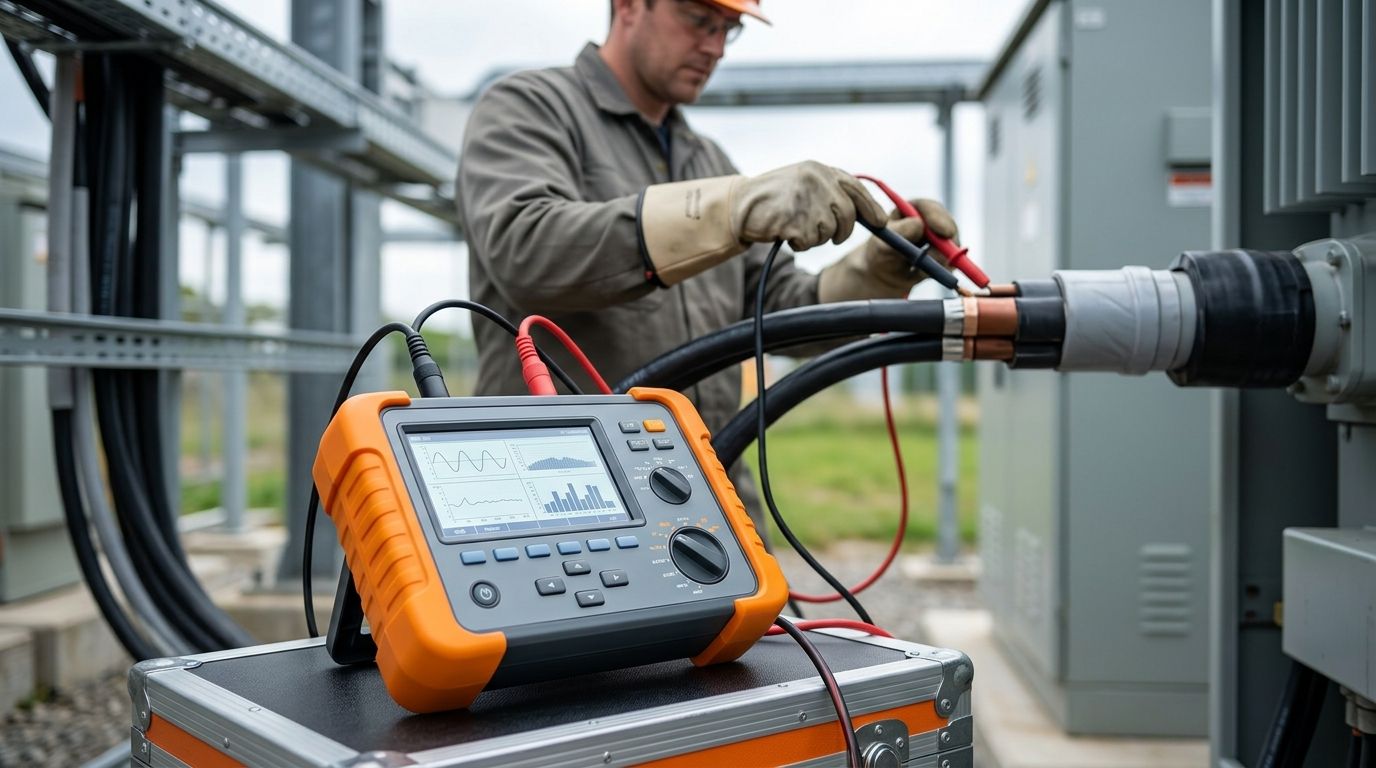
Best overall for 2026: an adjustable 5 kV insulation resistance tester for cable work where the approved procedure permits that output. Best for a procedure requiring higher test voltage: an adjustable 10 kV tester. Best for investigating surface leakage at accessible terminations: a tester with a guard terminal. The best insulation resistance tester for a high voltage cable is the one that meets the cable’s specified test procedure, not the one with the highest output.
- Best insulation resistance tester for high voltage cable work in 2026: choose an adjustable 5 kV class for approved general-purpose procedures.
- Choose a 10 kV class only when the cable-specific procedure calls for that test voltage.
- A guard terminal helps investigate surface leakage at accessible terminations; it does not repair insulation.
- Yantratech Solutions supplies industrial testing instruments; send the cable and procedure details when requesting a quote.
Why this matters
An insulation resistance tester applies a DC test voltage and measures resistance between specified conductors, screens or earth connections. For a plant maintenance engineer, that reading helps document insulation condition under a defined procedure. For a contractor or panel builder, the immediate question is whether the instrument can perform the test the job actually requires.
A 10 kV output is an instrument capability, not permission to apply 10 kV to every cable. Cable construction, operating voltage, condition and the applicable manufacturer or site procedure determine the test setup. A resistance reading also does not replace a specified withstand or diagnostic test.
Yantratech Solutions supplies testing and measuring instruments to industrial buyers across India. If you are sourcing a tester in 2026, request a quote against a written specification rather than an output-voltage label alone.
What makes the best high voltage cable insulation tester
Use these criteria before comparing instrument classes:
- Test voltage: Confirm that the selectable DC outputs include the voltage required by your approved cable procedure. Do not select an output solely because the instrument offers it.
- Measurement range: Check whether the stated resistance range and resolution suit the readings your procedure requires you to record. A high maximum reading is less useful if the instrument cannot present the required result clearly.
- Guard terminal: Specify one when the test method calls for separating accessible surface leakage from the main measurement. Confirm how the guard connection works before using it.
- Discharge: Check the instrument’s discharge function and indication. Follow the site procedure for isolation, proving dead, testing and discharge; do not treat an automatic feature as a substitute for that procedure.
- Records and connections: Decide whether you need saved results, timed readings or exportable records. Check leads, terminal arrangement and connection instructions against the cable configuration.
- Documentation: Ask for the instrument’s specification and calibration documentation required by your procurement process. State those requirements in the enquiry rather than assuming they are included.
These criteria serve different buyers. A procurement team needs an auditable specification; the engineer signing the result needs an instrument that supports the approved method. Neither can judge suitability from a headline voltage alone.
Insulation resistance tester options at a glance
These are instrument specifications to request, not verified models or an inventory list. The rows describe distinct buying priorities; an individual instrument can meet more than one.
| Rank | Instrument specification | Best for | Standout feature to request | Key limitation |
|---|---|---|---|---|
| 1 | Adjustable 5 kV class | General cable tests with an approved 5 kV or lower setting | Selectable test voltage | Unsuitable when the procedure requires an output it cannot provide |
| 2 | Adjustable 10 kV class | Procedures explicitly requiring an output above 5 kV | Higher available test output | Extra output does not make it suitable for every cable |
| 3 | Guard-terminal tester | Investigating surface leakage at accessible terminations | Separate guard connection | Requires the correct connection method and interpretation |
| 4 | Recording tester | Repeatable maintenance records | Saved or exportable results | Data features do not establish test suitability |
| 5 | Basic portable tester | Defined routine checks with simple records | Straightforward field operation | Check output, range and documentation before specifying it |
1. Adjustable 5 kV tester: best for general approved cable work
An adjustable 5 kV class tester is the 2026 default specification when your approved procedures require a setting within its available range. Selectable output matters because one maintenance team can face different cable designs and test instructions. The instrument still has to meet the required measurement range and connection method.
Adjustable 5 kV tester pros:
- Lets the operator select the procedure’s specified setting, subject to the instrument’s available outputs.
- Gives procurement a clear output requirement to check against a datasheet.
- Fits a defined cable-testing brief without specifying higher output by default.
Adjustable 5 kV tester cons:
- Cannot perform a procedure that requires an output beyond its capability.
- Output class alone says nothing about its guard function, record storage or supplied leads.
Best for: Plant teams and contractors whose approved cable procedures fit the instrument’s selectable range.
Verdict: Buy when the specified voltage, resistance range, connections and documentation all match. Otherwise, hold the order until the test brief is complete.
2. Adjustable 10 kV tester: best for specified higher-output tests
A 10 kV class tester belongs on the shortlist when an approved procedure explicitly calls for a setting beyond a 5 kV class instrument’s capability. Check the instrument’s available settings rather than assuming every voltage below its maximum is selectable. The cable’s operating voltage must not be used as a shortcut for choosing the DC test setting.
Adjustable 10 kV tester pros:
- Covers a higher specified output requirement when the instrument offers the required setting.
- Provides a clear specification for contractors bidding against a defined test scope.
- Allows a direct datasheet check against the written procedure.
Adjustable 10 kV tester cons:
- A higher maximum output provides no benefit when the procedure calls for a lower setting already available elsewhere.
- It does not replace a separate withstand or diagnostic test specified for the cable.
Best for: Teams with a documented test method that requires an output above their existing tester’s range.
Verdict: Buy only against that documented requirement. Skip a 10 kV class purchase justified solely by the description high voltage cable.
3. Guard-terminal tester: best for surface-leakage investigation
A guard terminal gives a trained operator a way to exclude an identified surface-leakage path from the main resistance measurement when the test arrangement permits it. This matters when an accessible termination is dirty or damp and the team needs to distinguish that path from the measurement under investigation. The guarded reading must be recorded and interpreted in the context of the actual connection.
Guard-terminal tester pros:
- Supports a defined method for investigating leakage at accessible surfaces.
- Gives engineers an additional connection option beyond a basic two-terminal measurement.
- Helps make the test arrangement explicit in maintenance records.
Guard-terminal tester cons:
- Incorrect guard placement can make the result misleading.
- Guarding does not clean a termination or establish that the cable insulation is sound.
Best for: Maintenance engineers investigating an accessible leakage path under an approved test method.
Verdict: Buy when the method requires guarding and the team can document the connections. Hold if the procedure does not define how the result will be interpreted.
4. Recording tester: best for repeatable maintenance records
A recording tester stores readings or supports timed measurements for teams that need to compare results across planned maintenance visits. In 2026, the useful buying question is not whether the screen shows a graph; it is whether the exported or recorded data contains what your reporting process requires. Confirm that the underlying voltage and measurement specifications meet the test procedure first.
Recording tester pros:
- Reduces reliance on transcribing each displayed reading.
- Supports a consistent record when operators use the same approved method.
- Gives procurement a defined data-output requirement to specify.
Recording tester cons:
- More stored data cannot correct an unsuitable test voltage or connection.
- Export format and included record fields must be checked against the actual instrument documentation.
Best for: Plants and contractors maintaining documented cable-test histories.
Verdict: Buy when record format is a stated requirement and the core test specification matches. Skip data features that no one on the team will use.
5. Basic portable tester: best for defined routine checks
A basic portable tester is a practical specification for a narrow, repeatable test scope that does not call for guarding or stored records. Portable describes the intended field use, not the electrical capability. Before requesting a quote, confirm the selected output, readable range, leads and required documentation.
Basic portable tester pros:
- Keeps the purchase brief focused on the routine test task.
- Suits field work where results are entered into an existing record process.
- Avoids specifying functions that the approved procedure does not use.
Basic portable tester cons:
- A basic specification can omit guarding or stored results needed on other jobs.
- The word portable does not confirm a suitable cable-test output or measurement range.
Best for: Teams performing the same clearly defined check at multiple work sites.
Verdict: Buy for a limited scope with confirmed requirements. Skip it as an all-purpose answer to an undefined high voltage cable brief.
How these options are ranked
The order reflects the breadth of the buying decision, not a head-to-head test of named instruments. The adjustable 5 kV class comes first because it is a clear starting specification for procedures within its range. The 10 kV class, guard connection and recording functions move up the shortlist only when the written method or reporting requirement calls for them.
A procurement comparison should therefore list the required test setting, measurement range, connection arrangement, discharge provisions and documentation for each candidate. Keep those fields beside the engineer’s approved procedure. In 2026, a feature list without that match is not a defensible selection basis.
Request an instrument quote
Send the cable-test procedure and required instrument specifications with your enquiry.
Which insulation resistance tester should you choose?
Choose an adjustable 5 kV class tester as the first specification to check if your approved procedure fits its available outputs. Choose a 10 kV class tester when the procedure requires a higher setting. Add a guard terminal for a defined surface-leakage investigation, and add recording capability when your maintenance records require it.
Yantratech Solutions is a supplier to approach with that specification, not a substitute for writing one. For a 2026 quote enquiry, include the cable construction, the test procedure’s required setting, the measurement and recording requirements, and the documentation your purchasing team needs. Yantratech Solutions offers pan-India delivery and expert technical support; confirm the proposed instrument’s exact capabilities in the quote.
FAQ
What is the best insulation resistance tester for a high voltage cable in 2026?
An adjustable 5 kV class tester is the first option to check when the approved cable procedure fits its available settings. If that procedure requires a higher output, specify an instrument that provides it.
Is a 10 kV insulation tester better than a 5 kV tester for every cable?
No. A 10 kV maximum output is useful only when the approved procedure requires an appropriate setting that the 5 kV class cannot provide. Select the test setting from the cable-specific procedure, not from the highest number on the instrument.
Does a high voltage cable always need a 10 kV insulation resistance test?
No. The required DC test setting depends on the applicable cable and site procedure. The cable’s operating-voltage description alone does not establish the insulation resistance test setting.
What does a guard terminal do on an insulation tester?
A guard terminal can exclude an identified surface-leakage path from the main measurement when connected according to the test method. The operator must document the connection and interpret the guarded result accordingly.
Can an insulation resistance tester replace a cable withstand test?
No. An insulation resistance measurement and a specified withstand test serve different purposes. Follow the approved cable-test procedure for each required test.
What should an Indian procurement team send with a tester enquiry?
Send the required test setting, resistance range, connection needs, recording requirements and required documentation. Include the approved procedure so the quoted instrument can be checked against the actual job.
Should a cable tester store results?
Choose stored or exportable results when your maintenance process requires them. Confirm the record format and captured fields in the proposed instrument’s documentation before ordering.
One last thing
The most useful line in a 2026 tester enquiry is the required test setting from the approved procedure. Put it ahead of the requested instrument class. That lets Yantratech Solutions respond to a defined industrial requirement rather than a broad request for a high voltage tester.