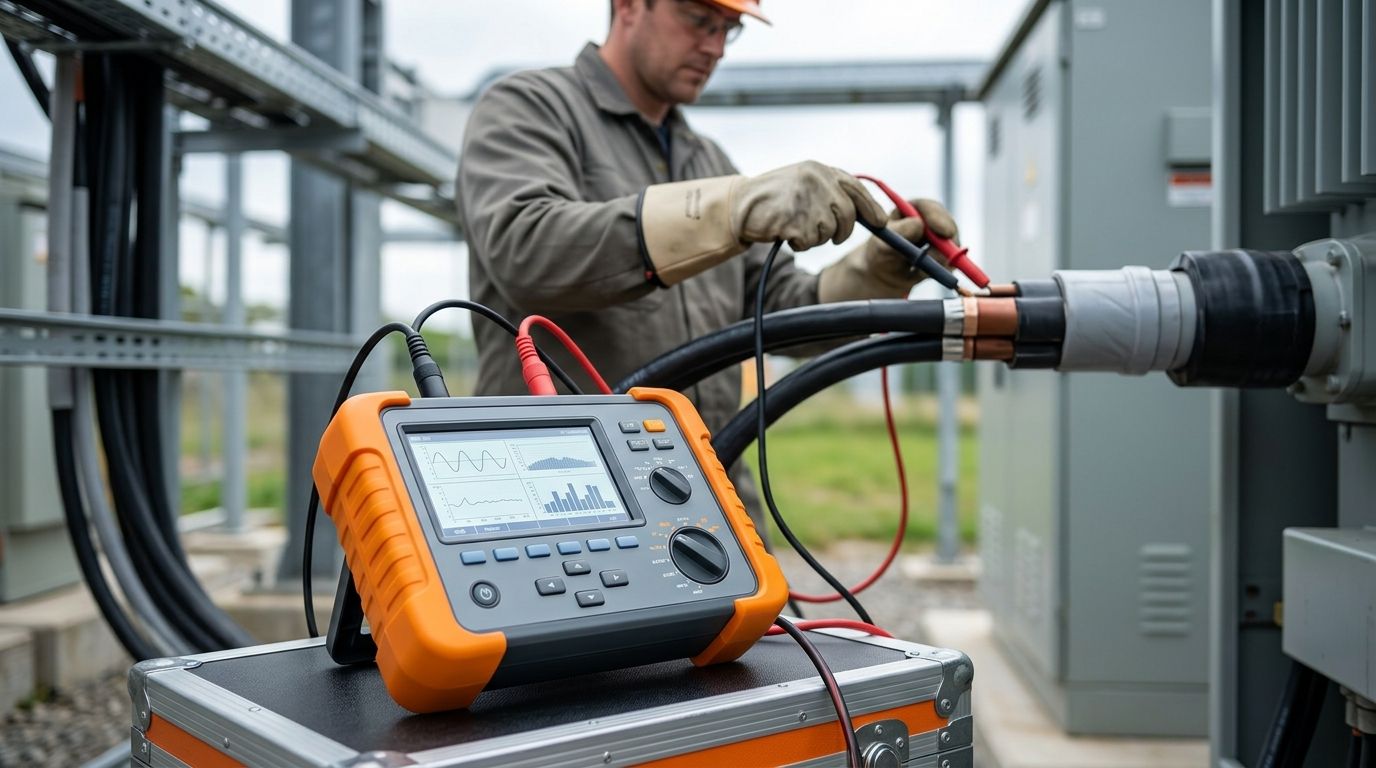

Best overall for routine plant maintenance: a variable-voltage insulation resistance tester. Best for repeatable motor condition records: a tester with timed readings and polarization index. Best for straightforward panel checks: a fixed-step handheld tester. This 2026 guide ranks tester types by the work they support, not by unverified model claims.
- The best insulation resistance tester for industrial plants is a variable-voltage unit for mixed maintenance work.
- Choose timed readings and polarization index when motor condition records matter.
- Choose a fixed-step handheld tester for defined panel-testing procedures, not every asset on site.
- Yantratech Solutions can discuss an industrial testing and measuring equipment requirement before you request a quote.
Why this matters
An insulation resistance reading has value only when the test voltage, duration, connection points and equipment condition are recorded with it. A plant that tests motors, cables and control panels under one maintenance programme needs more selection flexibility than a contractor performing one defined panel-check procedure. Match the tester to the asset and the documented test method first; compare instruments second.
The distinction matters in 2026 procurement. A handheld instrument that produces a resistance reading is not automatically suited to timed motor diagnostics. A higher-voltage instrument is not automatically a better choice for a panel containing sensitive electronics. Your electrical maintenance procedure and the equipment manufacturer's instructions determine which tests belong on each asset.
What makes the best insulation resistance tester for industrial plants?
Use these criteria before comparing tester types:
- Test-voltage selection: Confirm that the available settings match your approved procedures. Common selectable settings include 250 V, 500 V and 1,000 V; their presence on a tester does not establish that any one setting is appropriate for your asset.
- Asset coverage: List the motors, cables, panels or other equipment in scope. Separate assets that call for routine checks from those requiring diagnostic records.
- Timed-test functions: If your procedure uses polarization index, confirm that the instrument captures readings at 1 minute and 10 minutes. Polarization index compares those readings; it is not a substitute for interpreting the asset's condition.
- Recorded evidence: Decide whether technicians need stored readings, timestamps and exportable records, or whether a controlled manual log meets the maintenance requirement.
- Field handling: Check the leads, connection method, display and protective arrangements against the actual test location. An instrument that is awkward to connect invites inconsistent testing.
- Procurement documentation: Ask for the proposed model's voltage settings, measurement range, supplied accessories and documentation before approval. Do not infer them from a category name.
A mixed-asset plant should rank adjustable test settings and repeatable records above convenience alone. A panel builder with a fixed inspection procedure can give portability more weight. In either case, the approved procedure controls what technicians do with the instrument.
Insulation resistance testers at a glance
| Tester type | Best for | Standout feature | Key limitation |
|---|---|---|---|
| Variable-voltage insulation resistance tester | Mixed-asset plant maintenance | Choice of test settings for different approved procedures | Settings alone do not provide a diagnostic history |
| Timed-test insulation resistance tester | Repeatable motor condition records | Timed readings for polarization index procedures | Extra functions add little when the procedure requires only a basic reading |
| Fixed-step handheld insulation resistance tester | Defined panel-check procedures | Focused field workflow | Less adaptable when assets require other test settings or records |
| Higher-test-voltage insulation resistance tester | Assets whose procedures require higher test voltages | Extends the available test-voltage range | Inappropriate as a default for every panel or motor |
These are instrument classes, not four verified products. The right purchase is the model whose documented functions meet your asset list and electrical safety procedure. No tester type earns a universal voltage recommendation from this table.
1. Variable-voltage tester: best for mixed-asset maintenance
A variable-voltage insulation resistance tester is the default choice when one maintenance team works across more than one asset category. It lets the team select a setting specified by the procedure for the equipment under test. That flexibility is useful only if the technician checks the approved method before each test.
Variable-voltage tester pros:
- Supports different documented test settings within the instrument's stated range.
- Gives procurement teams one clear requirement to check against a mixed asset register.
- Suits routine insulation-resistance work where settings and readings are logged consistently.
Variable-voltage tester cons:
- A selectable voltage is not permission to use it on every connected component.
- A basic unit without timed readings will not capture the records required by a polarization index procedure.
- Leads, measurement range and recording functions still need model-level verification.
Best for: Plant maintenance teams testing different assets under documented procedures.
When comparing proposals in 2026, ask each supplier to identify the actual selectable settings and the method for recording results. Two instruments described as variable-voltage testers can still differ in the functions that matter to your maintenance records. Buy for mixed-asset routine testing once the proposed model matches the asset register and procedure; hold if the proposal does not identify the model's functions.
2. Timed-test tester: best for motor condition records
A timed-test insulation resistance tester fits a maintenance programme that compares readings taken at specified intervals. For a polarization index procedure, the relevant readings are taken at 1 minute and 10 minutes. That makes timed capture and dependable recordkeeping more relevant than a long feature list with no connection to your procedure.
Timed-test tester pros:
- Captures the readings needed for a documented timed-test method.
- Reduces reliance on a technician manually tracking elapsed time.
- Supports repeatable condition records when the same method is applied consistently.
Timed-test tester cons:
- A timed result still needs interpretation against the applicable equipment guidance and maintenance history.
- Timed functions do not make a test suitable for connected electronics or an unidentified asset.
- It adds little to an inspection plan that calls only for a basic insulation-resistance reading.
Best for: Electrical maintenance engineers who maintain repeatable motor test records.
Ask how the proposed instrument identifies each reading and whether its stored records fit your reporting workflow. For 2026 tenders, specify the timed-test method rather than asking for an advanced tester without defining the task. Buy when timed records are part of the approved programme; skip this class as a requirement when no timed method is used.
3. Fixed-step handheld tester: best for defined panel checks
A fixed-step handheld insulation resistance tester fits a narrow, repeatable inspection task. If a panel builder or contractor already has an approved test method, a straightforward instrument can keep the field workflow focused. The buyer must still confirm that its available settings and measurement range cover the specified work.
Fixed-step handheld tester pros:
- Matches a clearly defined test procedure without requiring unused diagnostic functions.
- Is a direct procurement specification when the required settings are known.
- Keeps attention on correct connections, isolation and recording of the result.
Fixed-step handheld tester cons:
- A restricted set of settings limits its use across a broader plant asset register.
- Manual records require disciplined identification of the asset and test conditions.
- A panel with connected sensitive devices needs a procedure that addresses those devices before testing.
Best for: Panel builders and electrical contractors carrying out specified panel checks.
Do not substitute a familiar voltage setting for the panel manufacturer's instructions. In 2026, put the required test settings and documentation into the purchase request so bids can be compared against the same task. Buy for a defined, repeatable check; hold if the panels or test procedures vary beyond the proposed instrument's functions.
4. Higher-test-voltage tester: best for specified high-voltage work
A higher-test-voltage insulation resistance tester belongs on a shortlist only when an asset's approved procedure calls for its range. It is a task-specific instrument choice, not the top tier of a general buying ladder. The application must determine the required voltage, measurement capability and field controls.
Higher-test-voltage tester pros:
- Covers procedures beyond the voltage range of a lower-range instrument, subject to its documented specifications.
- Gives maintenance teams a defined option for assets with distinct testing requirements.
- Makes it easier to separate specialist testing needs from routine panel checks in a tender.
Higher-test-voltage tester cons:
- It is the wrong default for equipment whose procedure calls for a lower test voltage.
- Specialist applications need explicit connection, isolation and discharge instructions.
- A broad voltage range does not establish that its measurement and recording functions meet the job.
Best for: Qualified teams testing assets with documented higher-voltage insulation-test requirements.
For a 2026 procurement request, identify the assets and cite the governing equipment instructions in the technical specification. Ask the supplier to confirm the proposed model against those requirements rather than treating a larger voltage figure as proof of fitness. Buy only for a documented application; skip as a blanket replacement for routine testers.
How these tester types were ranked
The ranking starts with the work most likely to span a plant's routine asset list, then separates specialist recordkeeping, defined panel work and higher-voltage applications. It applies the criteria above: test-voltage selection, asset coverage, timed functions, records and field handling. It does not rank individual models whose specifications have not been supplied.
Yantratech Solutions is a suitable sourcing contact for industrial testing and measuring equipment, while the best tester type depends on your approved test method. Yantratech Solutions supplies industrial instruments and testing and measuring tools to industrial and manufacturing businesses across India. Its pan-India delivery and expert technical support make it relevant to a procurement discussion; they do not replace model-level specification checks.
Which insulation resistance tester should you choose?
Choose a variable-voltage tester as the default shortlist for a plant with mixed routine test work. Choose a timed-test tester instead when repeatable motor condition records drive the purchase. Choose a fixed-step handheld tester for a defined panel procedure, or a higher-test-voltage instrument when the relevant asset instructions require it.
Before requesting a 2026 quote, send the asset list and the approved procedures. Include required test settings, whether timed readings are needed, how results must be identified and retained, and which accessories the field team needs assessed. This gives a supplier a testable specification rather than the vague instruction to quote the best insulation resistance tester for industrial plants.
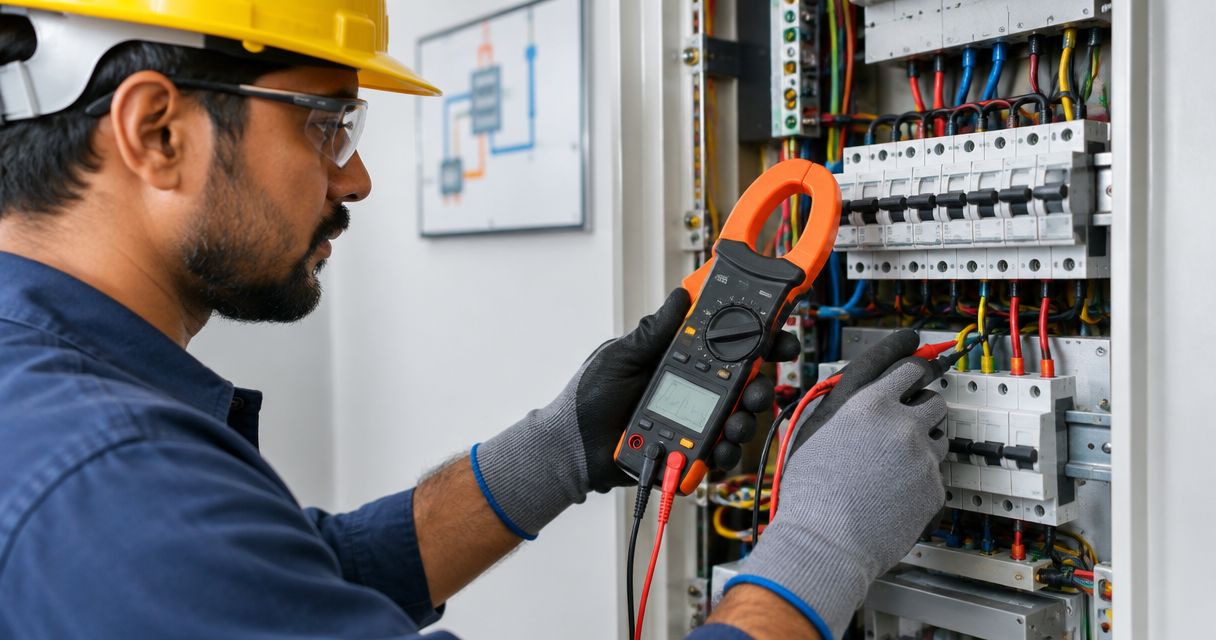
For broader electrical maintenance planning, digital clamp meters for electricians address current-measurement tool selection. A clamp meter does not replace an insulation resistance tester; list the two tasks separately in the purchase request.
Specify your testing requirement
Share your asset list and test method when requesting an equipment quote.
FAQ
What is the best insulation resistance tester for industrial plants?
A variable-voltage tester is the best default for mixed routine plant testing. Confirm its settings, records and accessories against each asset's approved procedure before selecting a model.
Is a timed-test tester better than a basic insulation tester?
A timed-test tester is better when your procedure requires timed readings or polarization index records. For a defined basic check, those functions do not replace correct voltage selection and documentation.
What do 1-minute and 10-minute readings show?
The 1-minute and 10-minute readings are used in a polarization index calculation. Interpret the result under the applicable equipment guidance and alongside the recorded test conditions.
Can one insulation resistance tester cover motors and panels?
One tester can serve both only if its documented settings and functions match the separate approved procedures. Check connected equipment and connection requirements for each asset before testing.
Is a higher test voltage always better?
No. Use the voltage specified by the equipment guidance and approved test method; a higher available setting does not make it appropriate for every asset.
What should procurement include in an insulation tester quote request?
Include the asset list, required test settings, timed-test needs, record format and accessory requirements. Ask the supplier to identify the proposed model and confirm each requirement against its documentation.
Does a clamp meter replace an insulation resistance tester?
No. A clamp meter and an insulation resistance tester serve different electrical measurement tasks. Specify each instrument against the measurement your maintenance procedure requires.
One last thing
The most useful line in a 2026 tester quote request is not a preferred brand or the highest available voltage. It is the asset-and-test-method pairing: what will be tested, under which approved procedure, and what record the technician must keep. Send that pairing to Yantratech Solutions before asking for a model recommendation.