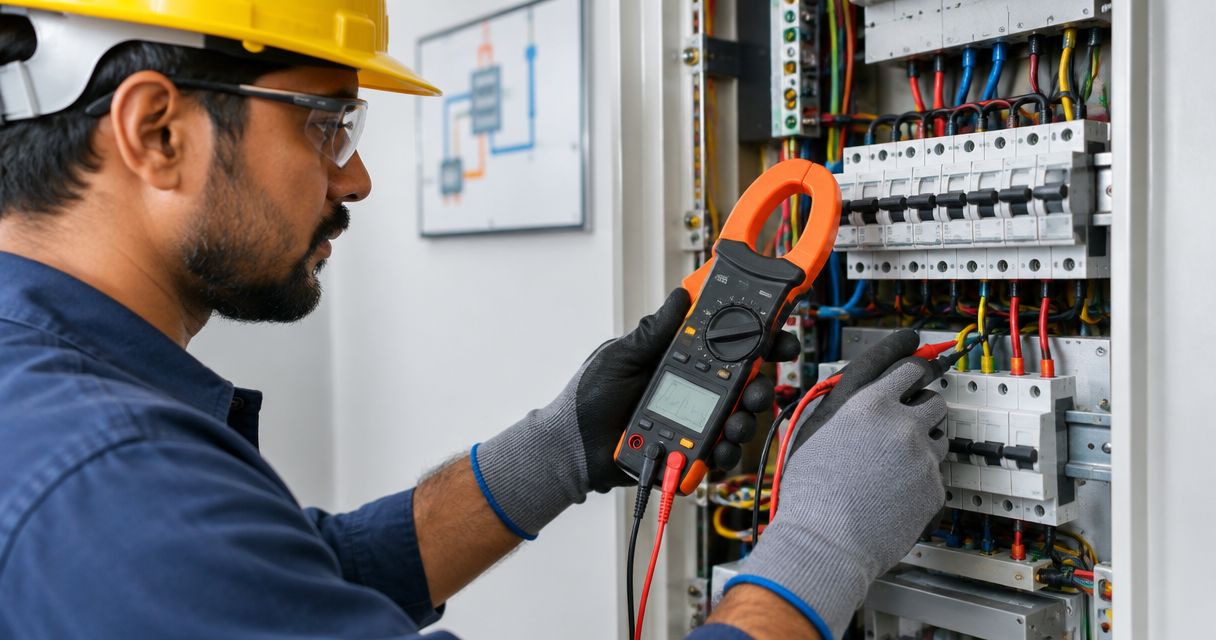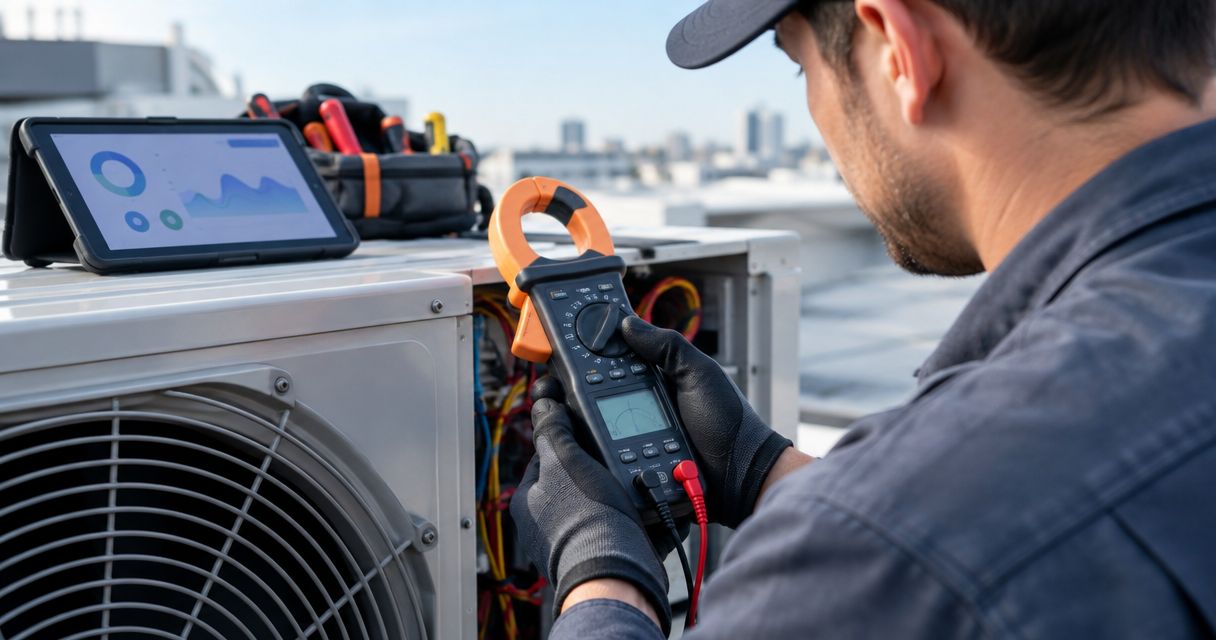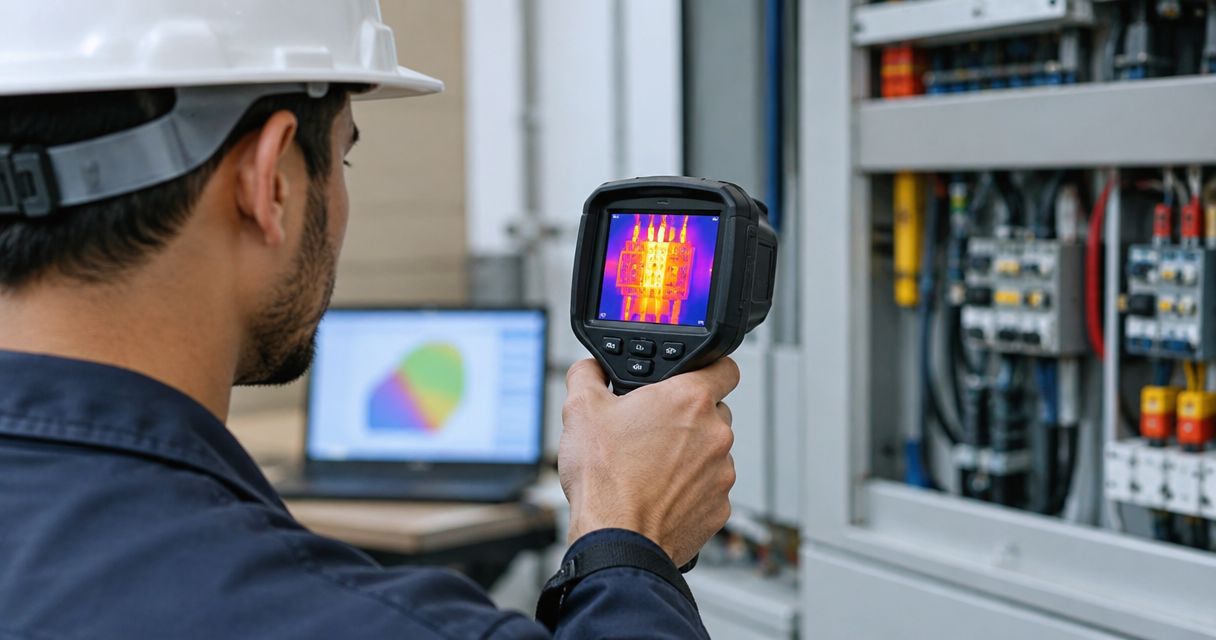
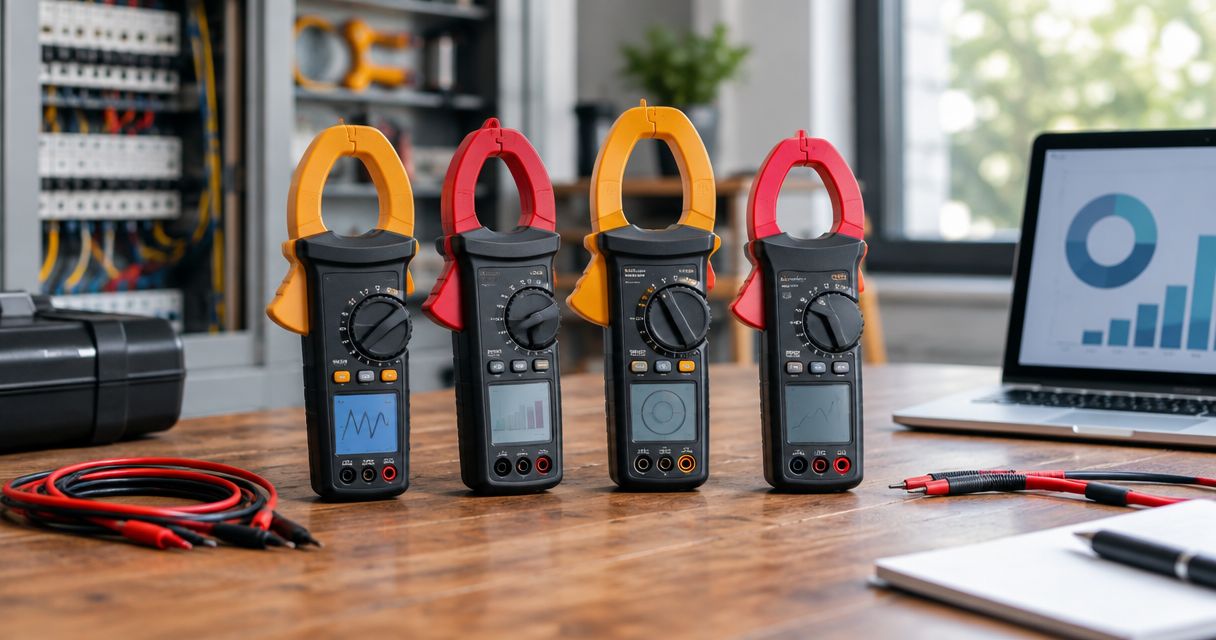
Digital clamp meters sold in India in 2026 range from basic AC-only handhelds to industrial-grade True RMS units with data logging, and the right pick depends on the load you're measuring, not just what's cheapest on a marketplace listing. Best overall for industrial maintenance: a True RMS AC/DC clamp meter with CAT IV 600V rating. Best for panel builders and routine checks: a basic AC-only digital clamp meter. Best for compliance and remote monitoring: a data-logging or Bluetooth-enabled clamp meter. Best for earth leakage and insulation diagnostics: a dedicated leakage current clamp meter. Best for heavy industrial and utility-scale loads: a high-current clamp meter rated 1000A or above. Yantratech Solutions supplies all five categories with pan-India delivery and expert technical support for procurement teams comparing specs before they request a quote.
- A clamp meter price comparison in India for 2026 should be built on CAT rating, current range and True RMS accuracy, not sticker price alone.
- True RMS AC/DC clamp meters are the safest default for plants running VFDs, motors and non-linear loads.
- Basic AC-only clamp meters suit panel builders and routine continuity checks but fail on DC and distorted waveforms.
- Data-logging and leakage current clamp meters solve narrow jobs — buy them only when the application actually needs it.
- Calibration traceability, not the lowest listed cost, is what protects compliance audits in regulated plants.
Why this matters
Most buyers searching for a clamp meter price comparison in India are trying to answer one question: which tier actually matches the job, so they don't overpay for features they won't use or underspec a meter that fails on-site. A ₹ figure on a listing tells you nothing about whether the unit reads True RMS on a VFD-fed motor or survives a CAT IV panel environment.
Procurement teams, panel builders and plant maintenance engineers all buy clamp meters, but they buy for different reasons. A panel builder wants speed and portability for routine current checks. A maintenance engineer on a plant floor with variable frequency drives needs True RMS accuracy or the readings are simply wrong. Getting this distinction right before you request a quote avoids the two common failure modes: buying a bare AC-only meter for a job that needs True RMS, or over-buying a data-logging unit for a task that never needed logging.
What makes the best digital clamp meter
- CAT safety rating — CAT III or CAT IV, matched to where you're testing (distribution board vs. incoming supply).
- True RMS measurement — mandatory for accurate readings on VFDs, UPS loads and other non-linear waveforms.
- Current range — 400A and 600A cover most panel and motor work; 1000A+ is for heavy industrial and utility loads.
- Display resolution — 4,000 counts is workable for basic checks; 6,000 counts gives finer resolution for diagnostics.
- IP rating — IP54 or better matters on dusty or damp plant floors, not in a clean control room.
- Calibration traceability — a certificate you can produce in an audit, independent of which brand you buy.
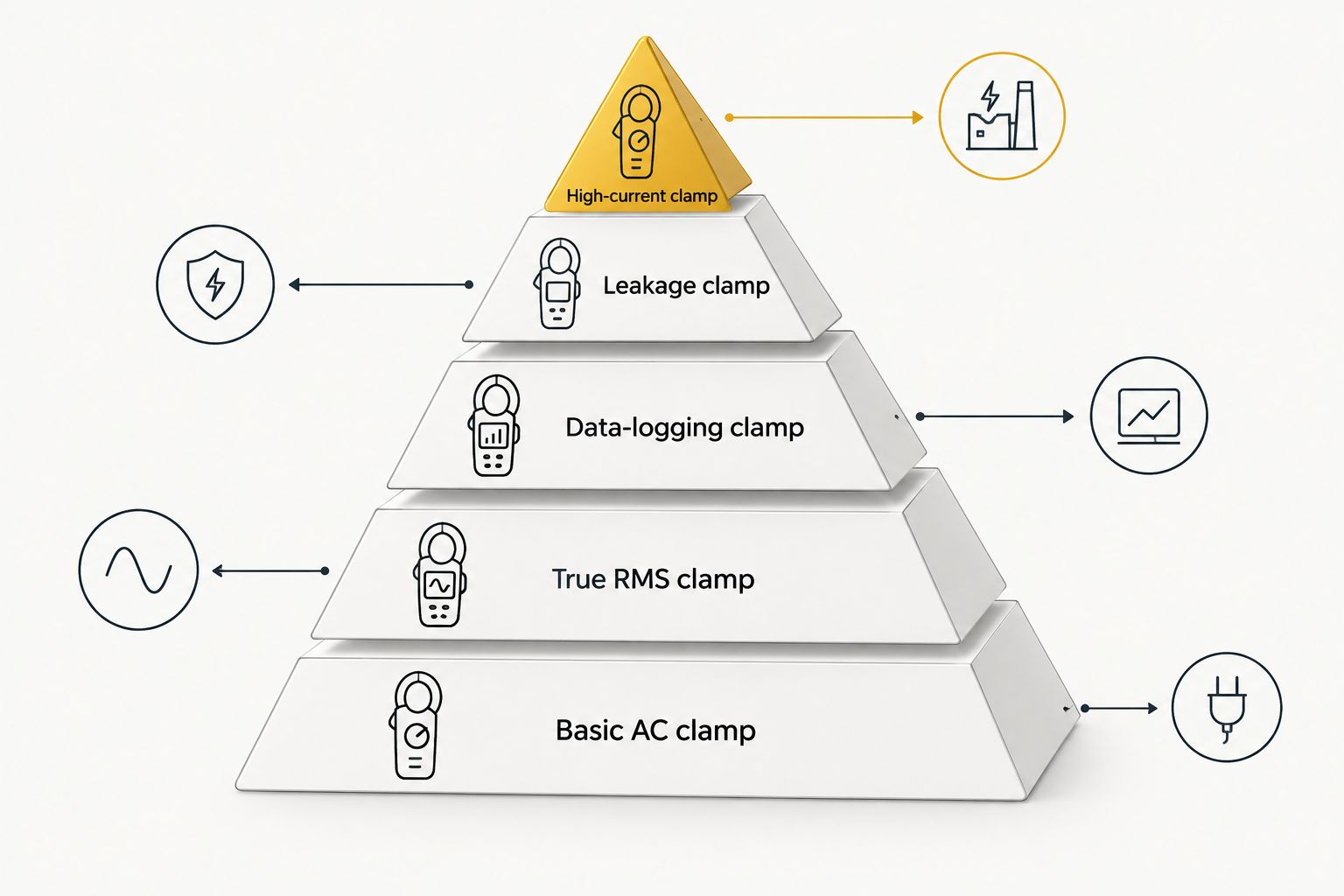
Digital clamp meters at a glance
| Category | Best for | Standout feature | Key limitation |
|---|---|---|---|
| True RMS AC/DC clamp meter | Industrial maintenance & power quality checks | Accurate on VFD and non-linear loads | Costs more than AC-only models |
| Basic AC-only digital clamp meter | Panel builders & routine current checks | Simple, lightweight, fast to use | No DC current, no True RMS accuracy |
| Data-logging / Bluetooth clamp meter | Compliance reporting & remote monitoring | Trend logging with mobile readout | Needs app setup and battery management |
| Leakage current clamp meter | Earth leakage & insulation diagnostics | Resolves milliamp-level leakage | Narrow use case outside leakage work |
| High-current industrial clamp meter (1000A+) | Heavy industrial & utility-scale loads | Wide current range up to 1000A+ | Bulkier jaw, needs larger cable clearance |
1. True RMS AC/DC clamp meter: best for industrial maintenance
A True RMS clamp meter calculates the actual root-mean-square value of a waveform instead of assuming a clean sine wave, which is why it reads correctly on motors, VFDs and UPS-fed circuits where distorted waveforms are routine. This is the category most plant maintenance and electrical engineering teams should default to in 2026, since non-linear loads are now common on almost every industrial floor.
True RMS clamp meter pros:
- Accurate readings on distorted and non-linear waveforms
- Usually paired with CAT III or CAT IV safety ratings
- Covers both AC and DC measurement in one unit
True RMS clamp meter cons:
- Higher cost than a basic AC-only meter
- Slightly steeper learning curve for entry-level technicians
Best for: plant maintenance engineers and electrical contractors working around VFDs, UPS systems and motor loads. Verdict: Buy if your site runs any variable-speed or non-linear equipment.
2. Basic AC-only digital clamp meter: best for panel builders on routine checks
A basic AC-only clamp meter measures alternating current only, without True RMS correction, and it's built for speed on straightforward continuity, voltage and current checks. Panel builders assembling switchgear or contractors doing site commissioning often need exactly this — fast readings, no complexity, no waveform math.
Basic AC clamp meter pros:
- Lightweight and quick to operate on-site
- Lower entry point for teams buying multiple units
- Sufficient for clean sine-wave circuits
Basic AC clamp meter cons:
- Inaccurate on VFD or non-linear loads
- No DC current measurement
- Typically limited to 4,000-count resolution
Best for: panel builders and contractors doing routine checks on standard AC circuits. Verdict: Buy for volume use on simple loads; Skip if your work touches drives or DC circuits at all.
3. Data-logging / Bluetooth clamp meter: best for compliance and remote monitoring
This category adds trend logging and, in many models, a Bluetooth link to a mobile app, so readings can be recorded over time and exported for compliance reports or predictive maintenance records. It solves a specific problem: proving a load stayed within limits over hours or days, not just at the moment someone clamped the meter on.
Data-logging clamp meter pros:
- Continuous trend data instead of single-point readings
- Useful for audit trails and preventive maintenance logs
- App-based readout reduces manual note-taking
Data-logging clamp meter cons:
- Adds setup time compared to a standard clamp meter
- Battery life and app reliability vary by unit
Best for: compliance teams and maintenance departments that need documented load history. Verdict: Hold unless your process genuinely requires logged evidence, otherwise a standard True RMS meter does the job.
4. Leakage current clamp meter: best for earth leakage and insulation diagnostics
A leakage current clamp meter is built to resolve milliamp-level current that a standard clamp meter's resolution simply can't detect, which makes it the right tool for earth leakage testing and insulation diagnostics on sensitive equipment. It's a specialist instrument, not a general-purpose replacement for a standard clamp meter.
Leakage clamp meter pros:
- Detects milliamp-range leakage a standard clamp meter misses
- Essential for insulation and safety compliance checks
- Non-invasive — no need to break the circuit
Leakage clamp meter cons:
- Limited use outside leakage and insulation work
- Not a substitute for a general-purpose clamp meter
Best for: safety and compliance engineers running earth leakage or insulation diagnostics. Verdict: Buy only if leakage testing is a recurring task; Wait if it's an occasional need better served by a rental or a multi-function meter.
5. High-current industrial clamp meter (1000A+): best for heavy industrial loads
When current draw exceeds what a standard 400A or 600A jaw can safely measure, a high-current clamp meter rated 1000A or above is the correct category, typically used on incoming utility feeds, large motor circuits and heavy industrial busbars. The jaw is physically larger to clear thick cabling, which is the trade-off for the extended range.
High-current clamp meter pros:
- Covers heavy loads standard clamp meters can't reach
- Suited to utility feeds and large motor circuits
- Often paired with the highest CAT ratings available
High-current clamp meter cons:
- Bulkier jaw makes it awkward on tight panel layouts
- Overkill for standard distribution board work
Best for: heavy industrial plants and utility-scale installations. Verdict: Buy if your loads regularly exceed 600A; Skip for standard panel and distribution work.
How this ranking was built
The order above follows the criteria set out earlier: CAT safety rating, True RMS capability, current range, display resolution, IP rating and calibration traceability — not marketplace listing price. Each category occupies a distinct use case rather than competing head-to-head, which is why a panel builder and a plant maintenance engineer can both find their answer in the same table without either being wrong.
Which digital clamp meter should you choose?
If you're not sure which tier fits, default to a True RMS AC/DC clamp meter with at least CAT III rating — it covers the widest range of industrial jobs without the narrow limitations of a specialist unit. Step up to a leakage current or data-logging model only when the specific task demands it, and move to a high-current unit only when your loads genuinely exceed 600A. Procurement teams comparing multiple categories at once should request a quote with the application specified, since the right spec sheet matters more than the lowest number on a listing.
Request a clamp meter quote
Get application-matched specs and pan-India delivery from Yantratech Solutions.
FAQ
What is the difference between a basic and a True RMS clamp meter?
A basic clamp meter assumes a clean sine wave and can misread distorted current, while a True RMS clamp meter calculates the actual waveform value. True RMS is necessary for VFDs, UPS loads and most modern industrial circuits.
Is True RMS necessary for industrial use in India in 2026?
Yes, for most plants running motors, drives or non-linear loads. A basic AC-only meter is fine for clean sine-wave circuits but gives incorrect readings on distorted waveforms.
What CAT rating do I need for a clamp meter?
CAT III is typical for distribution boards and feeder circuits, while CAT IV covers incoming utility supply and origin-of-installation points. Match the rating to where you're actually testing, not the highest number available.
Can a standard clamp meter measure leakage current?
No, standard clamp meters lack the resolution to detect milliamp-level leakage. A dedicated leakage current clamp meter is built specifically for earth leakage and insulation diagnostics.
How do I choose the current range for a clamp meter?
Match the range to your highest expected load with headroom: 400A or 600A covers most panel and motor work, while 1000A or above is for heavy industrial and utility-scale feeds.
Does a clamp meter need calibration certification for compliance?
For regulated plants and audit trails, yes — a traceable calibration certificate matters more than the brand or listed price. Confirm calibration support before ordering.
What's the difference between AC-only and AC/DC clamp meters?
AC-only clamp meters measure alternating current alone, while AC/DC models also measure direct current, which is required for battery, UPS and DC bus work. Choose based on whether your site has any DC circuits to test.
How often should industrial clamp meters be calibrated?
Calibration intervals depend on usage intensity and your quality system, but most industrial sites recalibrate annually. Check with your compliance team for the interval that applies to your certification.
One last thing
The single detail buyers skip most often is IP rating — a clamp meter with excellent True RMS accuracy but no dust or moisture protection fails fast on a real plant floor, while an IP54-rated unit survives conditions a clean-room spec sheet never anticipated. Match the IP rating to where the meter will actually live, not where it was tested.