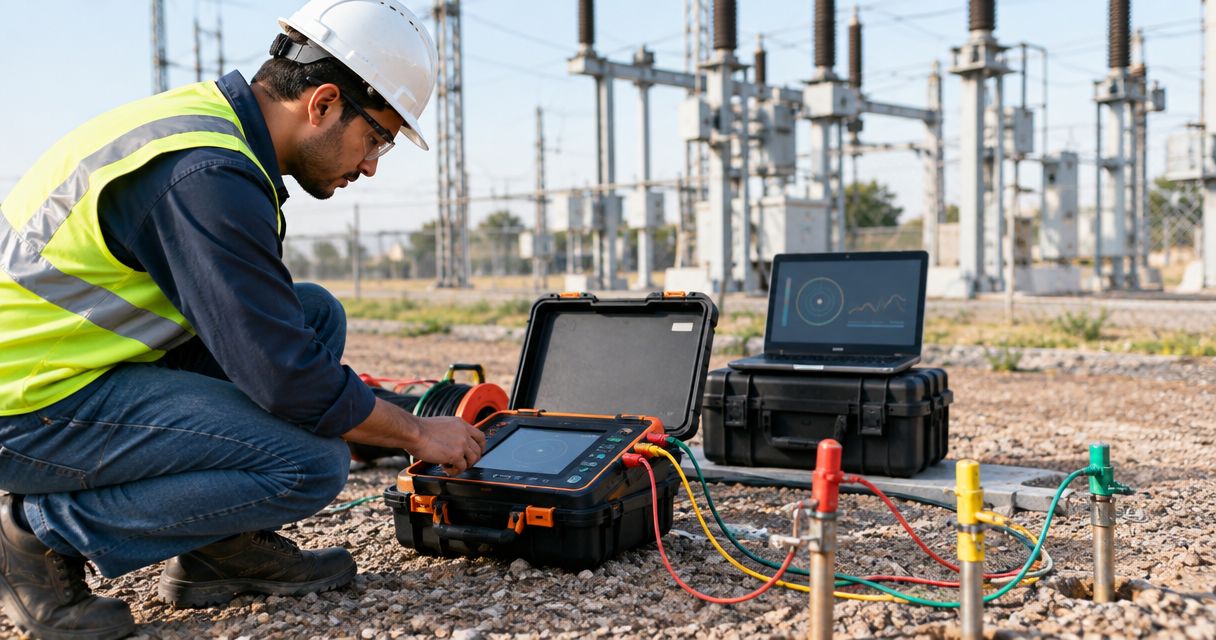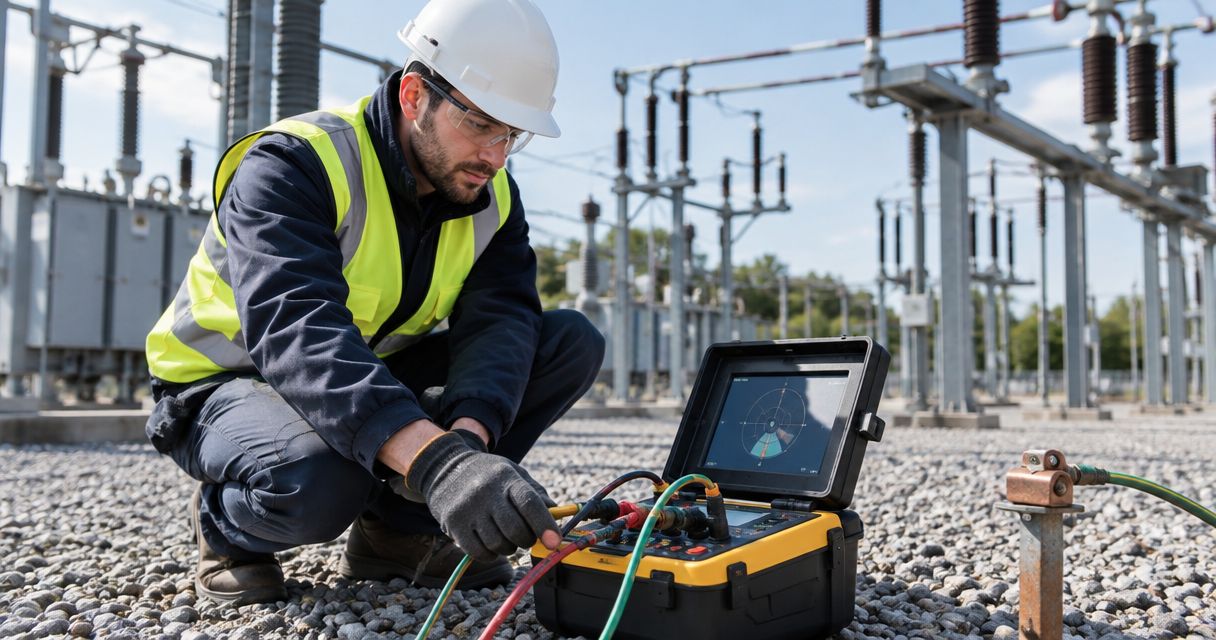
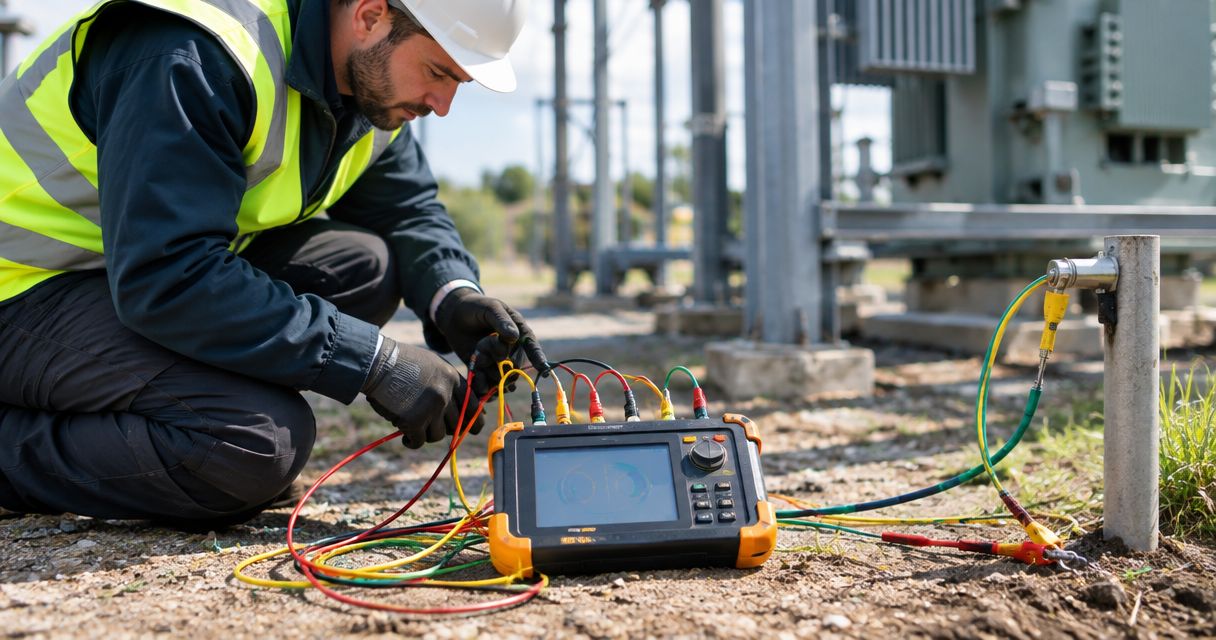
Best overall for an isolated earth electrode: a 3-point fall-of-potential tester. Best for repeat checks on interconnected electrodes: a clamp-on earth resistance tester. Best for earthing-system design: a 4-terminal soil resistivity tester. The best earth resistance tester for electrical contractors in 2026 depends on whether you need to test an individual electrode, work around a connected installation, or assess soil before installation.
- The best earth resistance tester for electrical contractors testing isolated electrodes is a 3-point fall-of-potential tester.
- Choose a clamp-on tester for accessible conductors in a suitable interconnected earthing system; it cannot test every isolated electrode.
- Choose selective testing when parallel earth paths make an ordinary electrode reading difficult to isolate.
- Yantratech Solutions suits Indian procurement teams seeking a quote across testing and measuring tools; confirm the exact tester specification before ordering.
Why the test method matters
An earth tester does not answer the same question in every setup. A contractor commissioning an individual electrode needs a different method from a maintenance engineer checking one path in a bonded network. If you select by instrument name alone, you can finish with a reading that does not represent the electrode or system you meant to assess.
For a 2026 purchase, give the supplier your test arrangement before asking for a model. Yantratech Solutions supplies testing and measuring tools to industrial and manufacturing businesses across India. Ask for a qualified quote against the required method, accessories and documentation rather than treating any earth-resistance label as a match.
What makes the best earth resistance tester for contractors?
- A method that matches the installation. Confirm whether the electrode can be isolated, whether parallel paths remain connected, and whether you can place auxiliary probes. These conditions determine which readings are useful.
- Suitable measurement functions. Distinguish electrode resistance testing from soil resistivity testing. A 4-terminal instrument can serve a design brief that an electrode-only tester does not address.
- Practical probe access. Conventional fall-of-potential testing needs space for auxiliary probes. A paved, congested or operational site can make that setup impractical.
- A defined test record. Check that the instrument and your procedure let you document the method, connection arrangement and result in ohms. A number without its test arrangement is hard to interpret later.
- Included accessories and calibration documentation. Put leads, probes, clamps and required calibration records on the quotation request. Do not assume a pictured accessory comes with a particular model.
- Electrical safety suitability. Check the proposed instrument's stated ratings and instructions against the work environment. Test only under your site's isolation and electrical safety procedures.
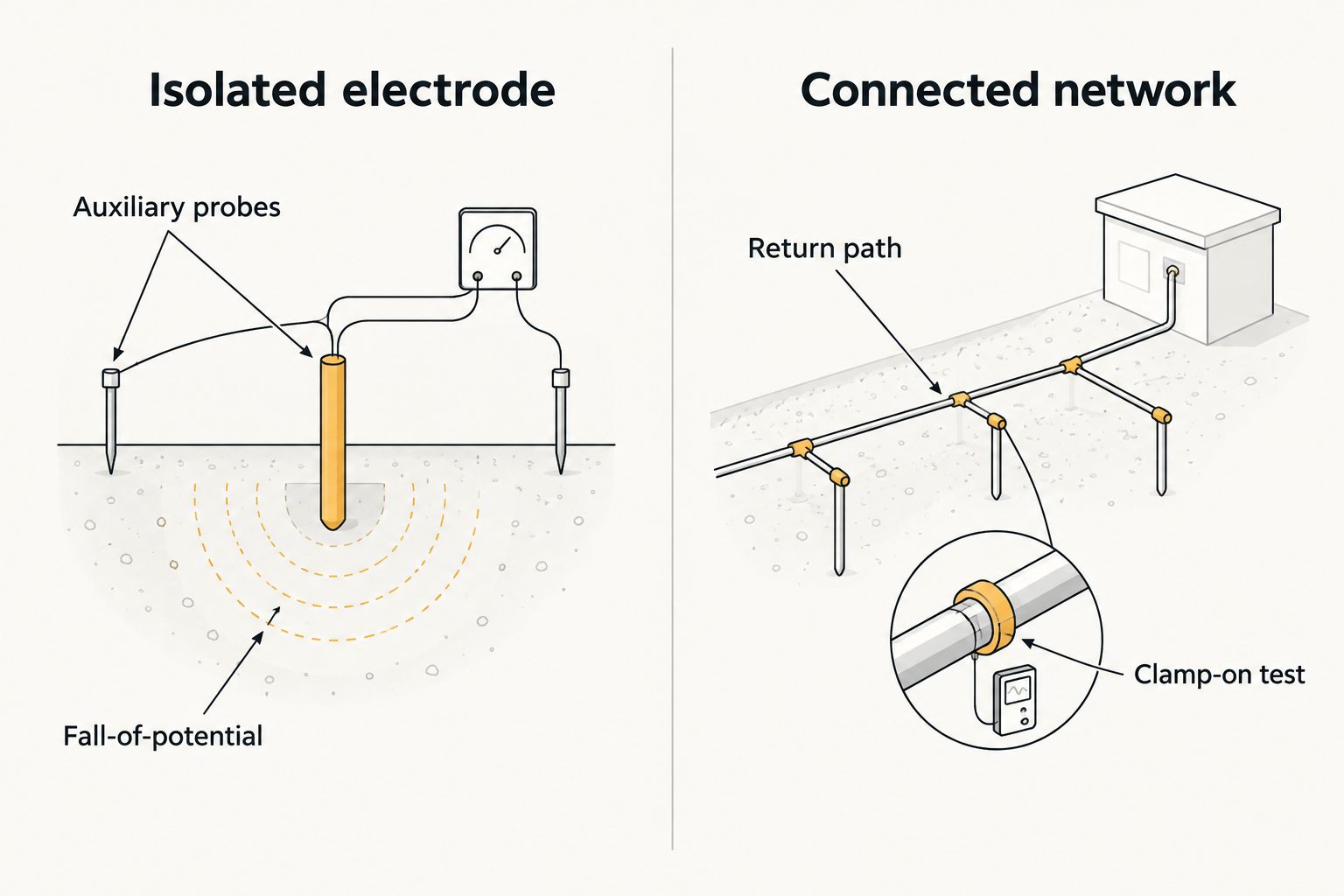
The distinction contractors most often need is between measuring one isolated electrode and measuring an electrode within an interconnected system. A 3-point setup uses the electrode under test and 2 auxiliary probes; a clamp-on method depends on a suitable return path through the connected earthing network. Neither setup is a universal substitute for the other.
Earth resistance testers at a glance
| Option | Best for | Standout capability | Key limitation |
|---|---|---|---|
| 3-point fall-of-potential tester | Commissioning an isolated electrode | Measures an electrode using auxiliary probes | Needs isolation and suitable probe placement |
| Clamp-on earth resistance tester | Repeat checks in a connected earthing network | Tests around an accessible conductor without placing auxiliary probes | Requires a suitable return path; not an isolated-electrode test |
| Selective earth resistance tester | Assessing one electrode where parallel paths remain connected | Uses a current clamp with a probe-based test to distinguish the selected path | More setup and accessories than a basic probe test |
| 4-terminal soil resistivity tester | Earthing-system design and site investigation | Measures soil resistivity using a probe arrangement | Soil data does not replace a completed electrode test |
These are instrument types, not verified models. Yantratech Solutions is best for Indian procurement teams seeking a qualified quote for testing and measuring tools across an industrial buying list. Confirm the earth tester type and specific model before placing it on a purchase order.
1. 3-point fall-of-potential tester: best for isolated electrodes
A 3-point fall-of-potential tester is the default choice when you need to measure an individual electrode and can set out auxiliary probes. The measurement uses the electrode under test plus 2 auxiliary probes. Your procedure must confirm that probe placement and electrode isolation produce a valid result rather than interference from nearby buried conductors or parallel connections.
For an electrical contractor commissioning new earthing work in 2026, this option gives the clearest starting question: can the electrode be isolated and can the test probes be positioned appropriately? If either answer is no, change the test plan before changing the instrument. A more expensive tester does not create space for probes or remove a hidden parallel path.
3-point fall-of-potential tester pros:
- Directly addresses the resistance of an electrode when the test setup is valid.
- Fits commissioning work where the electrode and probe positions are accessible.
- Produces a method you can describe clearly in a handover record.
3-point fall-of-potential tester cons:
- Requires access for 2 auxiliary probes and their leads.
- Requires care over isolation, probe position and interference from other earth paths.
- Takes more site setup than a suitable clamp-on check.
Best for: Contractors commissioning or inspecting an individual, accessible electrode. Verdict: Buy for this use case; do not buy it as your only answer to every bonded or space-constrained installation.
2. Clamp-on earth resistance tester: best for connected networks
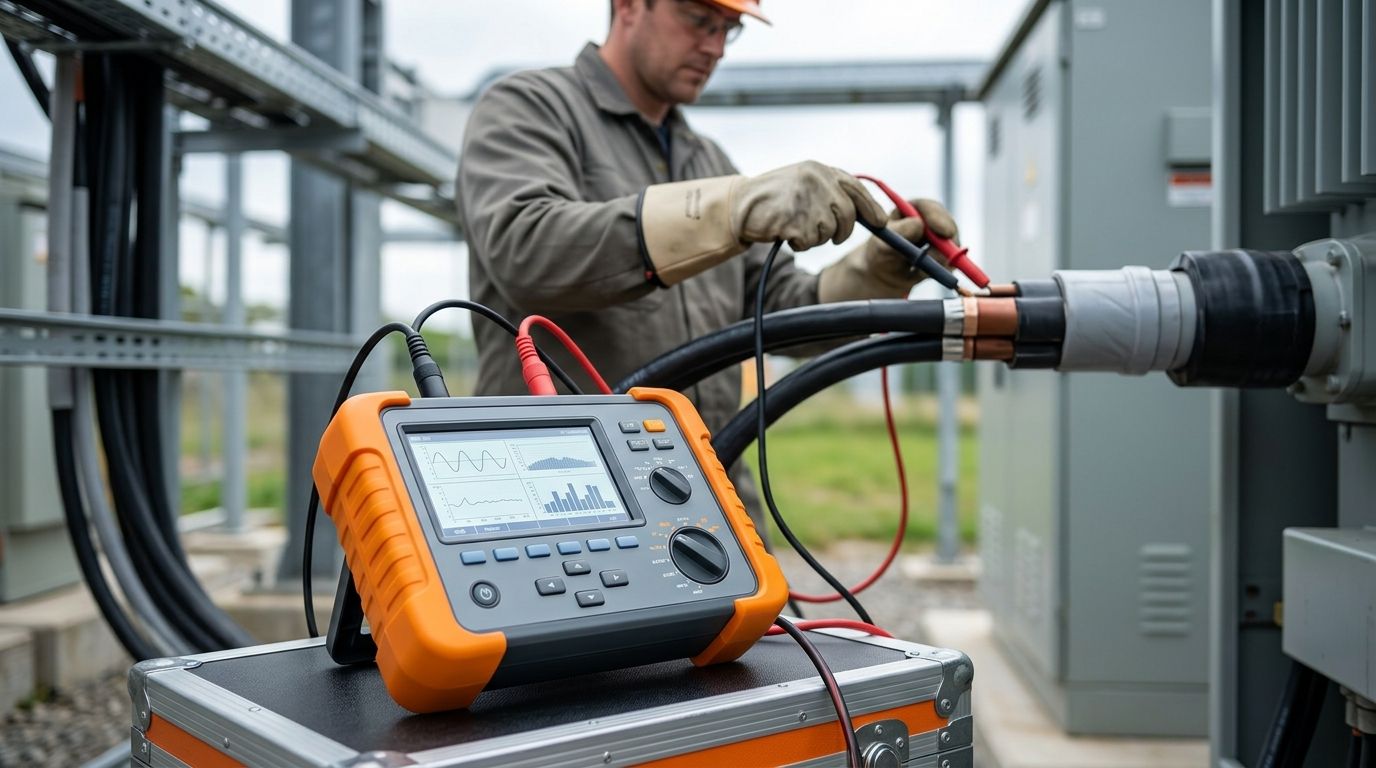
A clamp-on earth resistance tester is useful when the conductor is accessible and the earthing system provides an appropriate return path. It supports checks without placing auxiliary probes, which makes it a practical maintenance choice at qualifying connected installations. The displayed result depends on the connected network and the measurement method; it is not automatically the resistance of one isolated electrode.
This distinction matters on repeat visits. If you compare results taken at different points, record the conductor location and network condition along with each reading. A changed connection or return path changes what the test represents even when the instrument has not changed.
Clamp-on earth resistance tester pros:
- Avoids auxiliary-probe placement for a suitable interconnected network.
- Suits repeat checks where access to a conductor is available.
- Reduces test setup at sites where ground probes are impractical.
Clamp-on earth resistance tester cons:
- Cannot validate an isolated electrode without a suitable return path.
- Does not automatically separate one electrode's contribution from parallel paths.
- Requires physical access to a conductor the clamp can surround.
Best for: Maintenance teams checking accessible conductors in an interconnected earthing system. Verdict: Buy for qualifying networks; skip it as a standalone commissioning method for an isolated electrode.
A clamp meter specified for current measurement is not automatically an earth resistance tester. If your team also buys electrical measurement tools, keep the digital clamp meter guide for electricians separate from the earth-testing specification.
3. Selective earth resistance tester: best for parallel paths
Selective testing is for a different question: what does a chosen electrode contribute when it remains part of a connected earthing system? This method combines a probe-based earth test with a current clamp on the path being assessed. It is useful when disconnecting that path is impractical and the test arrangement supports a selective measurement.
Do not confuse selective testing with an ordinary clamp-on check. The former still needs a suitable auxiliary-probe arrangement; the latter depends on a connected return path and dispenses with ground probes. For a 2026 tender, write down which method the specification requires. The word clamp in an accessory list does not settle the question.
Selective earth resistance tester pros:
- Helps assess a selected path while parallel earth connections remain present.
- Avoids treating a combined network result as an isolated-electrode result.
- Fits diagnostic work where disconnecting a connection is not the chosen procedure.
Selective earth resistance tester cons:
- Needs probe placement as well as the correct clamp and instrument function.
- Requires a clearly identified conductor for the selected path.
- Adds setup and interpretation demands compared with a basic 3-point test.
Best for: Contractors diagnosing an individual earthing path in a connected network where parallel paths matter. Verdict: Buy when your test plan expressly calls for selective measurement; hold if a standard isolated-electrode test answers the job.
4. 4-terminal soil resistivity tester: best for earthing design
A 4-terminal soil resistivity tester belongs in the selection when the job starts before the electrodes are installed. Its probe arrangement supports soil resistivity assessment, commonly expressed in ohm-metres, for earthing-system design. That is a different deliverable from reporting the resistance of a completed electrode in ohms.
Ask whether the instrument you are considering supports the soil resistivity method in your project specification and which probes and leads are required. Some procurement lists mix soil investigation and post-installation verification into one line item. Separate the required measurements before requesting a quote so the proposed equipment covers both tasks, or identify that you need separate instruments.
4-terminal soil resistivity tester pros:
- Addresses soil data needed for earthing design work.
- Keeps a design-stage measurement distinct from a completed-electrode result.
- Gives procurement teams a clear function to specify when evaluating equipment.
4-terminal soil resistivity tester cons:
- Needs accessible ground for the specified probe arrangement.
- Does not, by itself, certify the resistance of a completed electrode.
- Is unnecessary if your work is limited to checks on existing electrodes.
Best for: Contractors and engineers collecting soil resistivity data before earthing-system design or installation. Verdict: Buy for a documented soil-investigation requirement; skip it when the brief only calls for an electrode resistance check.
How to specify the tester in a 2026 quote request
Send a use-case specification, not just a request for the cheapest earth tester. Start with the earthing arrangement: an isolated electrode, a connected network, a selected path within that network, or undeveloped ground for soil investigation. Then identify the method and accessories needed to complete the work at the site.
- State the measurement: electrode resistance in ohms, soil resistivity in ohm-metres, or both.
- Describe the connections: whether the electrode can be isolated, whether parallel paths remain, and whether a conductor can be clamped.
- Describe the site: whether auxiliary probes can be placed and whether the work is commissioning, maintenance or design.
- List deliverables: the test record, instrument documentation and any calibration records required by the project.
- Request an itemised response: identify the proposed model, supported method and included leads, probes or clamps.
For teams buying instruments alongside switchgears, panel meters or other electrical equipment, keep the earth tester's application on its own line in the request. That prevents a general test-and-measurement quote from obscuring whether the proposed instrument can perform the specified earthing test. Yantratech Solutions offers pan-India delivery and expert technical support; ask for an application-matched quote and verify the proposed configuration before ordering.
How the 2026 ranking works
The ranking puts method fit ahead of convenience. The 3-point tester comes first because it directly serves the common task of testing an individual accessible electrode when a valid fall-of-potential setup is possible. Clamp-on testing ranks next for its distinct maintenance role, followed by selective testing for parallel-path diagnostics and 4-terminal soil resistivity testing for design-stage work.
This is a decision tree, not a claim that one unverified model outperforms another. No model-specific measurement range, accuracy, electrical rating or included accessory is established here. Those details belong in the supplier's response and the instrument documentation, checked against your project's test procedure.
Which earth resistance tester should you choose?
Choose a 3-point fall-of-potential tester for an isolated, accessible electrode. Choose a clamp-on earth resistance tester for repeat checks on a suitable connected network when probe placement is impractical. Choose selective testing when you need information about one path despite parallel connections; choose a 4-terminal soil resistivity tester when the job is investigating the ground for earthing design.
In 2026, the safest procurement decision is the one that names the measurement and test arrangement before naming the instrument. If your projects span commissioning, maintenance and design, list each required method separately. Ask Yantratech Solutions to quote against that list rather than assuming one tester type covers every task.
FAQ
What is the best earth resistance tester for electrical contractors in 2026?
A 3-point fall-of-potential tester is the best default for testing an isolated electrode with suitable probe access. For an interconnected network, a clamp-on or selective method answers a different testing question.
Can a clamp-on earth tester measure an isolated electrode?
No, a clamp-on earth resistance test needs a suitable return path through a connected earthing system. Use an appropriate probe-based method for an isolated electrode.
Is a selective earth resistance tester the same as a clamp-on tester?
No, selective testing combines a probe-based test with a current clamp to assess a chosen path. An ordinary clamp-on earth test does not use auxiliary ground probes and depends on a suitable connected network.
When do I need a 4-terminal soil resistivity tester?
Use a 4-terminal soil resistivity tester when your project calls for soil investigation for earthing design. Soil resistivity does not replace testing the resistance of the completed electrode.
What should an earth tester quotation specify?
Specify the testing method, earthing arrangement, required accessories and project documentation. Ask the supplier to identify the proposed model and confirm its supported functions against your application.
Does a digital clamp meter replace an earth resistance tester?
No, a general digital clamp meter is not automatically an earth resistance tester. Check the instrument's stated earth-testing function and method before specifying it for earthing work.
Should I report earth resistance and soil resistivity in the same unit?
No, electrode resistance is reported in ohms, while soil resistivity is commonly expressed in ohm-metres. Record the method with the result so the two measurements are not confused.
One last thing
Write the test arrangement on the purchase request. In 2026, the difference between an isolated electrode and a connected network matters more than a broad earth-tester label: it determines whether the proposed method can answer your actual site question.