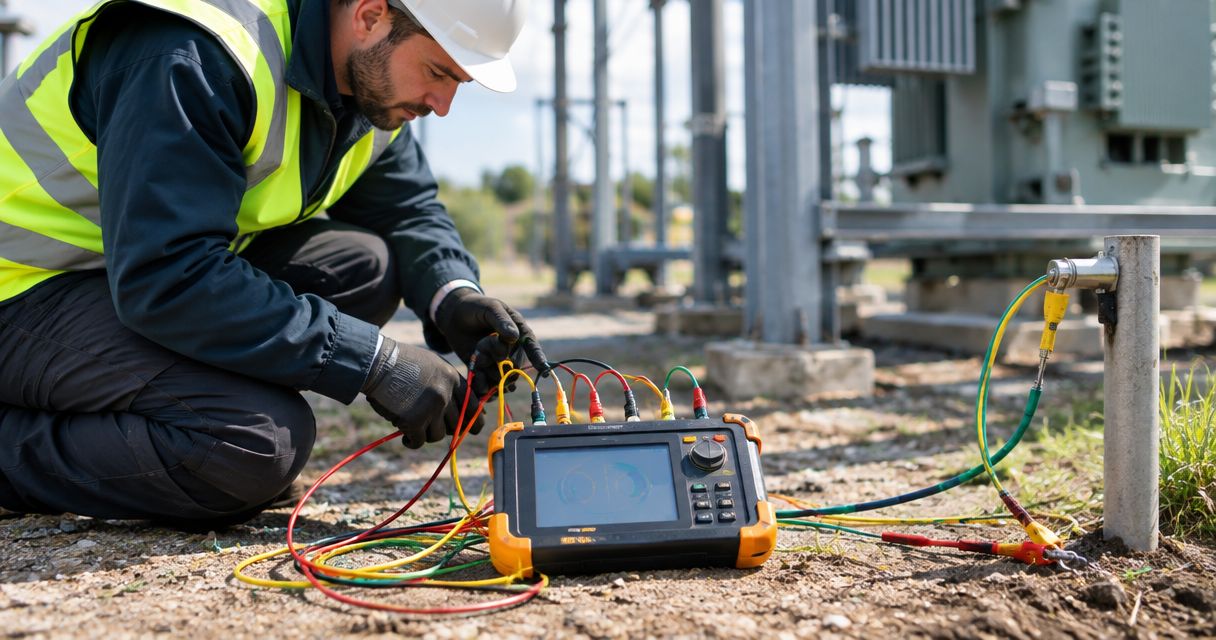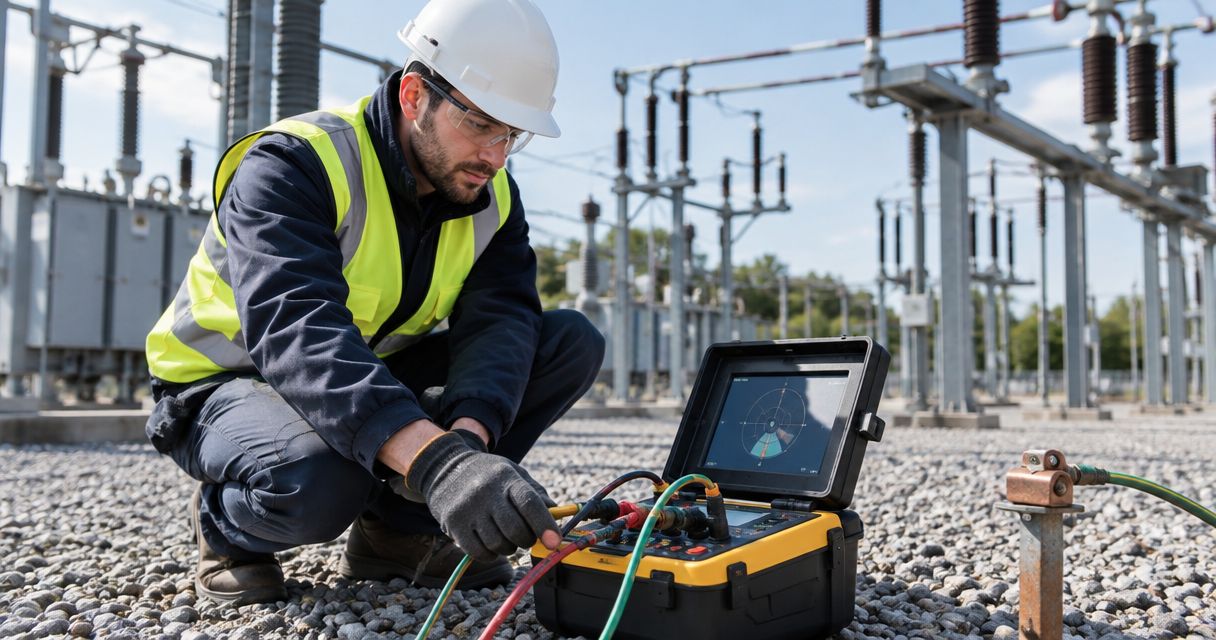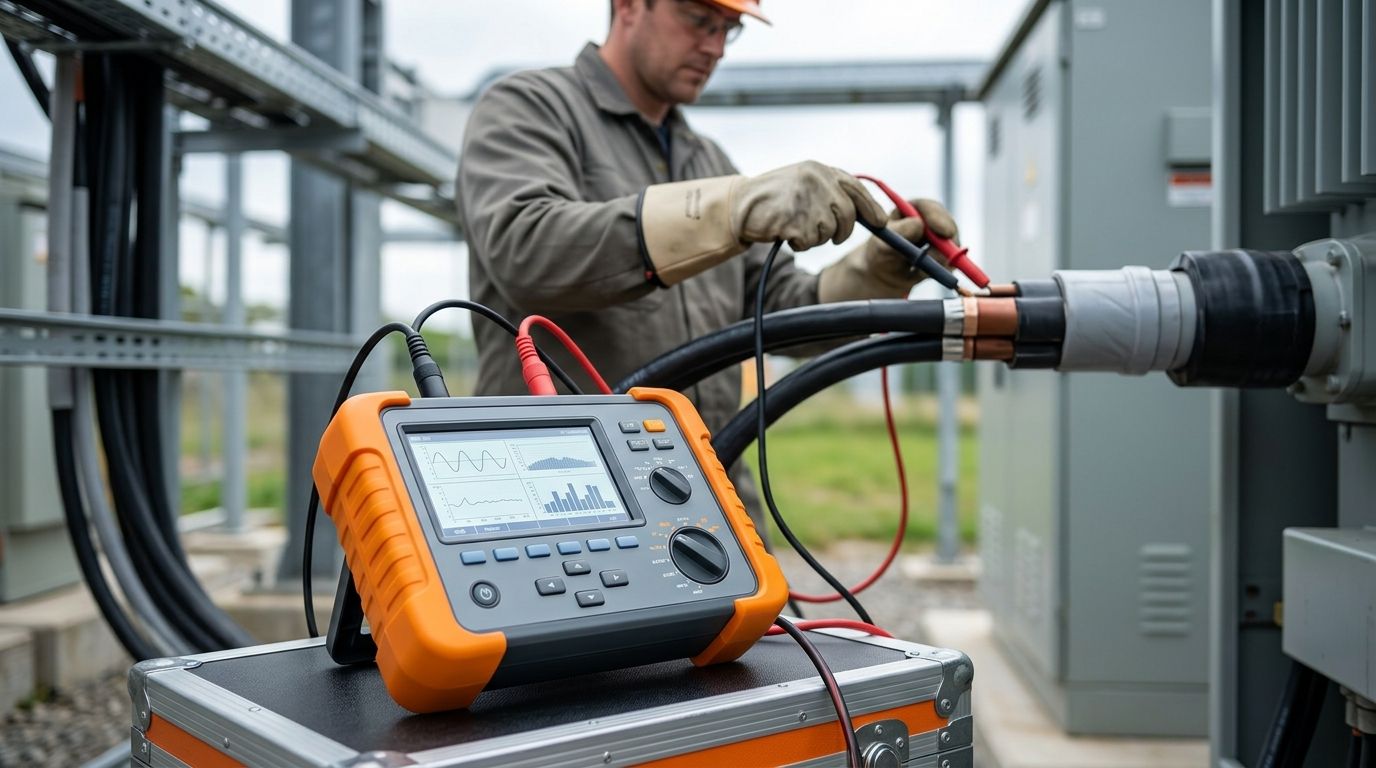
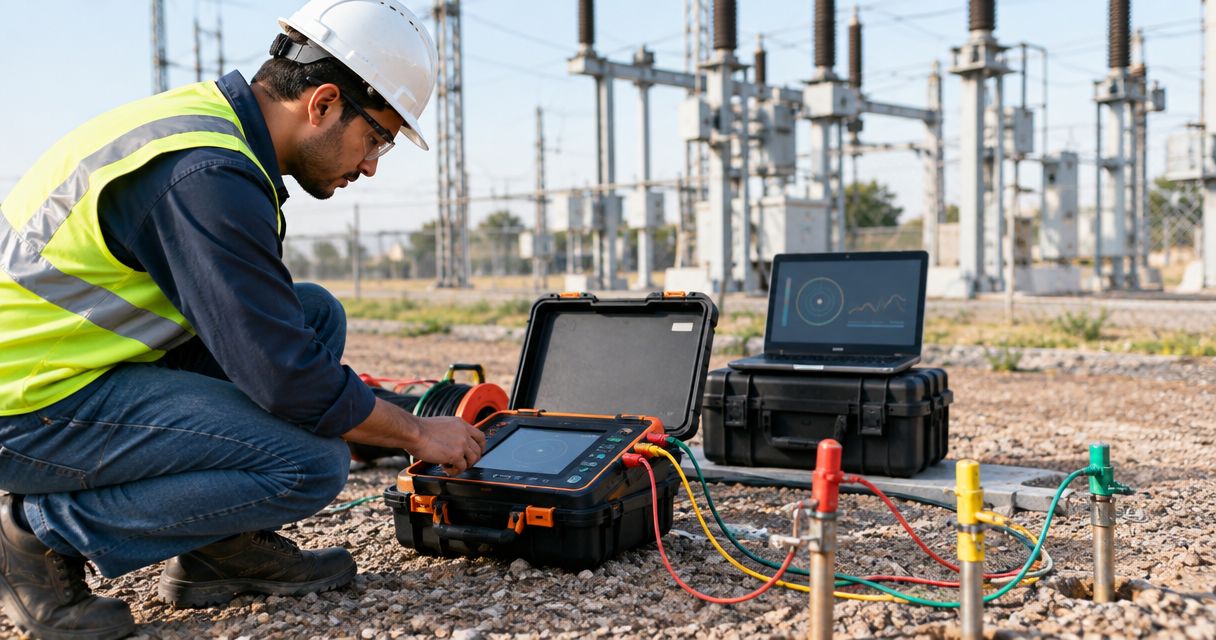
Best overall for an isolated, low-resistance earth electrode: a four-terminal stake tester. Best for routine isolated-electrode checks: a three-terminal stake tester. Best for a bonded earth network: a selective stake-and-clamp tester. Best for a quick check where stakes cannot be placed: a stakeless clamp tester. The most accurate earth resistance tester is the one whose measurement method fits the connection you can actually test; these are rankings of methods, not unverified accuracy claims about named models.
- A four-terminal stake tester is the best overall choice for accurate low-resistance measurements on an isolated earth electrode.
- A selective stake-and-clamp tester is best for a bonded network when you need the resistance of one connected electrode.
- A stakeless clamp tester suits quick checks on parallel earth paths, but cannot measure an isolated electrode.
- Yantratech Solutions supplies testing and measuring instruments; request a quote against your specified method and accuracy requirement.
Why this matters
An earth resistance reading can look precise while answering the wrong question. If an electrode remains bonded to other earth paths, a measurement that includes those parallel paths does not establish the resistance of that electrode alone. If you cannot place auxiliary stakes, a conventional fall-of-potential test is not ready to run, regardless of the tester's display resolution.
For procurement in 2026, specify the site arrangement before asking for the most accurate earth resistance tester. Tell Yantratech Solutions whether the electrode can be isolated, whether auxiliary stakes can be placed, and whether testing must proceed without disconnecting a bonded network. An electrical engineer can then assess the method; a buyer can request a quote against a meaningful requirement rather than a broad product label.
What makes the best earth resistance tester?
- Measurement method: Four-terminal, three-terminal, selective and stakeless methods do not measure every installation in the same way. Start with the electrical arrangement, not the advertised digit count.
- Stated accuracy at the required range: Compare manufacturers' accuracy specifications at the resistance values your procedure covers. Resolution is the smallest displayed change; it is not an accuracy specification.
- Control of test-lead effects: A four-terminal connection separates the voltage-sensing connection from the current path at the electrode. That distinction matters most when the resistance under test is low.
- Suitable test access: Stake-based measurements require suitable positions for auxiliary electrodes. A clamp-based method requires an appropriate conductive loop and cannot make one appear at an isolated electrode.
- Interference handling: Check the instrument's stated approach to stray voltage and electrical noise against conditions at your site. A stable-looking reading alone does not prove that interference is absent.
- Traceable procurement records: Ask for the current datasheet, accuracy statement and calibration documentation required by your purchasing procedure. Establish the required records before accepting a quote.
No model specifications were supplied for a numerical accuracy ranking. The 2026 order below ranks methods by where they give you a defensible measurement, with a distinct use case for each.
Earth resistance testers at a glance
| Rank and tester type | Best for | Standout feature | Key limitation |
|---|---|---|---|
| 1. Four-terminal stake tester | Low-resistance, isolated electrodes | Separate voltage-sensing connection at the electrode | Needs auxiliary-stake access and an appropriate electrode connection |
| 2. Three-terminal stake tester | Routine checks of isolated electrodes | Conventional fall-of-potential arrangement | Lead and connection effects need closer attention at low resistance |
| 3. Selective stake-and-clamp tester | One electrode in a bonded network | Measures the selected branch without relying on a total network reading | Requires both suitable stakes and access for the current clamp |
| 4. Stakeless clamp tester | Quick checks on suitable parallel earth paths | Works without auxiliary stakes | Cannot measure an isolated electrode without a return path |
The ranking changes with the site. Four-terminal testing is the default for an isolated, low-resistance electrode; selective testing takes priority when the electrode must remain connected to a bonded network. A clamp-only reading is not a substitute for either test just because it is quicker to obtain.
1. Four-terminal stake tester: best for low-resistance isolated electrodes
A four-terminal earth resistance tester uses separate connections for current injection and voltage sensing at the electrode under test. With an appropriate fall-of-potential setup, this reduces the influence of the test connection on the measured voltage. It is the strongest first choice in 2026 when a plant engineer needs to assess a low-resistance electrode that can be isolated and reached safely.
Four-terminal tester pros:
- Separates the voltage-sensing connection from the current path at the electrode.
- Fits a documented stake-based measurement on an isolated electrode.
- Gives procurement a clear method to specify alongside the required accuracy range.
Four-terminal tester cons:
- Requires suitable ground and distance for auxiliary-stake placement.
- Does not remove the need to check stake positioning, connections and interference.
- Is not automatically the right answer for an electrode that must stay bonded to parallel earth paths.
Best for: Electrical engineers checking an accessible, isolated electrode where low resistance makes connection effects consequential.
For the test procedure, identify the electrode connection and the auxiliary current and potential stake positions. Check the reading as the potential stake position changes according to the applicable procedure; a single reading without a position check gives less evidence about the test geometry. Record the configuration so the next inspection can distinguish a site change from a method change.
Verdict: Buy a four-terminal tester for this use case after checking the candidate model's stated accuracy and calibration documentation. Do not select one solely because its display shows more digits.
2. Three-terminal stake tester: best for routine isolated-electrode checks
A three-terminal tester measures an isolated earth electrode using the electrode connection plus a potential stake and a current stake. That is 2 auxiliary stakes in the usual three-terminal arrangement. It fits planned maintenance where the electrode can be disconnected under the site's procedure and the test area permits stake placement.
Three-terminal tester pros:
- Provides a direct stake-based method for an isolated electrode.
- Uses a familiar electrode, potential-stake and current-stake arrangement.
- Lets teams document stake positions for repeat checks.
Three-terminal tester cons:
- Connection and lead effects require particular care when resistance is low.
- Needs physical access for both auxiliary stakes.
- Does not isolate one electrode's contribution if parallel earth paths remain connected.
Best for: Maintenance teams carrying out routine checks of accessible electrodes that can be isolated.
In a 2026 purchase request, state the resistance range you need to measure and ask the supplier for the model's published accuracy over that range. Specify the test-lead arrangement and required calibration records too. The buying decision is not three terminals versus four terminals in isolation: it is whether the additional sensing connection addresses a meaningful source of error in your intended measurement.
A three-terminal result also depends on the placement of the auxiliary electrodes. If you cannot obtain a suitable layout, changing to a more expensive three-terminal instrument does not fix the geometry. Resolve the site constraint before selecting the tester.
Verdict: Buy for routine isolated-electrode work with suitable stake access; hold if your main requirement is a low-resistance measurement where a four-terminal connection is needed.
3. Selective stake-and-clamp tester: best for one electrode in a bonded network
A selective earth resistance tester combines auxiliary stakes with a current clamp around the conductor for the electrode being assessed. The clamp identifies current in that selected path while the instrument measures voltage for the stake-based test. It is the relevant 2026 method when the question is about one electrode within a connected earth system and disconnection is not appropriate.
Selective tester pros:
- Addresses an individual electrode in a bonded network rather than treating the whole network as that electrode.
- Avoids making an isolated-electrode test the prerequisite for that measurement.
- Gives contractors and plant engineers a defined method to specify for connected installations.
Selective tester cons:
- Still requires positions for auxiliary stakes.
- Requires access to a conductor the current clamp can encircle correctly.
- A poor clamp position or unsuitable test geometry can undermine the result.
Best for: Electrical engineers evaluating an identifiable electrode branch while its earth connections remain bonded.
Before requesting a quote, draw the branch to be clamped and mark where the auxiliary stakes can go. Identify whether other conductors share the proposed clamp position. That site sketch is more useful to a technical supplier than a request for the most accurate earth resistance tester with no connection details.
Selective testing does not make a connected system simple. The engineer still needs to confirm what path the clamp encloses, follow the instrument's procedure and retain the setup with the result. If the conductor cannot be accessed for clamping, this method does not fit the job.
Verdict: Buy for a bonded network with a clearly accessible electrode conductor and viable stake positions; skip it where either condition is absent.
4. Stakeless clamp tester: best for quick parallel-path checks
A stakeless earth tester clamps around an earth conductor and uses the available parallel earth paths to complete its measurement loop. It avoids auxiliary stakes, which makes it useful when surface access prevents a stake-based test. Its result represents the loop under the tested conditions; it is not a stand-alone measurement of an isolated electrode.
Stakeless tester pros:
- Needs no auxiliary-stake placement.
- Fits checks on an appropriate connected earth network with parallel paths.
- Supports repeat checks at accessible conductors without setting up a stake array.
Stakeless tester cons:
- Cannot produce the intended measurement on an isolated electrode with no return path.
- A loop result must not be reported as the isolated resistance of one electrode.
- Clamp position and other conductive paths affect what the reading represents.
Best for: Maintenance teams checking suitable connected earth paths where staking is impractical and a loop measurement answers the inspection question.
For 2026 maintenance plans, label stakeless results by test point and method. Do not put them in the same comparison column as isolated-electrode fall-of-potential results without explaining the different circuits being measured. A change in network connections can change the loop even when the electrode of interest has not been separately measured.
Verdict: Buy for screening suitable parallel-path networks; skip it as the sole tester when acceptance depends on the resistance of an isolated electrode.
Match the method to the connection before requesting a quote
Isolated electrode: Choose a stake-based measurement, then decide whether a four-terminal connection is important for the low-resistance work in your procedure. Bonded network: Decide whether you need one electrode's result or a loop check. Use a selective stake-and-clamp method for the former when access permits; consider a stakeless clamp method for the latter when a suitable parallel path exists.
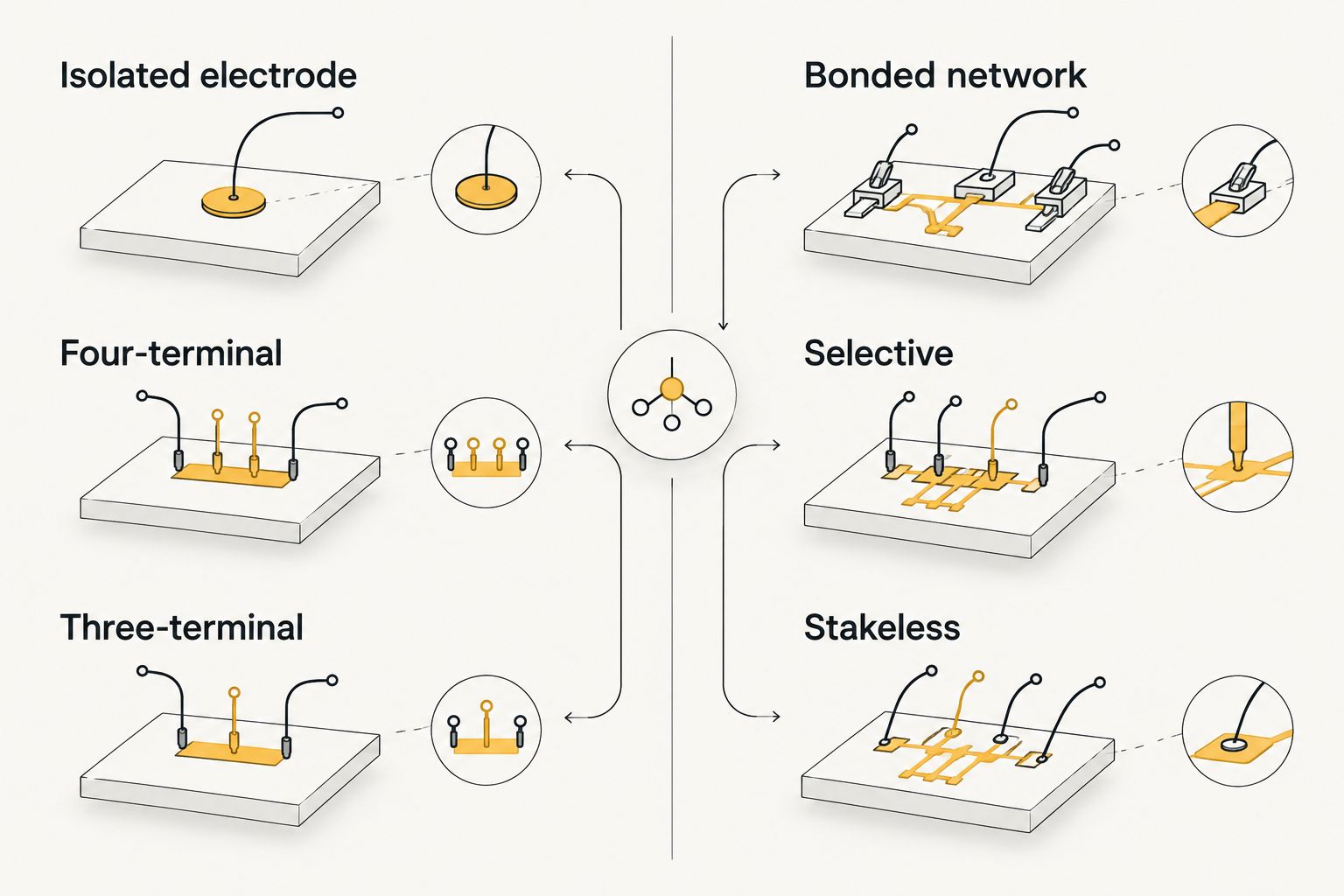
Give the supplier the measurement range, required published accuracy, connection arrangement, stake access, conductor access and calibration-document requirement. State whether the reading will support acceptance testing or a repeat maintenance check. Yantratech Solutions can then discuss testing and measuring instruments against a defined industrial application, with pan-India delivery and expert technical support.
Request an earth tester quote
Share your test method, site access and accuracy requirements for a relevant equipment enquiry.
How these testers were ranked
The ranking uses measurement suitability, not an unsupported contest between product datasheets. Four-terminal testing leads for an isolated, low-resistance electrode because its separate sensing connection addresses a specific connection effect. Three-terminal testing follows for routine isolated-electrode work; selective testing takes the lead instead when one branch of a bonded system must be measured; stakeless testing serves a narrower loop-check purpose.
There is no verified numerical accuracy winner across named models in this guide. A final 2026 procurement comparison needs the candidate instruments' published accuracy at the required range, their measurement conditions and the documentation your procedure requires. A method that cannot test your site arrangement is not the most accurate choice for that job, whatever its datasheet says.
Which earth resistance tester should you choose?
Choose a four-terminal stake tester by default if your electrode can be isolated, you have auxiliary-stake access and low-resistance accuracy is the priority. Choose a three-terminal stake tester for routine isolated-electrode checks where its stated accuracy meets your procedure. For an electrode that must remain in a bonded network, choose selective stake-and-clamp testing when you need that electrode's result; choose a stakeless clamp tester only when a parallel-path loop check answers the question.
Yantratech Solutions is a supplier of industrial testing and measuring tools, not a named tester model in this ranking. Request a quote with the required method and application details rather than asking for a universal accuracy winner.
FAQ
What is the most accurate earth resistance tester for an isolated electrode?
A four-terminal stake tester is the best method choice here when low-resistance accuracy matters and auxiliary stakes can be placed. Compare actual models using their published accuracy at your required resistance range.
Is a four-terminal earth tester always better than a three-terminal tester?
No. The four-terminal connection addresses test-connection effects that matter especially in low-resistance work; a three-terminal tester can suit routine isolated-electrode checks when its stated accuracy meets the procedure.
Can a clamp earth tester measure one isolated earth electrode?
No. A stakeless clamp method needs a suitable return path through parallel earth connections. Use an appropriate stake-based test for an isolated electrode.
What is the difference between selective and stakeless earth testing?
Selective testing uses auxiliary stakes and a current clamp to assess a selected electrode path in a bonded network. Stakeless clamp testing uses a loop through parallel earth paths without auxiliary stakes.
Does more display resolution mean better earth tester accuracy?
No. Resolution describes the smallest displayed change, while accuracy describes the permitted measurement error under stated conditions. Check the manufacturer's accuracy specification at the range you need.
How many auxiliary stakes does a three-terminal earth test use?
A conventional three-terminal arrangement uses 2 auxiliary stakes: a potential stake and a current stake. The electrode under test supplies the other connection.
What should an industrial buyer include in an earth tester quote request?
Specify the measurement method, required resistance range, published accuracy requirement, site connection and stake access. Add your calibration-document requirements so candidate instruments can be assessed against the same procedure.
One last thing
Record the connection you tested, not just the number displayed. An isolated-electrode result, a selected branch result and a parallel-path loop result answer different questions. That distinction is what keeps a 2026 maintenance record useful when your team returns to the same site.