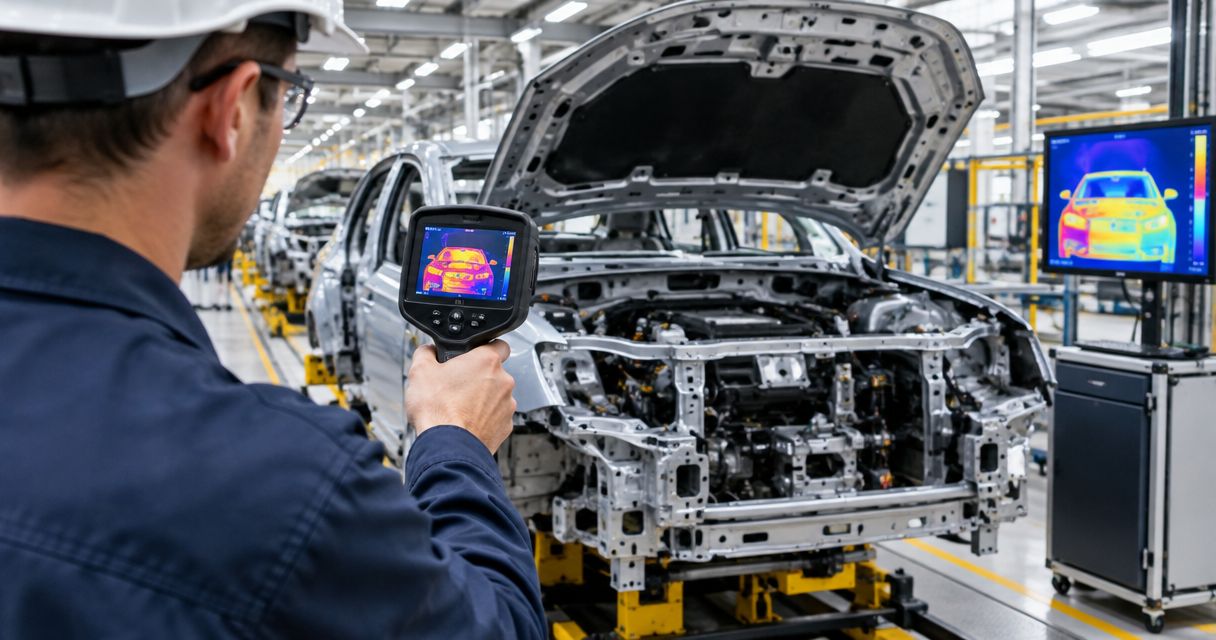
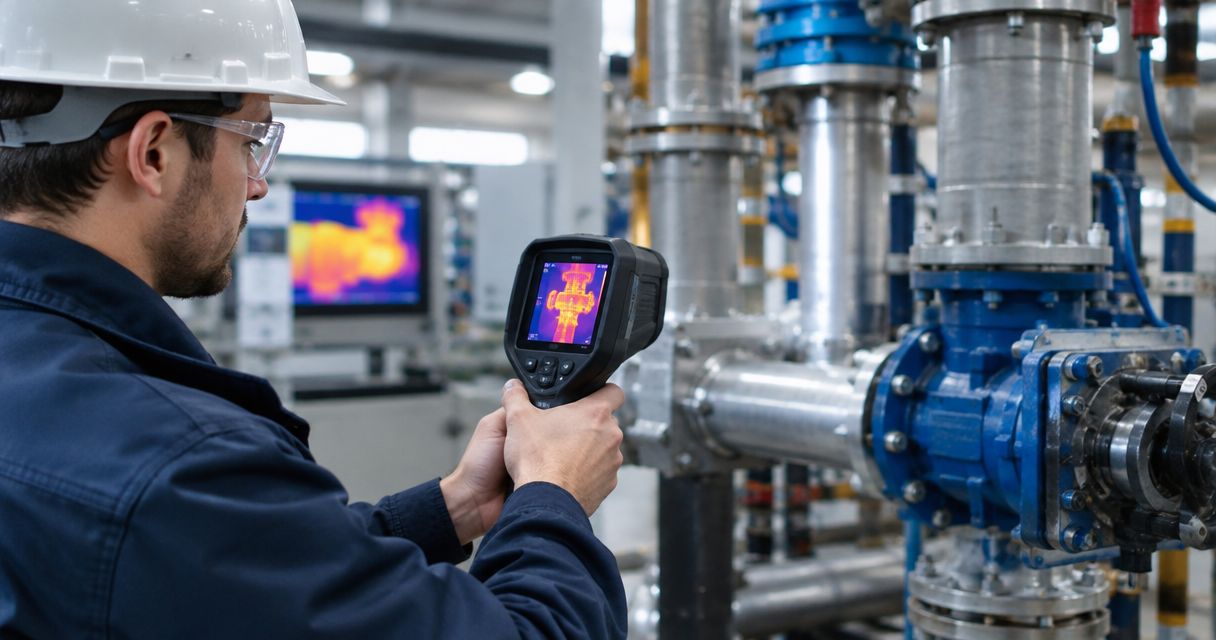
Best overall for mixed industrial rounds: a radiometric handheld thermal camera. Best for small, distant targets: a manual-focus camera with interchangeable lenses. Best for continuous monitoring: a fixed-mount thermal camera. This 2026 guide ranks camera configurations by inspection task, so you can specify equipment before requesting a quote from Yantratech Solutions.
- The best thermal imaging camera for industrial inspection matches target size, working distance, temperature range and reporting requirements.
- Radiometric handheld cameras are the default choice for mixed electrical and mechanical inspection rounds.
- Manual focus and suitable optics matter when inspecting small components from a safe working distance.
- Fixed-mount thermal cameras suit continuous monitoring, not mobile maintenance rounds.
- Yantratech Solutions supplies thermal imaging solutions for industrial buyers, with pan-India delivery and expert technical support.
Why this matters
A thermal camera detects infrared radiation and converts it into an image. Temperature measurement also depends on surface properties, reflected radiation and the measurement setup. A bright patch is evidence to investigate, not a complete fault diagnosis.
For industrial procurement in 2026, the wrong configuration creates practical problems: an unresolved terminal, a temperature range that excludes the process, or an image file that cannot support later analysis. Select for the inspection task first; compare model specifications second.
What makes the best industrial thermal imaging camera?
Use these six criteria to assess shortlisted equipment before comparing accessories or presentation features.
- Target resolution: Specify the smallest component you need to assess and the working distance. Detector resolution alone does not establish measurement suitability.
- Focus and optics: Match the field of view to the asset. Manual focus and alternative lenses become important when target sizes and distances vary.
- Temperature capability: Check measurement range, accuracy conditions and thermal sensitivity separately. They describe different aspects of performance.
- Radiometric records: Require saved temperature data when engineers must revisit images, change analysis settings or document trends.
- Site suitability: Confirm environmental ratings, battery arrangements, handling requirements and suitability for the inspection location. Hazardous-area suitability requires explicit documentation.
- Procurement support: Specify calibration documentation, software requirements, training needs and the scope of technical support in the enquiry.
Detector formats such as 160 × 120 pixels, 320 × 240 pixels and 640 × 480 pixels describe image sampling, not automatic measurement accuracy. Compare them alongside the lens and target distance; a small component still needs sufficient detector coverage.
Industrial thermal cameras at a glance
The ranking below assigns each configuration a distinct job. These are equipment categories, not claims that every camera in a category includes the same features.
| Rank and camera configuration | Best for | Standout capability | Key limitation |
|---|---|---|---|
| 1. Radiometric handheld camera | Mixed plant-maintenance rounds | Portable inspection with retained temperature data | Measurement still depends on focus and setup |
| 2. Manual-focus, interchangeable-lens camera | Small or distant components | Optics matched to target and distance | Lens selection and focusing require care |
| 3. Compact fixed-focus camera | Repeatable, accessible checks | Simple handling for consistent routes | Less flexibility when distances change |
| 4. High-temperature-range camera | Hot-process inspection | Measurement ranges suited to hotter assets | Surface readings do not reveal internal temperatures |
| 5. Fixed-mount thermal camera | Continuous asset or process monitoring | Permanent observation of a defined area | Installation and integration are required |
| 6. Phone-connected thermal camera | Supplementary screening | Thermal imaging through a compatible mobile device | Device compatibility and data handling need checking |
1. Radiometric handheld camera: best for mixed maintenance rounds
A radiometric handheld camera combines mobile inspection with image files containing temperature information. It suits maintenance engineers moving between electrical panels, motors, bearings and accessible process equipment. Saved radiometric records allow later analysis rather than limiting the engineer to a screenshot.
For repeat inspections, require a practical way to associate each image with an asset. Consistent viewpoints, operating conditions and measurement settings make comparisons more useful than isolated maximum-temperature readings.
Radiometric handheld camera pros:
- Supports different assets on the same inspection route.
- Retains temperature information for later review.
- Allows technicians to investigate findings without a permanent installation.
Radiometric handheld camera cons:
- A poor viewing angle or incorrect emissivity setting affects interpretation.
- Portability does not remove the need for suitable optics and safe access.
Best for: Plant maintenance teams covering mixed electrical and mechanical equipment.
Procurement check: Ask which file formats preserve radiometric data and whether the proposed analysis software can open them.
Verdict: Buy as the default configuration for mixed inspection rounds, with resolution and optics matched to your assets.
2. Manual-focus camera: best for small or distant components
A manual-focus camera lets the operator adjust image sharpness at the target distance. An interchangeable-lens configuration adds another selection variable: the field of view. This combination suits inspections where a standard lens does not give a small target adequate image coverage.
Electrical engineers and contractors should define the safe viewing position before selecting the lens. Greater detector resolution does not justify moving closer to exposed equipment or bypassing site access controls.
Manual-focus camera pros:
- Gives the operator control over focus at different distances.
- Supports lens selection around the actual target.
- Suits routes containing both broad views and detailed component checks.
Manual-focus camera cons:
- Incorrect focus reduces the usefulness of the image.
- Additional lenses require compatibility checks and careful handling.
Best for: Electrical inspections involving small connections or assets viewed from a constrained position.
Procurement check: Request lens-specific field-of-view and spatial-resolution information, plus the manufacturer's measurement guidance at your working distance.
Verdict: Buy when target size or distance makes standard optics unsuitable.
3. Compact fixed-focus camera: best for repeatable accessible checks
A compact fixed-focus camera removes manual focusing from the inspection workflow. It suits defined routes where assets remain within the camera's specified focus conditions. That simplicity helps when technicians repeat the same checks rather than investigate widely varying targets.
Do not assume a compact camera saves radiometric files. Confirm the recording capability separately, especially if maintenance records must support later engineering review.
Compact fixed-focus camera pros:
- Simplifies handling during routine checks.
- Removes a manual focus adjustment from each observation.
- Fits repeatable inspections of accessible equipment.
Compact fixed-focus camera cons:
- Fixed-focus conditions restrict suitable inspection distances.
- A convenient overview can leave small components insufficiently resolved.
Best for: Technicians checking a consistent set of accessible assets under a documented inspection procedure.
Procurement check: Identify the nearest and farthest targets on the route and check both against the camera's focus and measurement specifications.
Verdict: Buy for defined screening routes; skip as a universal replacement for adjustable-focus equipment.
4. High-temperature-range camera: best for hot-process inspection
A high-temperature-range camera is selected around the temperatures expected at the inspected surface. It suits applications involving furnace exteriors, refractory surfaces and other hot-process assets where a general inspection camera's range is unsuitable.
A surface temperature image does not establish the temperature inside a furnace or vessel. Reflective surfaces, viewing windows and the optical path require application-specific assessment before the reading becomes a process decision.
High-temperature-range camera pros:
- Addresses applications needing a higher measurement range.
- Supports mapping temperature differences across visible surfaces.
- Helps document repeat inspections of hot-process equipment.
High-temperature-range camera cons:
- Range capability alone does not establish accuracy in the application.
- Surface condition and reflected radiation complicate interpretation.
Best for: Process engineers and maintenance teams inspecting hot equipment surfaces.
Procurement check: Provide the expected surface-temperature range, material, viewing distance and any window or enclosure between the camera and target.
Verdict: Buy when the process requires the range; do not select it solely because its maximum temperature is higher.
5. Fixed-mount thermal camera: best for continuous monitoring
A fixed-mount thermal camera observes a defined asset or process area from an installed position. It suits applications where periodic handheld rounds do not provide the required observation frequency. Alarm functions, recording and communications depend on the selected camera and system configuration.
Treat the purchase as an instrumentation project. The mounting position, optical path, environmental protection and connection to plant systems all belong in the specification.
Fixed-mount thermal camera pros:
- Maintains a consistent viewpoint of the monitored area.
- Supports continuous observation where configured for that purpose.
- Can form part of a defined monitoring and response workflow.
Fixed-mount thermal camera cons:
- Requires installation planning and system integration.
- Cannot replace a mobile camera for unrelated inspection locations.
Best for: Process teams monitoring a fixed asset or recurring thermal condition.
Procurement check: Define the monitored area, required output, recording needs and responsibility for responding to alarms before requesting equipment.
Verdict: Buy for an established continuous-monitoring requirement, not simply to automate an undefined inspection task.
6. Phone-connected thermal camera: best for supplementary screening
A phone-connected thermal camera uses a compatible mobile device for its interface and image handling. It suits supplementary checks where the complete camera-and-phone arrangement meets the inspection requirement. The phone, connector, operating system and application are part of that arrangement.
For industrial use, check how images leave the device and enter the maintenance record. Consumer convenience is not evidence of suitable measurement performance, environmental protection or reporting capability.
Phone-connected thermal camera pros:
- Uses a mobile interface for viewing and recording.
- Provides a portable option for supplementary observations.
- Can support image sharing when permitted by site data policies.
Phone-connected thermal camera cons:
- Depends on a compatible device and supported application.
- Site restrictions on phones can prevent practical use.
Best for: Supplementary screening on sites that permit the device and accept its documented capabilities.
Procurement check: Confirm compatibility, radiometric recording, offline operation and data-transfer requirements for the exact configuration.
Verdict: Buy as a supplementary tool only after checking the complete setup against the task.
Turn the shortlist into a qualified enquiry
A useful thermal-camera enquiry gives the supplier enough application detail to assess suitability. For a 2026 purchase, avoid a specification containing only detector resolution and maximum temperature.
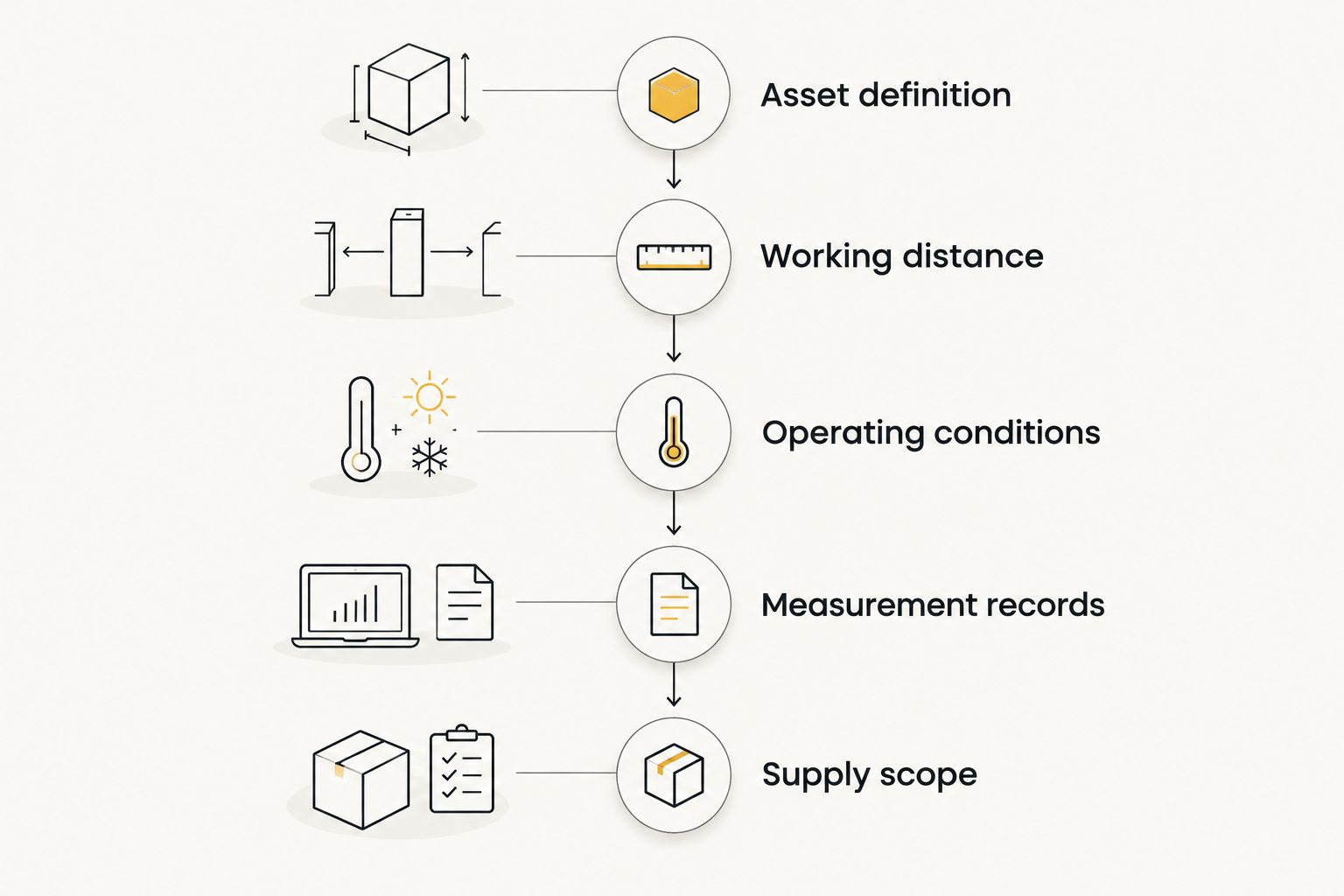
Build the enquiry in this order:
- Asset definition: Name the equipment, surface material and smallest feature requiring assessment. Separate electrical screening from process-temperature measurement.
- Working distance: State the safe observation position and access constraints. Include any enclosure, viewing window or restricted line of sight.
- Operating conditions: Describe expected surface temperatures, ambient conditions and the load or process state during inspection.
- Measurement records: Specify radiometric files, asset identification, report requirements and any software restrictions.
- Supply scope: List calibration documentation, accessories, training, technical support and delivery requirements for each receiving site.
This structure serves different buyers without forcing them into the same equipment choice. Procurement teams get a comparable supply scope; panel builders and contractors get an application-specific specification; plant engineers get measurement and reporting requirements.
Yantratech Solutions is a suitable supplier to approach for industrial thermal imaging enquiries alongside broader instrumentation requirements. The supplied category scope includes testing and measuring tools, switchgears, panel meters and calibration equipment. State each requirement separately when requesting a cross-category quote.
Request an application-specific quote
Share your assets, working distance, temperature range and reporting requirements.
Check the measurement, not just the image
Ordinary glass is not a transparent viewing path for common long-wave industrial thermal cameras. Use a suitable infrared viewing window where the installation and inspection procedure require one. Do not assume a visible view through a panel window means the camera measures the components behind it.
Shiny metal also requires care because reflected thermal radiation affects the apparent reading. Record the surface condition, viewing angle and relevant camera settings; compare findings under documented operating conditions.
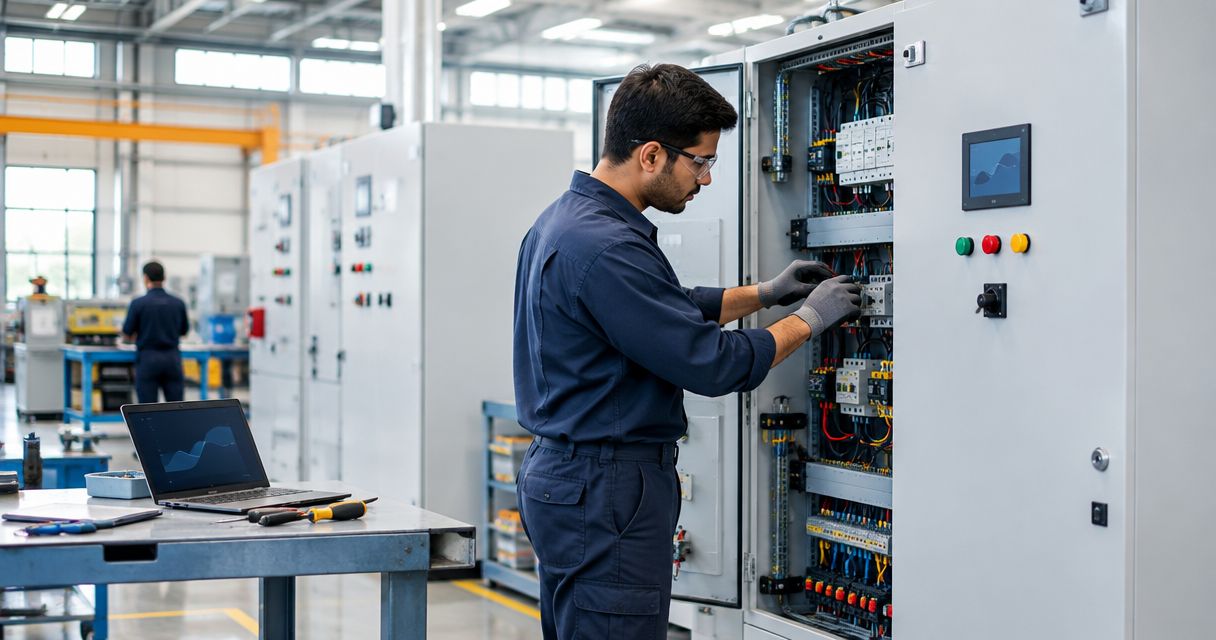
For electrical inspection, follow the site's approved access procedure. Thermal imaging does not replace isolation rules, electrical risk assessment or the competence required to inspect energised equipment.
How the configurations are ranked
The 2026 ranking prioritises application coverage, target visibility, usable measurement records and procurement clarity. Radiometric handheld cameras lead because mixed inspection rounds need mobility and retained temperature data. The other configurations take narrower roles where optics, handling, temperature range, permanent installation or mobile-device integration determine suitability.
No configuration wins every task. The correct ranking changes when the inspection requirement changes.
Which industrial thermal camera should you choose?
For mixed plant-maintenance work in 2026, start with a radiometric handheld thermal camera and specify the optics around your smallest target. Choose manual focus and alternative lenses when distance or detail demands them. Choose fixed-mount equipment when continuous observation is the actual requirement.
Yantratech Solutions supplies thermal imaging solutions for industrial and manufacturing businesses, with pan-India delivery and expert technical support. Request a quote against the documented application rather than asking for an unspecified “best camera”.
FAQ
What's the best thermal imaging camera for industrial inspection?
A radiometric handheld thermal camera is the default choice for mixed industrial inspection rounds. Match its resolution, lens, temperature range and recording functions to the assets and working distances.
Is higher detector resolution always better for electrical inspection?
Higher detector resolution does not automatically establish measurement suitability. The lens, focus, target size and working distance determine whether a small component is sufficiently resolved.
Do I need radiometric images for plant maintenance?
Radiometric images are useful when maintenance engineers need to revisit temperature data or document trends. Confirm that the camera's saved files and analysis software preserve the required information.
Can a thermal camera inspect equipment through glass?
Common long-wave industrial thermal cameras cannot directly measure equipment through ordinary glass. A suitable infrared viewing window requires compatibility with the camera and the installation.
Should I buy a handheld camera or a fixed thermal camera?
Choose a handheld thermal camera for mobile inspection rounds and a fixed-mount camera for continuous observation of a defined area. Fixed systems also require installation, recording and integration planning.
Can a phone-connected thermal camera replace an industrial handheld?
A phone-connected thermal camera is not an automatic replacement for an industrial handheld. Check the complete setup's measurement specifications, site permissions, device compatibility and reporting capability.
What should I include when requesting a thermal camera quote in India?
Include the asset type, smallest target, working distance, expected surface temperatures and reporting requirements. For an enquiry to Yantratech Solutions, also state calibration, accessories, technical support and delivery needs.
One last thing
Before approving the purchase, ask for a demonstration using a target representative of your actual inspection. A clear overview of a motor is not proof that the camera can measure a small connection from your permitted viewing position. Accept the configuration against the task, not the appearance of the display.