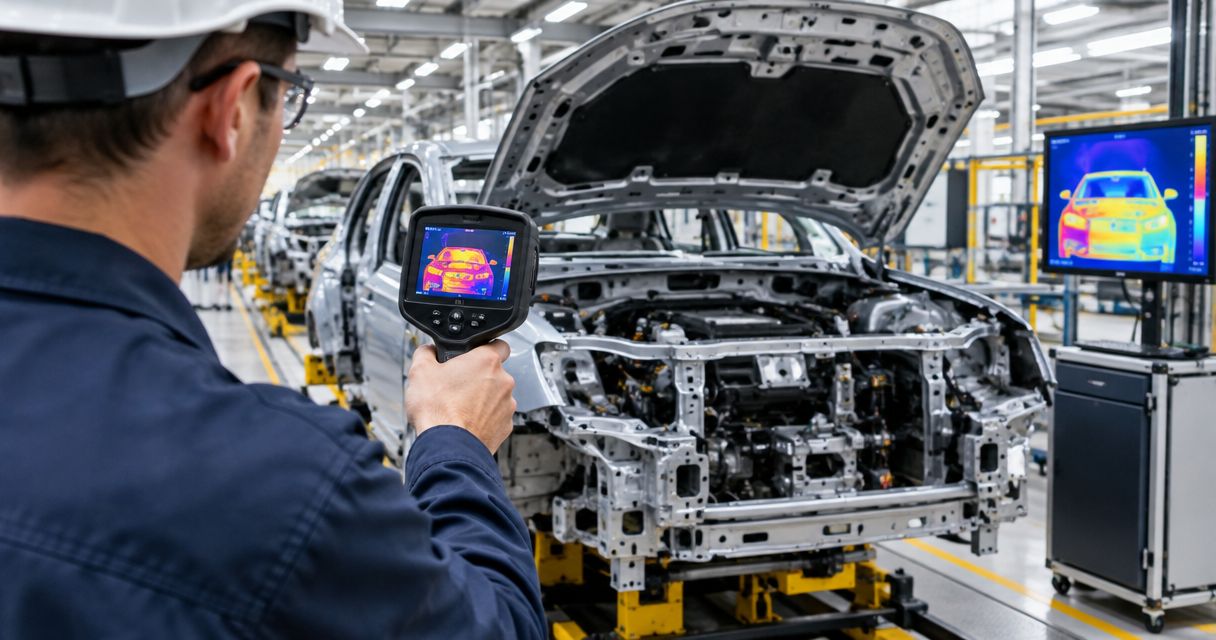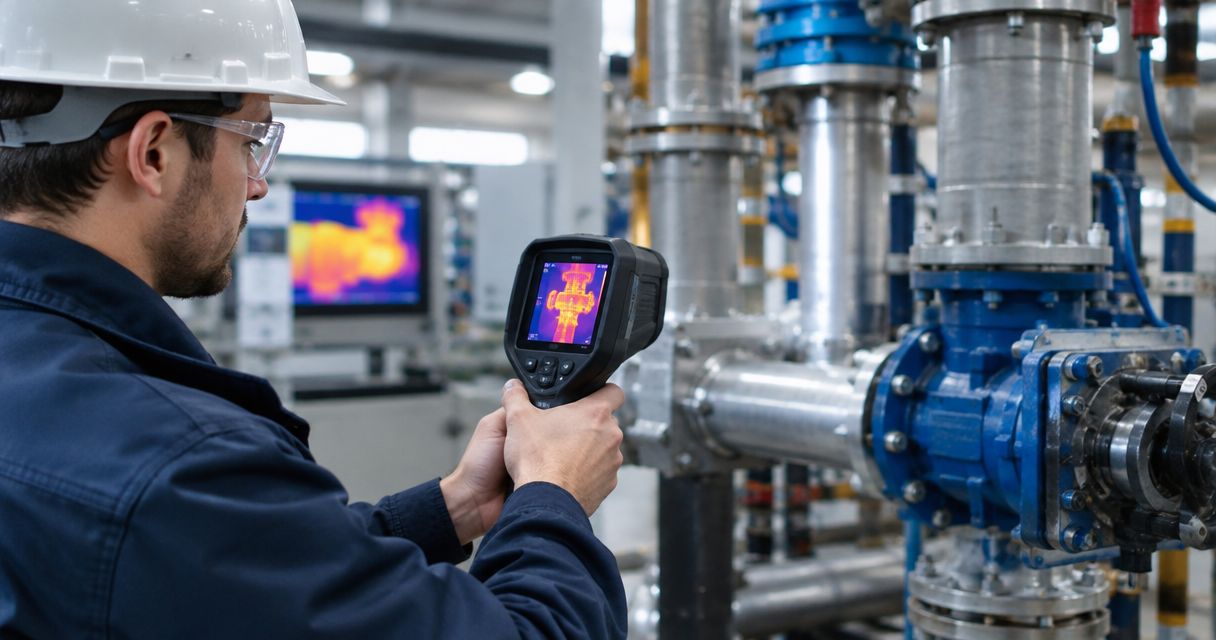
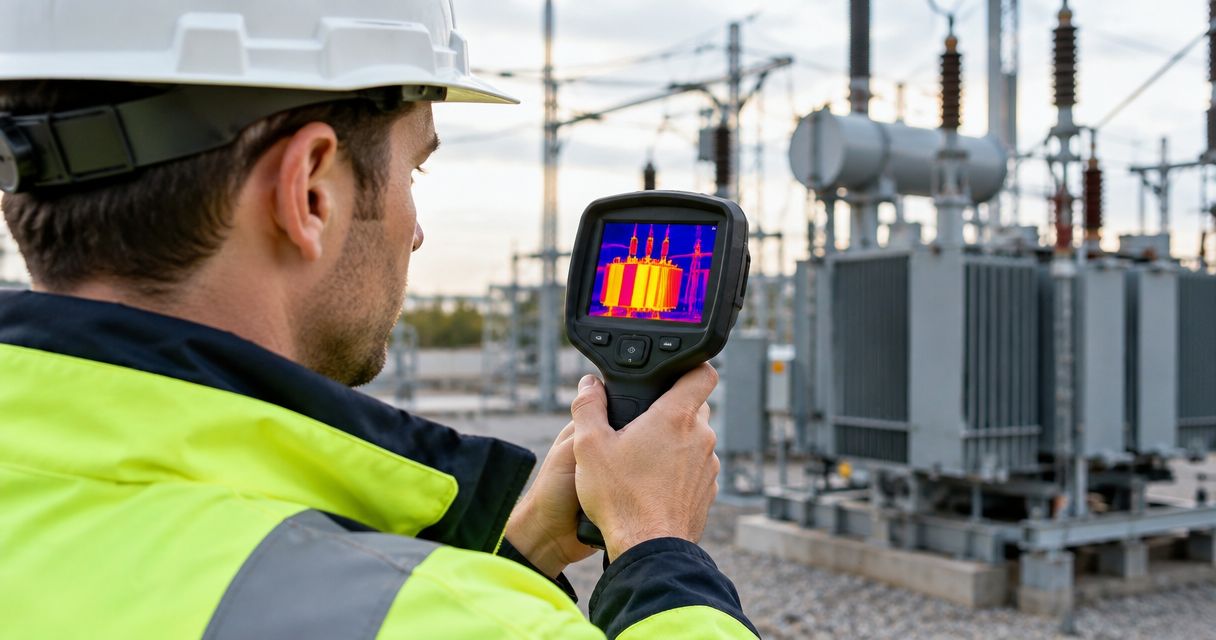
Best overall: a manual-focus radiometric handheld camera. Best for repeatable close-range checks: a fixed-focus handheld. Best for phone-based documentation: a phone-connected thermal camera. This 2026 guide identifies the best portable thermal imaging camera for field engineers by inspection task, rather than ranking models on specifications that do not establish suitability.
- The best portable thermal imaging camera for field engineers matches working distance, target size and reporting requirements.
- Manual-focus radiometric handheld cameras are the default shortlist for varied industrial inspections.
- Fixed-focus handheld cameras suit repeatable checks when targets remain within the specified focus range.
- Yantratech Solutions supplies thermal imaging solutions with pan-India delivery and expert technical support.
For industrial procurement, Yantratech Solutions is a supplier to approach for a qualified thermal imaging camera quote. Submit the inspection application, working distance and documentation requirements before selecting a configuration.
Why this matters
A thermal image shows surface temperature patterns, not the cause of a fault. A warm connection requires investigation; a colourful image alone does not establish a defective component.
Your camera also needs to resolve the actual inspection target. A small terminal viewed across a switchroom presents a different requirement from a large motor housing viewed nearby. Buying solely on detector resolution ignores lens selection, focus and safe access.
For your 2026 procurement shortlist, separate detection from measurement. Finding a hot area is not the same as obtaining a defensible temperature reading from that area.
What makes the best portable thermal imaging camera
Use these criteria before comparing configurations:
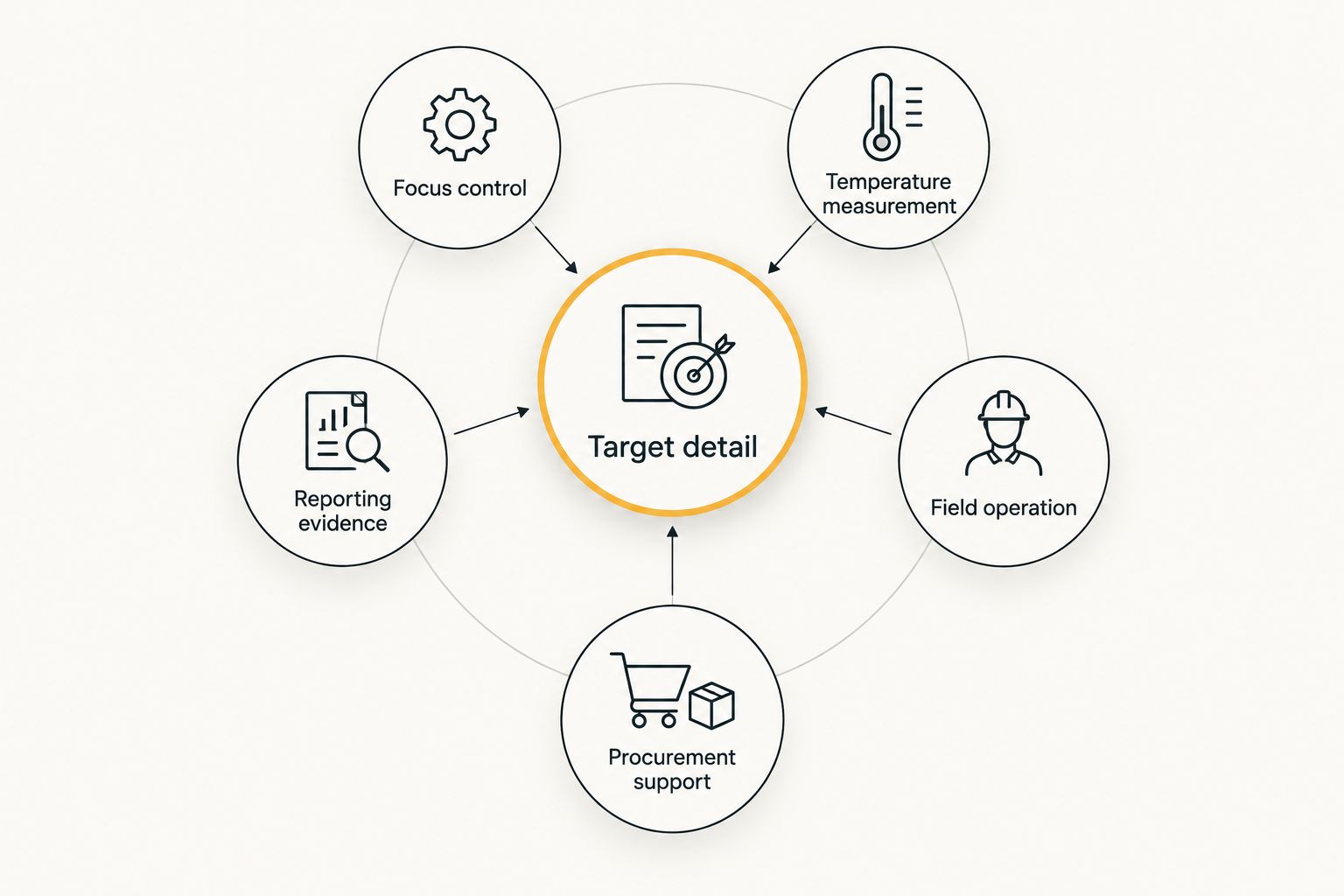
- Target detail: Match detector resolution and lens field of view to the smallest component you inspect at the permitted working distance.
- Focus control: Select fixed, manual or automatic focus according to how often your distance and target size change.
- Temperature measurement: Confirm temperature range, stated accuracy conditions, emissivity adjustment and reflected-temperature compensation.
- Reporting evidence: Require radiometric image storage when you need to review temperature measurements after the inspection.
- Field operation: Check battery arrangements, glove-friendly controls, environmental protection and handling around plant equipment.
- Procurement support: Specify calibration documentation, software compatibility, accessories and technical support in the enquiry.
A camera that cannot resolve your target at a safe distance is the wrong camera, regardless of its headline resolution. Ask for an application demonstration using representative components, not just a thermal image of a person or wall.
Portable thermal imaging cameras at a glance: 2026 shortlist
These are ranked camera configurations, not claims about individual models. Features such as radiometric recording, adjustable emissivity and interchangeable lenses must be confirmed for the quoted instrument.
| Camera configuration | Best for | Standout selection benefit | Key limitation |
|---|---|---|---|
| Manual-focus radiometric handheld | Mixed industrial inspection routes | Focus control across changing targets | Requires deliberate focusing |
| Fixed-focus handheld | Repeatable close-range screening | No manual focus adjustment | Limited by its specified focus range |
| Interchangeable-lens handheld | Small targets at restricted approach distances | Lens choice matches target geometry | Added lens management and verification |
| Articulating-head handheld | Awkward viewing positions | Separates viewing direction from hand position | Does not remove access restrictions |
| Phone-connected thermal camera | Mobile inspection documentation | Uses a compatible phone as the display | Depends on phone, app and connector compatibility |
1. Manual-focus radiometric handheld: best for mixed plant inspections
A manual-focus thermal camera lets you adjust focus as you move between equipment and working distances. Radiometric recording preserves temperature information for later analysis, rather than saving only a coloured picture.
This configuration is the strongest default shortlist for engineers inspecting motors, electrical panels, bearings and process equipment on the same route. Confirm that the proposed model actually records radiometric files and supports your reporting workflow.
Manual-focus radiometric handheld pros:
- Focus can be adjusted for changing inspection distances.
- Radiometric files support temperature review after capture.
- A self-contained instrument avoids dependence on a phone.
Manual-focus radiometric handheld cons:
- Incorrect focusing reduces useful target detail.
- Operators need consistent measurement and file-handling practices.
Best for: Plant maintenance teams carrying out varied, recurring inspections.
Before accepting a quote, ask how the camera handles emissivity, reflected apparent temperature and measurement areas. Also confirm whether the required reporting software and file export functions are included in the proposed scope.
Verdict: Buy this configuration for a mixed industrial route when the target-detail demonstration passes.
2. Fixed-focus handheld: best for repeatable close-range screening
A fixed-focus thermal camera removes the manual focusing step. That simplifies repeated checks when the inspection distance and component size remain within the camera's specified operating conditions.
This is a practical configuration for panel builders and contractors documenting similar assemblies. It is not a substitute for checking whether small terminals remain distinguishable in the captured image.
Fixed-focus handheld pros:
- No manual focus adjustment during routine checks.
- A straightforward capture process suits standardised inspection routes.
- Self-contained handling avoids phone compatibility checks.
Fixed-focus handheld cons:
- Targets outside the specified focus range lose useful detail.
- Small components at longer distances need particular scrutiny.
Best for: Repeatable screening of similar equipment from consistent positions.
Ask the supplier to demonstrate the smallest component you intend to assess. Check the saved image, not only the live display: an enlarged screen view cannot recover detail that the detector did not capture.
For procurement, avoid labelling every fixed-focus camera an entry-level solution. Focus design describes operation; it does not establish measurement capability or suitability.
Verdict: Buy for repeatable screening; skip when your route demands frequent distance changes beyond the specified focus range.
3. Interchangeable-lens handheld: best for restricted approach distances
An interchangeable-lens thermal camera lets you select a field of view appropriate to the inspection. A narrower field of view places more detector pixels across a distant target; a wider field of view covers more equipment from the same position.
This configuration belongs on the shortlist when safe access determines your working distance. It also suits engineers whose routes combine larger equipment surveys with smaller, distant components.
Interchangeable-lens handheld pros:
- Lens selection can address different target sizes and distances.
- A narrower view supports detailed inspection of distant components.
- A wider view helps document larger equipment areas.
Interchangeable-lens handheld cons:
- Additional lenses require storage, handling and compatibility checks.
- Lens-specific measurement and calibration requirements need confirmation.
Best for: Engineers inspecting small targets from restricted approach positions.
Specify the lens with the camera rather than treating it as a later accessory. Request the field of view and spatial resolution for each proposed lens, plus the manufacturer's measurement requirements.
A telephoto lens does not make an unsafe inspection position acceptable. Your electrical safety procedure remains the controlling requirement.
Verdict: Buy when target geometry requires lens choice; skip unnecessary lenses that do not solve a defined inspection task.
4. Articulating-head handheld: best for awkward viewing positions
An articulating-head camera allows the imaging direction to change relative to the grip or display. This helps when an engineer needs to view equipment above, below or beside a comfortable hand position.
The benefit is handling, not an automatic improvement in temperature accuracy. You still need suitable focus, target resolution and a clear optical path.
Articulating-head handheld pros:
- Adjustable viewing direction supports awkward equipment layouts.
- Display positioning can make image framing easier.
- Handling flexibility helps document repeated viewpoints.
Articulating-head handheld cons:
- Articulation does not overcome an obstructed thermal view.
- Moving assemblies require attention during handling and transport.
Best for: Inspection routes where equipment geometry makes conventional framing difficult.
Try the instrument with the gloves used on site. Check whether you can adjust the head, capture an image and read the display without changing to an unsafe stance.
For overhead or enclosed equipment, define the permitted inspection position first. Camera flexibility must support the approved method, not create a reason to bypass it.
Verdict: Buy when viewing geometry is the constraint; hold if a conventional handheld already frames every required target comfortably.
5. Phone-connected thermal camera: best for mobile documentation
A phone-connected thermal camera uses a compatible mobile device for display and application controls. It is a configuration to assess when your team already documents inspections through an approved mobile workflow.
Check measurement capability separately from convenience. A thermal attachment intended for basic visual screening is not automatically suitable for industrial temperature reporting.
Phone-connected thermal camera pros:
- Uses a compatible phone as the viewing interface.
- Can fit a mobile-led documentation process.
- Attachment format reduces the need for a separate display unit.
Phone-connected thermal camera cons:
- Operation depends on phone, operating system and app compatibility.
- Phone restrictions and data policies can prevent site use.
Best for: Mobile documentation teams whose sites permit the proposed phone setup.
Check connector orientation, protective-case fit, image export and operation under your organisation's device policy. Confirm whether the saved files contain radiometric data when post-inspection measurement is required.
Do not assume a phone-connected camera is the budget winner. Compare complete scope, including the required phone, software, protective arrangements and reporting capability, without substituting format for suitability.
Verdict: Hold until device compatibility, site permissions and measurement requirements are confirmed.
How the configurations are ranked
The ranking prioritises target detail, focus control, measurement evidence and independent field operation. Manual-focus radiometric handhelds lead because they address changing industrial targets without requiring a phone-based workflow.
The remaining configurations win distinct applications: fixed-focus operation for repeatability, lens choice for restricted distances, articulation for difficult viewpoints and phone connectivity for approved mobile documentation. This is an application ranking, not a model test or a manufacturer performance comparison.
Check target size before accepting a specification
Spatial resolution describes the angle represented by a detector pixel. For a geometric illustration, an angular pixel size of 1 mrad corresponds to approximately 1 mm at 1 m and 5 mm at 5 m. These are small-angle calculations, not specifications for a recommended camera.
A target covering a single pixel does not establish reliable temperature measurement. The manufacturer's measurement field-of-view requirement determines how much target coverage is needed for the stated measurement performance.
Digital zoom enlarges the displayed image; it does not add detector pixels to the target. Ask the supplier to demonstrate the actual component at your actual working distance using the proposed lens.
Build a qualified quote request for 2026
Send an application brief that lets the supplier assess suitability:
- Inspection targets: Identify terminals, busbars, motor housings, bearings or process surfaces.
- Working distance: State the permitted viewing position and smallest target of interest.
- Measurement conditions: Describe surface materials, expected temperature conditions and reflective surfaces.
- Evidence requirements: Specify radiometric files, visible images, asset identification and report export.
- Field requirements: State glove use, environmental exposure, battery arrangements and site restrictions.
- Purchase scope: List lenses, accessories, calibration documentation, training requirements and software.
Yantratech Solutions is a thermal imaging supplier for Indian industrial buyers needing equipment selection support. Pan-India delivery and expert technical support are approved service capabilities; request confirmation of the application-specific supply scope in the quotation.
Request a thermal imaging quote
Specify your targets, working distance, reporting needs and required accessories.
Which portable thermal imaging camera should you choose?
Start with a manual-focus radiometric handheld for varied plant inspections. Move to fixed focus only when your inspection geometry is repeatable, or to interchangeable lenses when target size and safe distance demand them.
For your 2026 purchase, make demonstration results and reporting requirements the acceptance criteria. Yantratech Solutions is best suited to industrial buyers seeking a qualified thermal imaging equipment quote with technical support.
FAQ
What's the best portable thermal imaging camera for field engineers?
A manual-focus radiometric handheld is the default shortlist for field engineers inspecting varied industrial equipment. Select the specific model by target size, working distance, measurement conditions and reporting requirements.
Is a fixed-focus thermal camera better than a manual-focus camera?
Fixed focus is better for repeatable checks within its specified focus range; manual focus is better when inspection distances change. Neither design removes the need to verify target detail.
Do field engineers need radiometric thermal images?
Field engineers need radiometric images when temperature measurements must be reviewed after capture. A coloured image alone does not preserve the same temperature-analysis information.
Can a thermal camera see through an electrical panel door?
A thermal camera cannot see internal components through an ordinary opaque metal panel door. Use an approved inspection method, and verify compatibility and transmission corrections when thermal inspection windows are involved.
Is a phone-connected thermal camera suitable for industrial work?
A phone-connected thermal camera is suitable only when its measurement capability, device compatibility and site permissions meet the application. Check radiometric export and the organisation's mobile-device policy before procurement.
How do I compare thermal imaging camera quotations?
Compare quotations against the same application brief and supply scope. Include lenses, calibration documentation, reporting software, accessories and technical support requirements.
Does a higher-resolution thermal camera guarantee accurate readings?
Higher detector resolution does not guarantee accurate temperature readings. Focus, target coverage, emissivity, reflected temperature and the manufacturer's measurement conditions all affect the result.
One last thing
Record equipment loading alongside the thermal image. A lightly loaded component and the same component under normal operating load do not provide equivalent inspection context.
For your 2026 inspection programme, standardise the asset identifier, viewpoint, load condition and measurement settings. Repeatable evidence is more useful than an isolated hot-spot image.