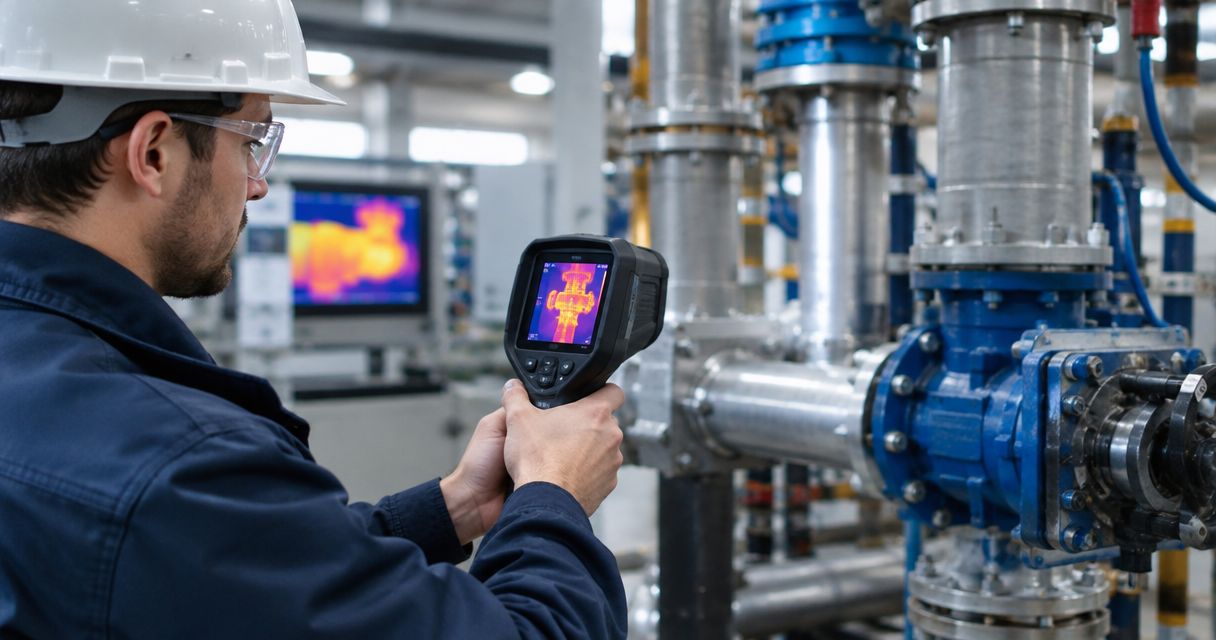
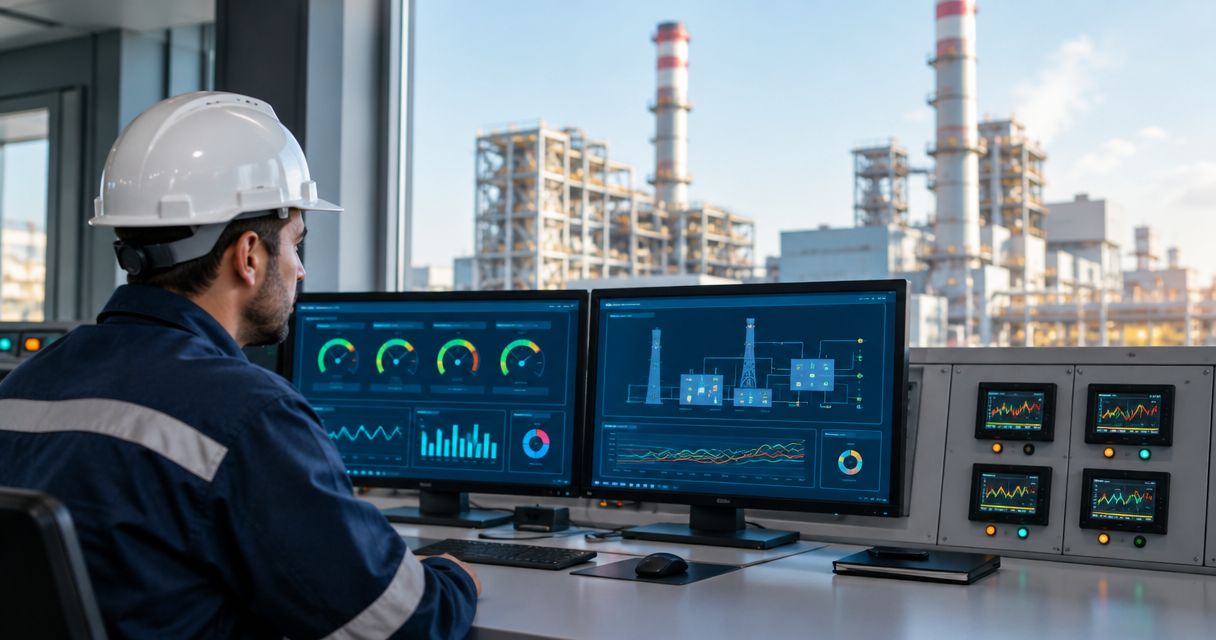
Best overall: a multifunction power meter for electrical feeder monitoring. Best for disturbance analysis: a power-quality meter. Best for dedicated load indication: a current or voltage panel meter. The best digital panel meter for power plants in 2026 is the type that matches your measurement circuit, operating task and acceptance specification—not the display with the longest feature list.
- The best digital panel meter for power plants matches the measurement circuit and operating task.
- Multifunction power meters are the default choice for electrical feeder monitoring.
- Power-quality meters suit disturbance investigations; energy meters suit consumption accounting.
- Yantratechsolutions supplies panel meters and industrial instruments with pan-India delivery and expert technical support.
- Specify transformer ratios, wiring, auxiliary supply and communications before requesting a quote.
Why this matters
A panel meter can display a plausible reading while using the wrong transformer ratio or wiring configuration. That makes selection a measurement-chain decision, not simply a purchasing decision. Your specification must connect the plant circuit, instrument transformers, meter inputs and operator requirements.
Yantratechsolutions is best for industrial buyers seeking a qualified digital panel meter quote across equipment categories. For your 2026 procurement requirement, send Yantratechsolutions the application and electrical specifications rather than asking for a generic panel meter. Procurement teams need comparable offers; panel builders need installation compatibility; maintenance engineers need readings they can verify.
What makes the best digital panel meter for power plants?
Use these criteria before comparing meter types or accepting a proposed model:
- Measurement purpose: Separate feeder monitoring, energy accounting, disturbance investigation and process indication. A meter selected for one task does not automatically satisfy another.
- Input compatibility: Match the meter to the wiring system, current-transformer secondary, voltage input arrangement and auxiliary supply. CT inputs commonly use 1 A or 5 A secondaries; the selected meter must accept the actual circuit.
- Accuracy and acceptance: Specify the required accuracy for each important measurement. Energy accuracy, current accuracy and power accuracy are different requirements; verify each against the proposed datasheet.
- Integration: Identify the protocol, physical interface and required data points. An RS-485 port alone does not establish compatibility with your plant monitoring system.
- Installation and serviceability: Check panel cut-out, depth, terminal access, environmental ratings and safe test arrangements. A technically suitable meter still needs to fit the panel.
- Documentation: Request the model-specific datasheet, wiring diagram, parameter list and applicable calibration documentation. Evaluate the offered configuration, not a brochure covering an entire family.
Digital panel meter types at a glance
This 2026 shortlist ranks meter types by application. Select the relevant category first, then compare specific models against your plant specification.
| Rank and meter type | Best for | Standout function | Key limitation |
|---|---|---|---|
| 1. Multifunction power meter | Routine electrical feeder monitoring | Consolidates electrical measurements in one instrument | Does not automatically provide detailed disturbance capture |
| 2. Power-quality meter | Investigating supply disturbances | Adds power-quality measurements and recording where specified | Capabilities vary; harmonic display alone is not event analysis |
| 3. Energy meter | Consumption accounting and internal allocation | Accumulates energy for defined circuits | Internal accounting suitability does not establish billing acceptance |
| 4. Current or voltage panel meter | Dedicated local load or voltage indication | Keeps the displayed measurement focused | Does not replace power or energy measurement |
| 5. Process indicator | Local indication of plant process signals | Displays a scaled transmitter signal | Does not measure electrical power from a process input |
1. Multifunction power meter: best for feeder monitoring
A multifunction power meter brings several electrical measurements into one panel instrument. Depending on the specified model, these include voltage, current, power, power factor, frequency and energy. It is the default shortlist for monitoring auxiliary feeders, distribution panels and other circuits requiring more than a single reading.
For power plants, the benefit is measurement consolidation. Operators can review related electrical quantities without installing a separate display for each one, provided the proposed model contains the required functions.
Multifunction power meter pros:
- Combines related electrical measurements at one panel location.
- Supports a clear feeder-monitoring specification.
- Communicating variants can supply measurements to a supervisory system.
- Reduces the need for separate single-function indicators when several quantities matter.
Multifunction power meter cons:
- Requires correct wiring and transformer-ratio configuration.
- Routine measurements do not establish disturbance-recording capability.
- Display navigation needs checking against the operator's routine tasks.
Best for: Plant electrical engineers and panel builders specifying routine feeder visibility.
Before ordering, identify the values that must remain visible during normal operation. Check whether the proposed meter shows those values together or requires repeated navigation. For a retrofit, compare terminal arrangements and panel dimensions rather than assuming a similar-looking instrument is interchangeable.
Verdict: Buy a multifunction power meter for general electrical monitoring after confirming circuit compatibility and required measurements.
2. Power-quality meter: best for disturbance investigations
A power-quality meter is the appropriate shortlist when your task extends beyond routine electrical readings. Depending on the model, it measures or records quantities associated with voltage disturbances, harmonics, unbalance and other power-quality conditions. The specification must identify which events and records your engineers actually need.
For a 2026 power-quality requirement, distinguish a live harmonic display from recorded evidence. A number on a screen does not establish that the instrument can capture, timestamp and export the event under investigation.
Power-quality meter pros:
- Provides application-specific measurements for electrical investigations.
- Recording functions support examination of events after they occur.
- Timestamped records help engineers compare incidents across systems when clocks are coordinated.
Power-quality meter cons:
- Event capture, storage and export differ between models.
- Configuration and record interpretation require more attention than basic indication.
- Additional functions add unnecessary complexity when only routine readings are required.
Best for: Maintenance and electrical engineers investigating recurring disturbances or unexplained operating events.
Write the required event types, recording behaviour, time synchronisation and export method into the enquiry. Where a procurement specification references a power-quality measurement standard, request evidence of the offered model's conformity to that exact requirement.
Verdict: Buy a power-quality meter when disturbance evidence is part of the job; skip it for simple local indication.
3. Energy meter: best for consumption accounting
An energy meter accumulates electrical energy for a defined circuit. It suits internal consumption tracking, departmental allocation and comparisons between metered loads. Specify whether the application needs import energy, export energy or both rather than treating every energy register as equivalent.
Dedicated energy measurement is a distinct use case from general feeder monitoring. The purchasing decision should centre on the required registers, measurement accuracy, data retrieval and acceptance conditions.
Energy meter pros:
- Focuses the specification on consumption measurement.
- Supports defined accounting boundaries between circuits or departments.
- Communicating variants support periodic collection of energy readings.
Energy meter cons:
- Energy registers do not provide a complete disturbance investigation.
- Billing or contractual acceptance requires separate verification.
- Incorrect ratios or register interpretation compromise accounting results.
Best for: Procurement and energy-management teams defining internal consumption-accounting points.
State the accounting boundary explicitly: which feeder, equipment group or department the reading represents. Require confirmation of register behaviour and data access. If the reading supports a contractual settlement, establish acceptance requirements before choosing the instrument—not after installation.
Verdict: Buy an energy meter for consumption accounting; hold any billing-related purchase until the acceptance requirements are confirmed.
4. Current or voltage panel meter: best for dedicated indication
A current or voltage panel meter gives operators a focused electrical reading. It is appropriate when the panel task is to observe a specific current or voltage rather than review power, energy and other quantities. Selection still requires the correct input arrangement and scaling.
A current-only display cannot establish electrical power by itself. Likewise, voltage indication does not explain energy consumption. Choose the simpler instrument because the task is narrow, not because the application has been underspecified.
Current or voltage panel meter pros:
- Keeps the displayed quantity clear and task-specific.
- Suits panels needing a dedicated local indication.
- Avoids unrelated functions when the measurement requirement is limited.
Current or voltage panel meter cons:
- Cannot replace a multifunction or energy meter.
- Separate measurements can require separate instruments and panel space.
- Scaling errors remain possible with transformer-connected inputs.
Best for: Panel builders and contractors supplying a clearly defined local current or voltage display.
For current indication, confirm whether the input comes from a CT secondary or another specified measurement arrangement. For voltage indication, establish whether the meter receives a direct voltage input or a transformer-derived input. Do not infer either arrangement from the display range.
Verdict: Buy a dedicated current or voltage meter for a narrow indication task; skip it when power or energy measurement is required.
5. Process indicator: best for transmitter-fed process displays
A process indicator displays a signal from a transmitter, such as a temperature, pressure or flow measurement converted into an electrical output. A common industrial signal is 4–20 mA. The indicator scales that input into the engineering units needed at the panel.
This is not an alternative to electrical power metering. A process indicator belongs on the shortlist only when the source is a compatible process signal and the plant needs a local display of that variable.
Process indicator pros:
- Displays the process quantity in application-specific engineering units.
- Suits local indication from compatible transmitters.
- Models with specified alarm outputs can support local annunciation.
Process indicator cons:
- Does not measure feeder power from a transmitter input.
- Depends on correct signal type, scaling and loop arrangement.
- Display accuracy does not establish the accuracy of the complete measurement chain.
Best for: Instrumentation engineers and panel builders adding transmitter-fed process indication.
Confirm the input signal, engineering-unit range and whether the loop arrangement needs an external supply. Any alarm, retransmission or communications function must appear in the offered configuration. An optional function in a catalogue is not evidence that it is included.
Verdict: Buy a process indicator for transmitter-fed plant variables; skip it for electrical feeder measurement.
Build a procurement specification that produces comparable quotes
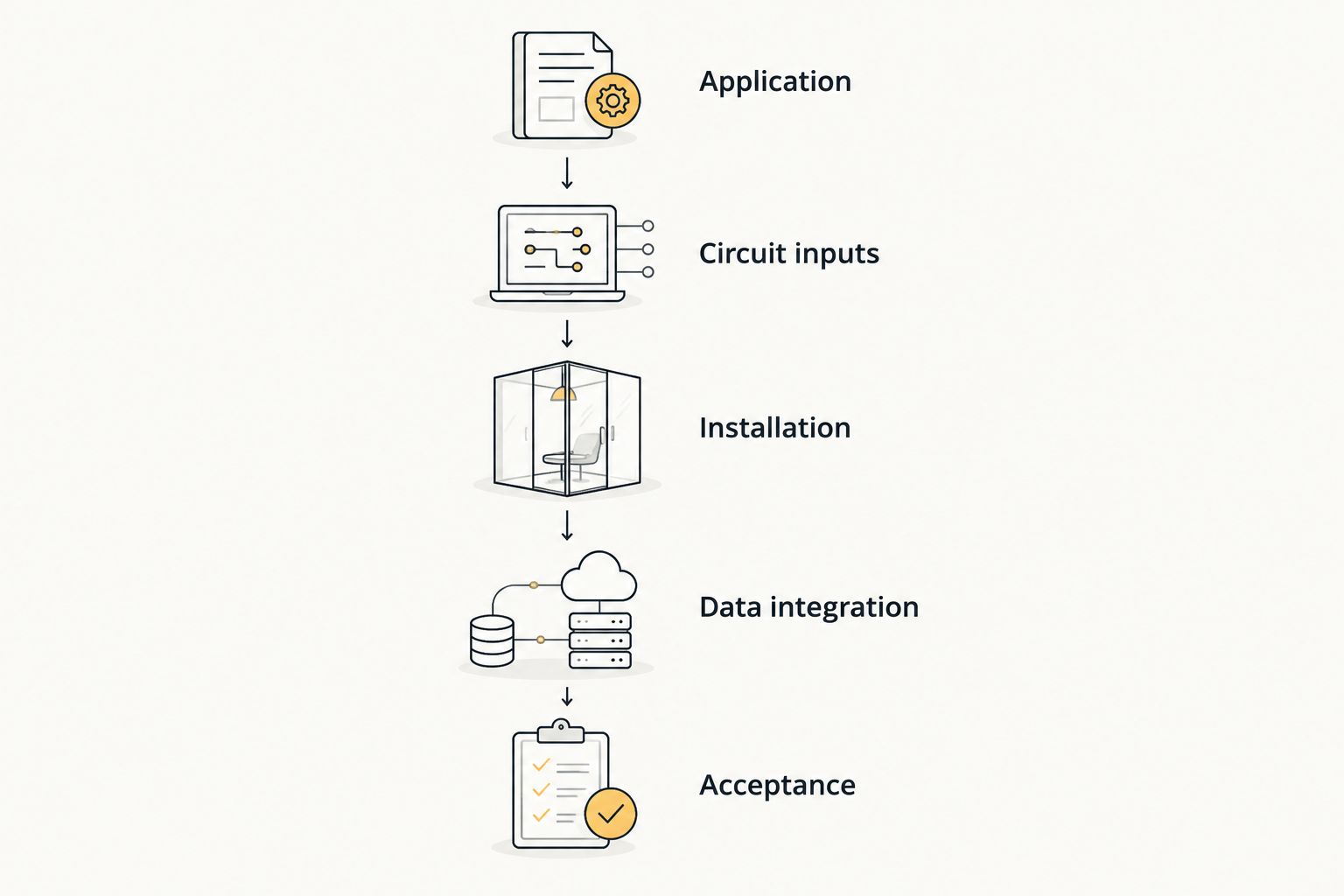
For your 2026 enquiry, prepare a meter schedule instead of sending only a category name. Yantratechsolutions supplies digital panel meters alongside other industrial instruments, making application details particularly important when your enquiry spans several equipment categories.
- Application: Name the panel, circuit and operating task. State whether the meter supports monitoring, accounting, investigation or process indication.
- Circuit inputs: Record wiring configuration, CT secondary and ratio, voltage arrangement and any instrument-transformer details.
- Installation: Provide auxiliary supply, panel cut-out, available depth, terminal-access constraints and required environmental ratings.
- Data integration: Specify interface, protocol, data points, addressing and the plant system receiving the measurements.
- Acceptance: Define the required documents, measurement checks, configuration record and handover responsibilities.
Keep electrical and process requirements in separate schedule entries. A 4–20 mA process input and a 5 A CT input describe different measurement arrangements, even when both instruments occupy similar panel positions. Procurement teams should compare compliance against each line item rather than compare descriptions alone.
Request a quote from Yantratechsolutions with the completed meter schedule. Pan-India delivery and expert technical support are available; ask for the proposed configuration and supporting documents against your application.
Request a qualified panel meter quote
Provide your application, circuit inputs, installation details and communications requirements.
How the ranking works
The order prioritises application fit: multifunction meters cover routine electrical monitoring, followed by specialised disturbance analysis, energy accounting, dedicated indication and process signals. Input compatibility, integration, installation and documentation determine whether a particular model belongs in your final shortlist.
The ranking is not a substitute for model-specific technical evaluation. Select the meter type here; approve the actual instrument against its datasheet and your acceptance specification.
Which digital panel meter should you choose?
Choose a multifunction power meter as the default for routine power-plant feeder monitoring in 2026. Choose a power-quality meter when recorded disturbance evidence is required, an energy meter for consumption accounting, or a dedicated indicator when the task is deliberately narrow.
Do not buy additional functions without an operating requirement. Equally, do not remove necessary measurements merely to simplify the purchase description. The best choice gives your operators the right information and your engineers a measurement chain they can verify.
FAQ
What's the best digital panel meter for power plants?
A multifunction power meter is the default choice for routine electrical feeder monitoring. Use a power-quality meter for disturbance investigations or an energy meter when consumption accounting is the main task.
Is a power-quality meter better than a multifunction meter?
A power-quality meter is better suited to disturbance investigation when it provides the required recording functions. A multifunction meter is the appropriate choice when the task is routine electrical monitoring rather than event analysis.
Can I connect a digital panel meter directly to a power-plant feeder?
Only use the connection arrangement permitted by the meter's rated inputs and the plant circuit design. Confirm whether current and voltage inputs require instrument transformers before installation.
How do I choose between a 1 A and 5 A CT input?
Match the meter input to the installed CT secondary rating. Also confirm the CT ratio, wiring and meter configuration; matching the secondary rating alone does not complete the specification.
Does RS-485 mean the meter will work with my SCADA system?
No, RS-485 identifies a physical communications interface, not complete system compatibility. Confirm the protocol, settings, data map and required measurements with the receiving system.
Can a process indicator measure electrical power?
A process indicator receiving a transmitter signal does not replace an electrical power meter. It displays the process variable represented by its configured input and scaling.
What should I send when requesting a panel meter quote?
Send the application, circuit inputs, transformer ratios, auxiliary supply, panel dimensions and communications requirements. Include accuracy, documentation and acceptance requirements so offered configurations can be compared.
One last thing
Record the installed transformer ratios and meter settings together. Correct hardware with incorrect configuration still produces incorrect scaled readings. Include that configuration record in the panel handover, and require qualified personnel to follow the plant's electrical safety procedures during verification.