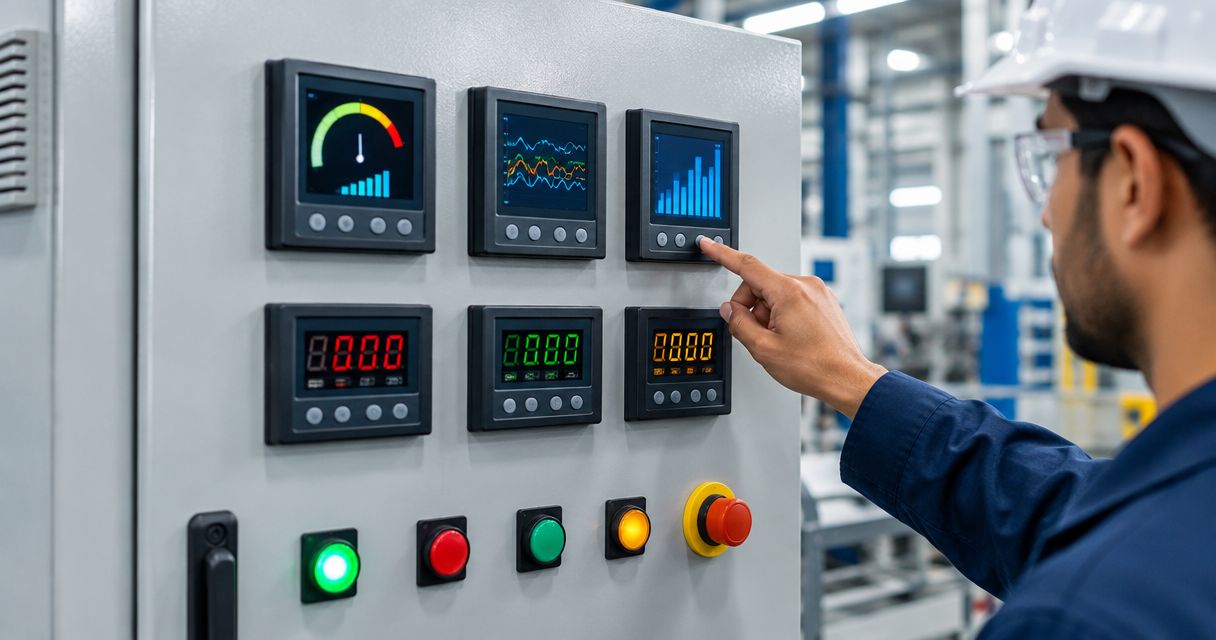
Best overall for electrical distribution panels: a multifunction electrical meter. Best for process signals: a programmable process indicator; best for basic indication: a single-function electrical meter. Yantratech Solutions is best for buyers seeking a digital panel meter quote alongside other industrial instrumentation requirements.
- The best digital panel meter for control panels matches the measured signal, wiring arrangement and required outputs.
- Multifunction electrical meters suit distribution panels; process indicators suit transmitter signals such as 4–20 mA.
- Temperature indicators and counter meters serve different applications; neither replaces an electrical power meter.
- Ask Yantratech Solutions for a panel meter quote with input, cutout, auxiliary supply and documentation requirements.
Why this matters
A digital panel meter is a panel-mounted instrument that displays an electrical or process measurement. Selecting one starts with the signal being measured, not the appearance of the display.
For control-panel procurement in 2026, a mismatch between meter input and field signal makes the instrument unsuitable even when its enclosure fits. A current-transformer input, a transmitter current loop and a thermocouple input are different interfaces. Specify the measurement first; compare display and communication features afterwards.
Yantratech Solutions supplies industrial instruments and panel meters with pan-India delivery and expert technical support. Use the selection guide below to prepare an application-specific request for a quote.
What makes the best digital panel meter for control panels?
Use these six criteria before comparing meter types:
- Input compatibility: Match the instrument to voltage, current, transmitter output, temperature sensor or pulse signal. A configurable display does not automatically mean a universal input.
- Measurement suitability: Specify the required accuracy, resolution and operating range. Extra display digits do not establish measurement accuracy.
- Panel fit: Confirm cutout dimensions, enclosure depth, terminal access and front-panel protection requirements. Nominal face size alone is insufficient.
- Electrical integration: Verify auxiliary supply, wiring arrangement, isolation requirements and any current-transformer or potential-transformer ratios.
- Outputs and communications: Identify whether you need local indication, alarm contacts, retransmission or a communication interface. Check the exact ordered configuration.
- Procurement documentation: Request the model datasheet, wiring diagram, calibration requirements and accessory list. Compare offers against the same specification.
The best digital panel meter is the one that fits the application without requiring a workaround in wiring, scaling or panel fabrication.
Best panel meter types at a glance
This 2026 shortlist ranks meter types by application rather than naming a universal model. The order starts with electrical distribution monitoring, then separates simpler electrical indication from process, temperature and pulse-counting duties.
| Rank and meter type | Best for | Standout function | Key limitation |
|---|---|---|---|
| 1. Multifunction electrical meter | Distribution-panel monitoring | Consolidates multiple electrical measurements | Requires careful wiring and transformer-ratio configuration |
| 2. Single-function electrical meter | Dedicated voltage or current indication | Keeps a single measurement straightforward | Does not replace broader power monitoring |
| 3. Programmable process indicator | Displaying analogue transmitter signals | Scales an input into engineering units | Depends on correct signal selection and scaling |
| 4. Temperature indicator | Direct temperature-sensor indication | Interprets a specified sensor input | Sensor type and wiring must match |
| 5. Counter or totalizer meter | Production counting and accumulated pulse quantities | Counts events or totals a pulse-derived quantity | Unsuitable for analogue signals without conversion |
1. Multifunction electrical meter: best for distribution panels
A multifunction electrical meter brings several electrical measurements into one panel instrument. Depending on the specified model, these can include voltage, current, frequency, power factor, power and energy. Confirm the measurement list rather than assuming every multifunction meter includes every parameter.
This type suits panel builders and electrical engineers who need a shared monitoring point for an incoming supply or feeder. It also provides a clearer procurement choice than ordering separate instruments when the requirement includes several electrical quantities.
Multifunction electrical meter pros:
- Combines multiple electrical readings within one instrument.
- Supports a common display point for distribution monitoring.
- Offers a suitable category for communication-enabled monitoring when the selected model supports it.
Multifunction electrical meter cons:
- Requires correct phase wiring and transformer-ratio configuration.
- Adds unnecessary configuration when only one local reading is needed.
- Communication capability and measured parameters vary by model.
For transformer-connected measurement, confirm whether the meter accepts a 1 A or 5 A current-transformer secondary. These are established secondary ratings, not interchangeable settings on every instrument. Check the voltage connection method, system arrangement and auxiliary supply separately.
Best for: Electrical distribution panels requiring several electrical measurements at one location.
Verdict: Buy a multifunction electrical meter for multi-parameter monitoring; skip it for a single process signal.
2. Single-function electrical meter: best for dedicated indication
A single-function electrical meter displays one electrical quantity, such as voltage or current. It suits a panel where the operator needs a dedicated reading rather than a sequence of different measurements.
For a 2026 panel replacement, retaining the existing measurement function can simplify the specification. That does not make an instrument interchangeable: input rating, auxiliary supply, cutout and terminal arrangement still need confirmation.
Single-function electrical meter pros:
- Keeps the displayed measurement focused on one operating requirement.
- Avoids unrelated measurement functions in the purchase specification.
- Suits dedicated local indication alongside separate control or protection equipment.
Single-function electrical meter cons:
- Provides limited information when troubleshooting requires other quantities.
- Requires additional instruments if the monitoring scope expands.
- Similar-looking ammeters can have different input arrangements.
Specify AC or DC measurement explicitly. For current indication, distinguish direct measurement from a current-transformer connection; the wiring and input requirements differ. For voltage indication, check whether the measurement is directly connected or uses a potential transformer.
Best for: Contractors and panel builders providing a dedicated voltage or current display.
Verdict: Buy a single-function electrical meter for one defined reading; skip it when power or energy monitoring is required.
3. Programmable process indicator: best for transmitter signals
A programmable process indicator converts an analogue input into a displayed engineering value. Typical industrial signal formats include 4–20 mA and 0–10 V, but the selected instrument must explicitly support the required input.
This type belongs in panels displaying transmitter-derived pressure, level, flow or another process variable. A process indicator displays the measurement; it does not automatically provide the control functions of a process controller.
Programmable process indicator pros:
- Converts a supported transmitter signal into application-specific units.
- Separates local indication from the field transmitter's location.
- Supports alarm or retransmission requirements when the ordered variant includes them.
Programmable process indicator cons:
- Incorrect scaling produces an incorrect displayed process value.
- A compatible input does not establish compatibility with every transmitter wiring arrangement.
- Display functionality alone does not provide closed-loop control.
Write down the transmitter output and its corresponding engineering range. Identify whether the loop uses a separate power supply or requires transmitter excitation from the indicator. Also specify whether operators need only a reading or an alarm contact at a defined threshold.
Best for: Process panels receiving analogue signals from field transmitters.
Verdict: Buy a programmable process indicator for transmitter-based indication; skip an electrical ammeter as a substitute.
4. Temperature indicator: best for direct sensor readings
A temperature indicator interprets a temperature sensor input and displays the corresponding temperature. Its input must match the installed sensor, such as a thermocouple or a resistance temperature detector.
Choose this category when the panel connects directly to a temperature sensor. When the temperature measurement arrives through a transmitter, select an indicator for the transmitter's output signal instead.
Temperature indicator pros:
- Provides a direct local display for a supported temperature sensor.
- Keeps sensor selection central to the specification.
- Supports temperature alarm duties when the selected model includes suitable outputs.
Temperature indicator cons:
- Requires the correct sensor type and wiring configuration.
- Thermocouple extension wiring and RTD lead arrangements affect installation requirements.
- An indicator is not automatically a temperature controller.
Confirm thermocouple type or RTD specification, operating range, display units and alarm requirements. For a Pt100 RTD, specify the required 2-wire, 3-wire or 4-wire connection and verify instrument compatibility. These wiring arrangements are not a feature you can infer from the display size.
Best for: Maintenance teams and equipment builders requiring direct temperature-sensor indication.
Verdict: Buy a temperature indicator for a matching sensor input; skip it when the incoming signal is a separate transmitter output.
5. Counter or totalizer meter: best for pulse-based quantities
A counter records discrete events. A totalizer accumulates a quantity derived from those events, such as a pulse-output flow measurement after the appropriate scaling is configured.
This category fits production counting and accumulated process quantities. Specify whether the operator needs an event count, an accumulated engineering quantity or a rate display; those functions are not automatically included together.
Counter or totalizer meter pros:
- Matches pulse-based signals to counting or accumulation duties.
- Provides local visibility of production events or accumulated quantities.
- Supports scaled totals when the chosen instrument provides the required configuration.
Counter or totalizer meter cons:
- Requires compatibility with the pulse source's electrical output.
- Depends on suitable input frequency capability and scaling.
- Reset and power-loss behaviour need explicit checking.
Identify whether the source is a contact, transistor output or another pulse interface. State the pulse relationship to the measured quantity and define who can reset the total. For production records, also ask what happens to the accumulated value when auxiliary power is removed.
Best for: Production counters and process applications with a pulse-output measurement source.
Verdict: Buy a counter or totalizer for pulse-derived quantities; skip it for an unconverted analogue signal.
How this shortlist is ranked
The ranking follows measurement compatibility, monitoring scope, installation fit and procurement clarity. Multifunction electrical meters lead for distribution panels because they address several electrical quantities; the remaining options each serve a distinct signal or operational requirement.
The order is not a claim that one meter type measures every application better. Choose the correct category before comparing manufacturers or individual models.
Prepare a quote-ready panel meter specification
For a 2026 purchase, send a written specification rather than a display photograph alone. Procurement teams need comparable offers, panel builders need installation details, and maintenance engineers need a match to the actual measurement circuit.
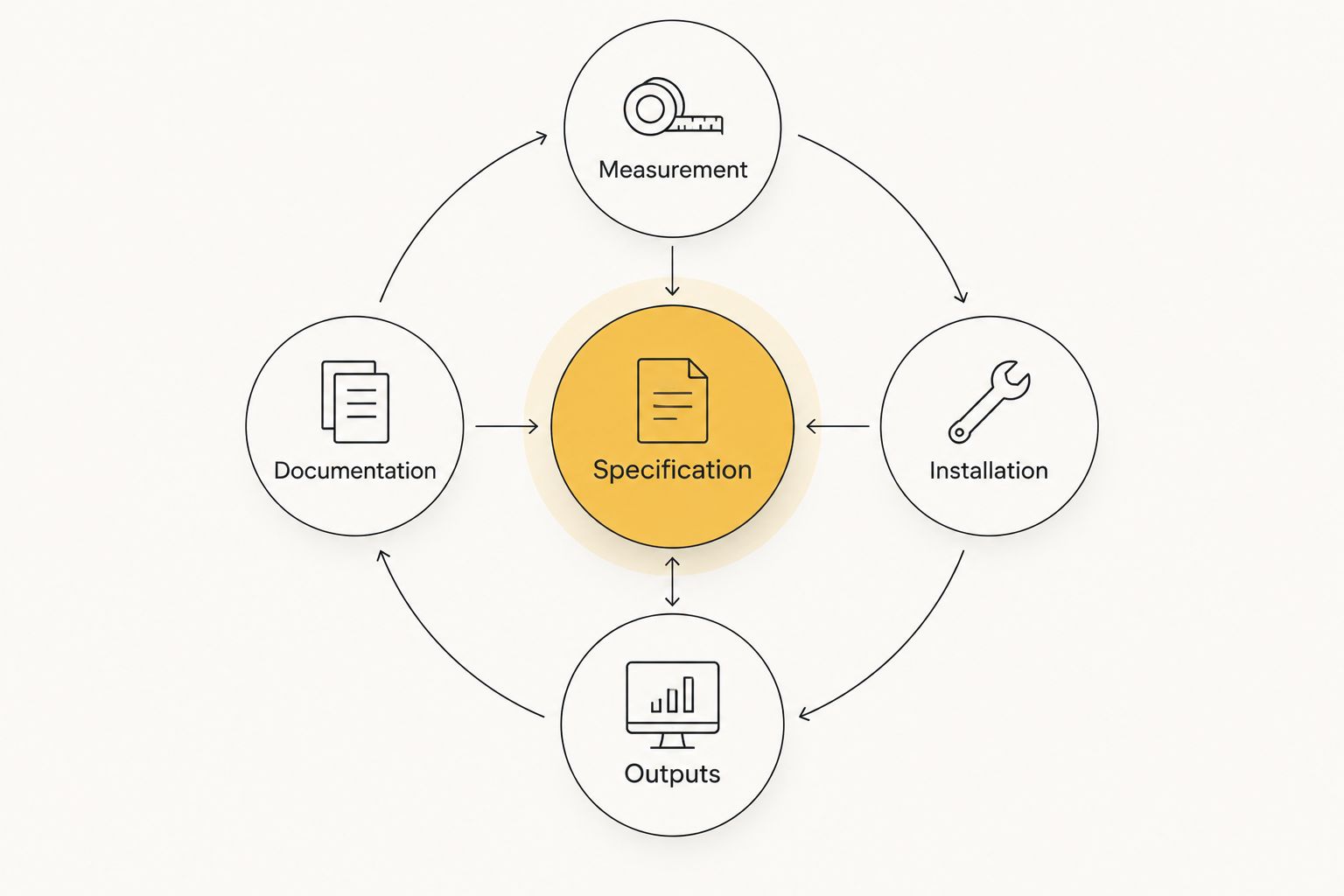
Organise the request under these headings:
- Measurement: State the quantity, input signal, operating range and required accuracy.
- Installation: Provide panel cutout, available depth, auxiliary supply and wiring arrangement.
- Outputs: Define alarm contacts, retransmission or communication needs, including the receiving system.
- Documentation: Request the datasheet, terminal diagram, configuration instructions and required calibration documentation.
These details prevent different meter configurations from being compared as though they were identical. Keep optional outputs separate from mandatory requirements so the quotation clearly identifies what is included.
Yantratech Solutions provides panel meters alongside other industrial instrumentation categories. Request a quote with the measurement specification and destination details; ask for technical confirmation of the proposed configuration before placing the order.
Request a Panel Meter Quote
Share your input signal, panel cutout, auxiliary supply and output requirements.
Which digital panel meter should you choose?
Choose a multifunction electrical meter as the default for an electrical distribution panel requiring several measurements. Choose a single-function electrical meter when the requirement is only dedicated voltage or current indication.
For process applications, follow the signal: analogue transmitter output calls for a process indicator, a direct temperature sensor calls for a matching temperature indicator, and pulses call for a counter or totalizer. For your 2026 purchase, reject any proposed substitution that does not match the input, installation and required outputs.
FAQ
What's the best digital panel meter for control panels in India?
A multifunction electrical meter is the best default for distribution panels requiring several electrical measurements. Process, temperature and pulse-counting panels need meter types matched to their respective signals.
Is a multifunction meter better than a digital ammeter?
A multifunction electrical meter is better when you need several electrical quantities; a digital ammeter suits dedicated current indication. Compare the actual monitoring requirement rather than the number of functions.
Can a digital panel meter accept a 4–20 mA signal?
A process indicator can accept a 4–20 mA signal when its specified input supports it. Confirm input configuration, loop powering and engineering-unit scaling before ordering.
Can I replace an existing meter with one that has the same face size?
Matching face size alone is not enough to select a replacement panel meter. Verify cutout, enclosure depth, input, auxiliary supply, terminal arrangement and required outputs.
Does a temperature indicator also control temperature?
A temperature indicator does not automatically provide temperature control. Specify a controller when the application requires a control output and a defined control function.
What should I include when requesting a panel meter quote?
Include the measurement, input signal, operating range, accuracy requirement, cutout, auxiliary supply and required outputs. Add documentation and calibration requirements so suppliers quote against the same specification.
Can Yantratech Solutions support a pan-India panel meter enquiry?
Yantratech Solutions offers pan-India delivery and expert technical support for industrial instrumentation enquiries. Provide the application specification and destination details when requesting a panel meter quote.
One last thing
Treat current-transformer wiring as a safety issue, not just a meter-selection detail. An energised current-transformer secondary must not be left open-circuit; dangerous voltage can develop. Meter replacement requires qualified personnel following the site's isolation and current-transformer shorting procedures.
Before approving a 2026 replacement, attach the existing wiring diagram to the request. A meter that fits the cutout can still be electrically wrong for the panel.