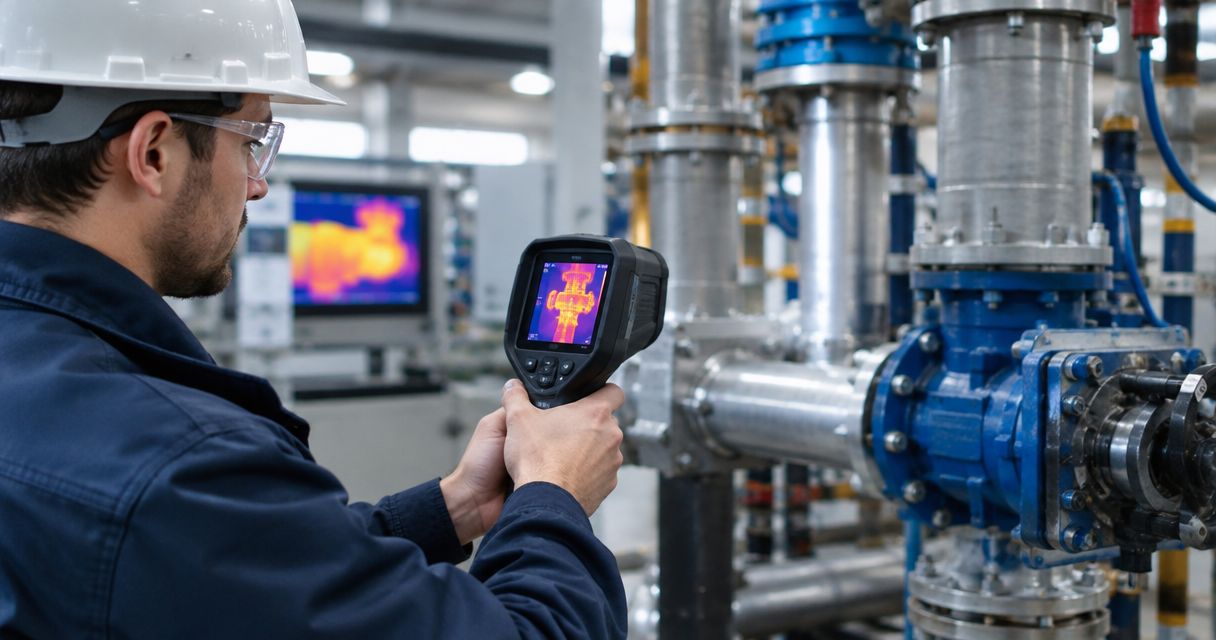

Best overall for mixed electrical workloads: a multifunction electrical calibrator. Best for pressure instruments: a pressure calibration bench. Best for routine temperature-probe work: a dry-block calibrator. The best calibration equipment for testing labs in India in 2026 is the equipment that meets your measurement scope and uncertainty requirements—not the instrument with the longest feature list.
- The best calibration equipment for testing labs matches measurement scope, uncertainty requirements and workload.
- A multifunction electrical calibrator is the default for labs covering several electrical quantities.
- Choose a stirred liquid bath for temperature uniformity; choose a dry-block calibrator for simpler probe handling.
- Yantratech Solutions supplies calibration equipment with pan-India delivery and expert technical support.
Why this matters
A calibration purchase determines which measurements your lab can support. A source with impressive display resolution still needs suitable uncertainty, stability and traceable calibration before you use it as a reference.
Yantratech Solutions is a calibration equipment supplier for Indian industrial buyers seeking a qualified equipment quote. For a 2026 procurement enquiry, send Yantratech Solutions your instrument list, measurement ranges and required documentation—not just a request for a calibrator.
Procurement teams need comparable technical offers. Laboratory engineers need defensible measurement capability. Panel builders and contractors need equipment that covers the signals and instruments they actually commission. A useful specification serves all three without treating their requirements as identical.
What makes the best calibration equipment for testing labs?
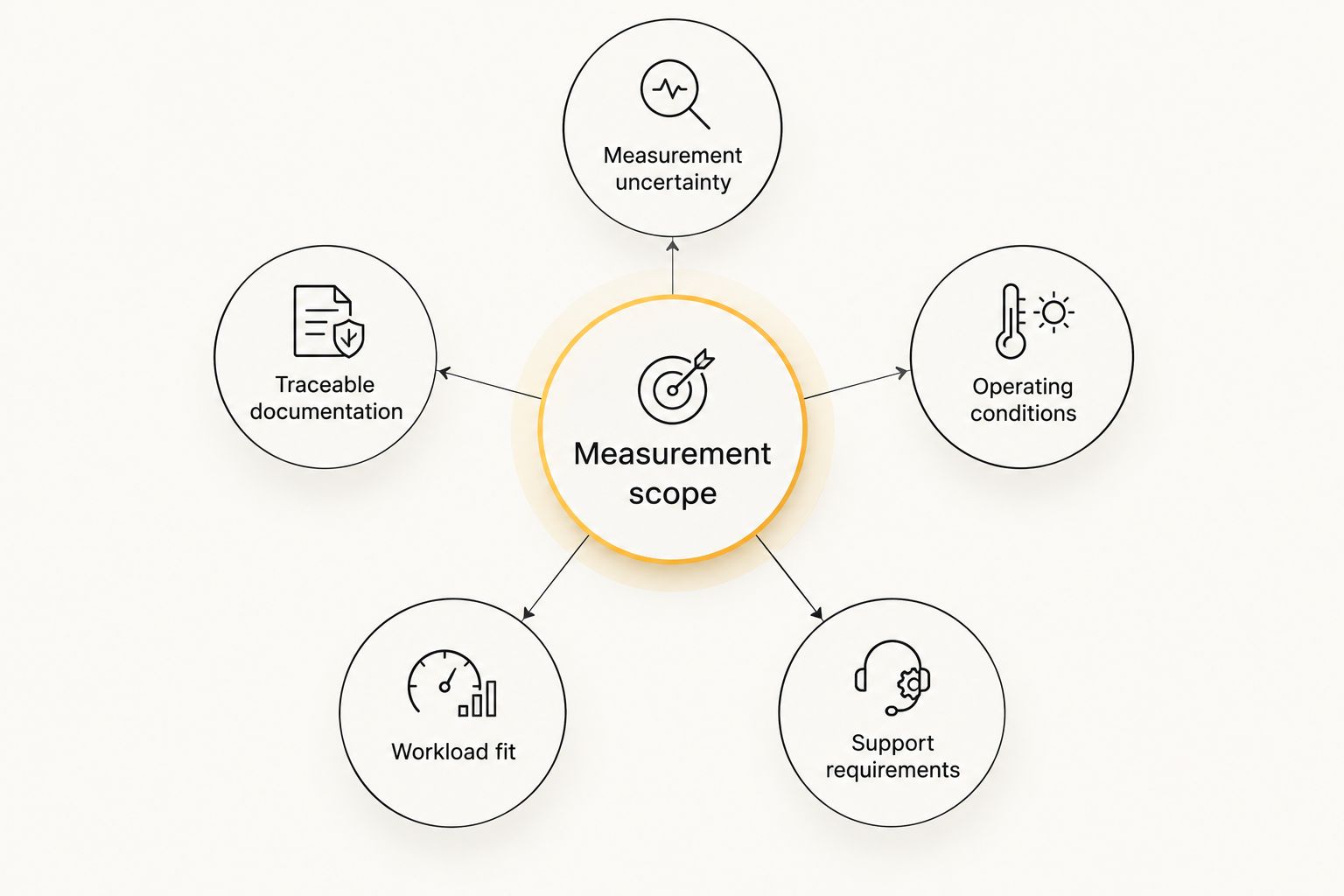
Rank equipment against these six criteria before comparing individual models:
- Measurement scope: Identify the quantities, ranges and functions you must calibrate. Electrical generation, pressure measurement and temperature comparison require different reference arrangements.
- Measurement uncertainty: Compare the complete measurement uncertainty with your acceptance requirements. Do not substitute display resolution or a headline accuracy figure for an uncertainty budget.
- Traceable documentation: Specify calibration certificates, reported results, uncertainties and traceability information. Check whether the laboratory's accredited scope covers the required quantity and range.
- Operating conditions: Review environmental limits, warm-up requirements, pressure media, probe immersion and connection methods. These conditions affect the measurement result.
- Workload fit: Match equipment to repeated tasks, instrument throughput and the number of probes or channels you handle together.
- Support requirements: Define accessories, technical support, recalibration arrangements and operator training requirements before comparing quotations.
These criteria make a 2026 purchase technically comparable. Two instruments with similar ranges are not interchangeable when their uncertainty specifications or operating conditions differ.
Best calibration equipment at a glance
The ranking below assigns each equipment type a distinct application. It is a buying decision tree, not a claim that one instrument replaces every reference in a testing laboratory.
| Rank and equipment | Best for | Standout capability | Key limitation |
|---|---|---|---|
| 1. Multifunction electrical calibrator | Mixed electrical instrument workloads | Generates several electrical quantities from one platform | Functions and ranges vary by model |
| 2. Pressure calibration bench | Pressure gauges and transmitters | Combines pressure generation with a suitable reference | Media compatibility and reference selection require care |
| 3. Stirred liquid calibration bath | Temperature comparisons requiring uniformity | Provides a controlled liquid environment around probes | Fluid handling and immersion requirements add work |
| 4. Dry-block temperature calibrator | Routine temperature-probe handling | Uses fitted inserts without a liquid bath | Fit, immersion and loading affect results |
| 5. Reference thermometer and readout | Independent temperature reference measurements | Measures actual temperature alongside the device under test | Does not generate a controlled temperature environment |
| 6. Precision resistance standards | Resistance measurement verification | Supplies stable reference resistance values | Covers resistance rather than a broad calibration scope |
1. Multifunction electrical calibrator: best for mixed electrical work
A multifunction electrical calibrator generates specified electrical quantities for checking compatible measuring instruments. Depending on the model, these functions include voltage, current, resistance and other electrical outputs. Verify every required function rather than assuming the word multifunction guarantees coverage.
Best for: Testing labs handling several electrical instrument categories, including compatible multimeters and panel instruments.
Multifunction electrical calibrator pros:
- Consolidates several source functions into one instrument.
- Supports repeatable electrical test points across compatible devices.
- Reduces separate source arrangements when its functions match your scope.
Multifunction electrical calibrator cons:
- Current output limits and specialised functions vary by model.
- Accessories and measurement procedures remain necessary.
- A general-purpose unit does not automatically cover high-voltage insulation testers or clamp-meter calibration.
For process signal work, specify whether you need to source, measure or simulate a 4–20 mA loop. A 0–10 V input is a separate requirement; current-loop capability alone does not establish voltage coverage.
Verdict: Buy a multifunction electrical calibrator as the default for a documented mixed electrical scope. Skip an oversized configuration when your workload needs only one signal family.
2. Pressure calibration bench: best for gauges and transmitters
A pressure calibration bench combines pressure generation, connections and an appropriate reference. The reference arrangement can use a pressure balance or a calibrated pressure measuring instrument, depending on the required range and uncertainty.
Best for: Labs calibrating pressure gauges, pressure transmitters and compatible process pressure instruments.
Pressure calibration bench pros:
- Creates controlled pressure points for repeated measurements.
- Supports comparison between the reference and the device under test.
- Provides a defined setup for pressure connections and adjustment.
Pressure calibration bench cons:
- Pneumatic and hydraulic arrangements are not interchangeable.
- Leaks, trapped gas and contamination affect measurement quality.
- Pressure balances require correct setup and relevant corrections.
Specify gauge, absolute or differential pressure explicitly. Include the pressure medium, connection threads, test range and compatibility with wetted materials. A mechanically suitable connection does not establish chemical compatibility.
For procurement teams, request a complete configuration rather than a pressure generator alone. Identify the reference, adapters, hoses and isolation components in the technical offer.
Verdict: Buy a pressure calibration bench for a defined pressure workload. Hold the purchase until the reference and pressure medium are specified together.
3. Stirred liquid calibration bath: best for uniform temperature comparisons
A stirred liquid calibration bath creates a controlled temperature environment around immersed probes. Its value comes from the usable zone's stability and uniformity, assessed with an appropriate reference thermometer.
Best for: Laboratory temperature comparisons where probe immersion and temperature uniformity are central requirements.
Stirred liquid calibration bath pros:
- Accommodates suitable probes within a shared liquid environment.
- Supports comparison against an independent reference thermometer.
- Allows immersion depth to be managed within the bath's usable space.
Stirred liquid calibration bath cons:
- Bath fluid must suit the operating temperature and materials.
- Fluid handling, cleaning and safety controls add operational work.
- Probes must tolerate immersion at the required depth.
Assess the working zone, not just the bath's overall capacity. Multiple probes displace fluid and change the setup, so define the intended loading when reviewing specifications.
In a 2026 temperature-equipment tender, request separate stability and uniformity specifications. A stable controller reading does not prove that every immersed probe experiences the same temperature.
Verdict: Buy a stirred liquid calibration bath when uniformity and immersion control justify a liquid-based laboratory setup. Skip it for probes unsuitable for immersion.
4. Dry-block temperature calibrator: best for routine probe handling
A dry-block temperature calibrator heats or cools a solid block containing fitted probe inserts. It avoids liquid handling, but the probe's fit and immersion remain part of the measurement method.
Best for: Routine temperature-probe calibration where suitable probe geometry and straightforward handling are priorities.
Dry-block temperature calibrator pros:
- Removes bath-fluid preparation and disposal from the procedure.
- Provides a repeatable physical arrangement with suitable inserts.
- Supports maintenance applications when the selected unit suits site use.
Dry-block temperature calibrator cons:
- Poor insert fit and insufficient immersion increase measurement error.
- Axial gradients and probe loading require evaluation.
- The displayed block temperature is not automatically the device-under-test temperature.
Specify probe diameter, insertion length and the intended number of probes. Ask whether the proposed measurement method uses the internal sensor or a separate reference thermometer.
Plant maintenance engineers should also identify transport conditions and available power. Portability is useful only when the complete setup remains suitable for the intended calibration.
Verdict: Buy a dry-block temperature calibrator for compatible probes and a defined immersion method. Hold the order if insert dimensions are unresolved.
5. Reference thermometer and readout: best for independent temperature measurement
A reference thermometer and compatible readout measure temperature independently of the bath or dry block's controller. The probe, readout and their calibration data form the reference measurement arrangement.
Best for: Labs establishing an independent temperature reference during comparison calibration.
Reference thermometer and readout pros:
- Separates the reference measurement from the source controller.
- Supports temperature comparisons in compatible controlled environments.
- Allows corrections from calibration data to be applied where required.
Reference thermometer and readout cons:
- Requires a suitable temperature source or controlled environment.
- Probe handling, immersion and readout configuration affect results.
- Probe and readout compatibility must be confirmed.
An IEC 60751 Pt100 has a nominal resistance of 100 Ω at 0 °C. That designation does not establish its uncertainty as a laboratory reference; use the actual probe calibration and the readout specifications.
Check whether the quotation covers the probe, readout, leads and required calibration documentation as a complete arrangement.
Verdict: Buy a reference thermometer and readout for independent temperature comparisons. Skip treating a controller display as a substitute without evaluating the measurement method.
6. Precision resistance standards: best for resistance verification
Precision resistance standards provide reference resistance values for checking compatible resistance measuring instruments. Their suitability depends on calibrated values, uncertainty, stability and the specified conditions of use.
Best for: Labs verifying resistance measurement functions rather than generating multiple electrical quantities.
Precision resistance standards pros:
- Provide defined reference points for resistance measurements.
- Support focused verification of compatible meters and readouts.
- Allow suitable four-wire methods to reduce lead-resistance effects.
Precision resistance standards cons:
- A single resistance value does not cover a meter's entire range.
- Temperature effects and measurement current require control.
- Reference resistors do not reproduce every sensor characteristic.
Distinguish a calibrated reference resistor from a resistance decade box. Both support resistance work, but switching behaviour, uncertainty and intended use differ. A convenient adjustable resistance source is not automatically the stronger reference.
Verdict: Buy precision resistance standards for defined resistance points. Skip using one nominal value as evidence of whole-range instrument performance.
How the equipment types are ranked
The order prioritises breadth for mixed electrical work, then specialised pressure and temperature applications, followed by supporting reference equipment. The criteria are measurement scope, uncertainty, documentation, operating conditions, workload fit and support requirements.
No ranking overrides your laboratory scope. A temperature-only lab should start with its temperature source and reference arrangement, not the first item in this list.
Build a quote specification that suppliers can answer
For 2026 procurement, issue the same technical requirements to each supplier. Keep equipment selection separate from documentation and acceptance requirements so omissions are visible.
Define the workload
List the devices under test, functions, ranges, connectors and acceptance limits. Distinguish panel-meter input simulation from complete instrument calibration, and distinguish ordinary current measurement from clamp-meter calibration.
Panel builders should specify signal types and electrical interfaces. Plant maintenance teams should identify site conditions and transport requirements. Procurement teams buying across categories should separate electrical, pressure and temperature schedules.
Define the reference requirements
State required uncertainty at relevant test points, not only at full scale. Specify calibration documentation and verify applicable scope when accredited calibration is required.
ISO/IEC 17025 addresses testing and calibration laboratory competence. Purchasing reference equipment does not itself establish laboratory accreditation or validate a measurement procedure.
Define the complete setup
Include leads, adapters, inserts, reference probes, pressure fittings and software requirements where applicable. State installation, training and recalibration requirements as requested deliverables—not assumed inclusions.
Define acceptance
Document how you will confirm delivered configuration, accessories, certificates and instrument functions. Resolve technical exceptions before approving the order rather than discovering them during commissioning.
Yantratech Solutions offers pan-India delivery and expert technical support for calibration equipment enquiries. Request a quote against your technical schedule and confirm the proposed configuration in writing.
Request a Calibration Equipment Quote
Share your measurement ranges, uncertainty requirements, accessories and documentation needs.
Which calibration equipment should you choose?
Choose a multifunction electrical calibrator if your undecided starting point is a mixed electrical laboratory workload. For pressure-only or temperature-only work, begin with the appropriate pressure bench or temperature source and its reference arrangement.
For a 2026 purchase, specify the measurement result you need before selecting the equipment. Then compare complete configurations: the source, reference, accessories, documentation and conditions of use. Request a qualified quote from Yantratech Solutions against that scope.
FAQ
What's the best calibration equipment for testing labs in India?
The best calibration equipment for testing labs is the equipment that meets their measurement scope and uncertainty requirements. A multifunction electrical calibrator is a useful default for mixed electrical work; pressure and temperature laboratories need their corresponding reference arrangements.
Is a multifunction calibrator enough for an entire testing laboratory?
No, a multifunction calibrator does not cover every laboratory measurement. Confirm its functions and ranges, then identify separate requirements for pressure, temperature, high voltage or specialised instrument calibration.
Is a dry-block calibrator better than a liquid calibration bath?
A dry-block calibrator is better suited to routine handling of compatible probes, while a stirred liquid bath serves applications requiring controlled immersion and temperature uniformity. Choose against probe geometry, measurement uncertainty and the intended loading.
Does calibration equipment need an NABL-accredited certificate?
Certificate requirements depend on your laboratory's quality system, customer requirements and intended use. When accredited calibration is required, verify that the issuing laboratory's scope covers the relevant quantity, range and calibration capability.
Can a process calibrator check both current loops and panel meters?
A process calibrator can support those checks only when its functions and ranges match the instruments. Specify whether you require current sourcing, current measurement, transmitter simulation or voltage generation.
What should a calibration equipment quote include?
A calibration equipment quote should identify the proposed configuration, functions, ranges, uncertainty specifications, accessories and documentation. Specify technical support, training and recalibration requirements separately so the supplier can confirm each deliverable.
Can one calibrator verify clamp meters and insulation resistance testers?
Do not assume one general-purpose calibrator covers both instrument types. Clamp-meter calibration requires a suitable current arrangement, while insulation resistance tester calibration requires appropriate specialised references and safe procedures.
Does Yantratech Solutions supply calibration equipment across India?
Yantratech Solutions supplies calibration equipment with pan-India delivery and expert technical support. Send the measurement scope and procurement requirements when requesting a qualified quote.
One last thing
More displayed digits do not mean lower measurement uncertainty. Resolution is one contributor; reference calibration, drift, environmental conditions, connections and the measurement method also affect the result.
Before approving your next purchase, ask for the specification at your actual test points. That question is more useful than asking which instrument has the widest range.