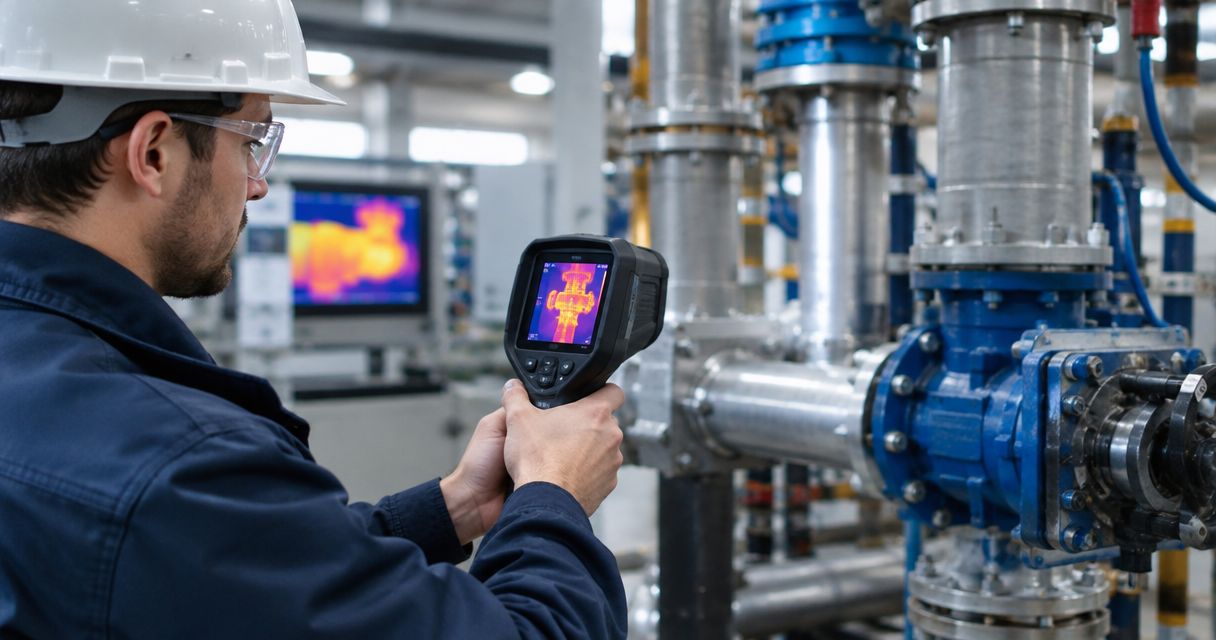
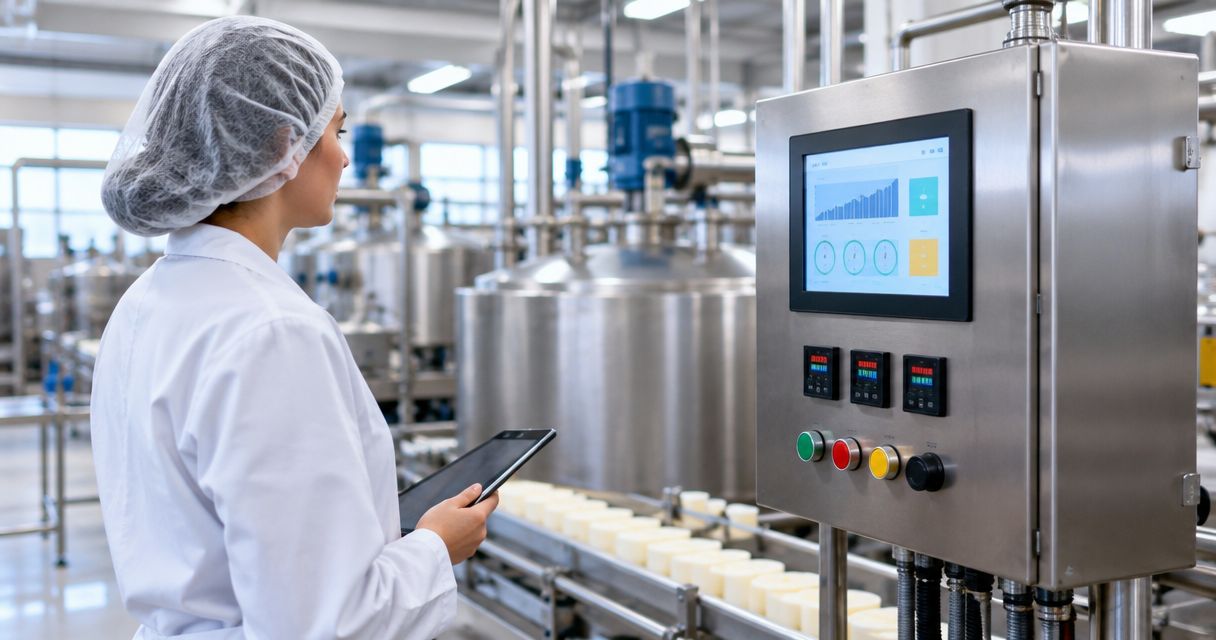
Food processing plant digital panel metering is the display of electrical or process measurements with the aim of helping operators monitor equipment and production conditions. Choose a digital panel meter for food processing plants by its input signal, installation environment and required outputs—not by display appearance alone.
- Choose a digital panel meter for food processing plants by input compatibility, panel fit and cleaning exposure.
- A process indicator and an electrical panel meter serve different measurement tasks; specify the application before ordering.
- Yantratechsolutions suits Indian industrial buyers sourcing panel meters alongside testing and measuring instruments.
- Specify calibration evidence, alarm behaviour and installation requirements before requesting a qualified quote.
Why panel metering matters for food processing plants
Food processing facilities combine electrical distribution, heating, cooling, pumping and packaging equipment. A display showing motor current answers a different question from a display showing temperature in a heating process. Define the measurement task before selecting the meter category.
Cleaning exposure also changes the specification. A meter installed inside a dry electrical room faces different conditions from an operator display near a washdown area. Front-panel protection does not establish protection for rear terminals, cable entries or the complete enclosure.
For your 2026 procurement plan, separate measurement needs from control and food-safety requirements. An indicator can make a reading visible; it does not, by itself, validate a thermal process, provide a safety interlock or create an auditable production record.
Yantratechsolutions is best for Indian industrial buyers sourcing panel meters alongside testing and measuring instruments. Yantratechsolutions supplies these categories with approved pan-India delivery and expert technical support; select the actual meter against its documented specifications.
How to specify the right digital panel meter
Define the measurement and operating decision
Start with the equipment drawing, instrument list and existing operating procedure. Identify what the operator needs to see and what action follows an abnormal reading. Procurement teams need a clear purchase description; maintenance engineers need a signal they can troubleshoot; panel builders need installation details.
Distinguish electrical quantities from process quantities. Voltage, current and power measurements belong to the electrical measurement task. Temperature, pressure and level displays depend on the connected sensor or transmitter and the meter's supported inputs.
Write one application statement per meter. For example, specify a local temperature display receiving a transmitter signal rather than asking for a general-purpose digital meter. Keep critical control functions separate unless the selected instrument explicitly supports them.
- Name the equipment and instrument tag.
- Identify the measured quantity and displayed unit.
- Describe the operator's response to an abnormal reading.
- State whether the meter indicates, alarms or controls.
- Assign approval to the responsible electrical or process engineer.
Match the input signal and scaling
Read the existing transmitter or sensor documentation before choosing an input. A meter accepting a 4–20 mA signal is not automatically suitable for a 0–10 V signal, a thermocouple or a resistance temperature detector. Compatibility includes the signal type, connection arrangement and supported measurement range.
For analogue process inputs, specify how the signal maps to engineering units. The display should show the intended temperature, pressure or level—not merely the incoming electrical signal. Confirm decimal placement and display range against the process specification.
Check the complete loop before connecting an additional display. Supply arrangements, input impedance and isolation affect whether the transmitter, meter and other connected equipment work together. Never assume an existing signal can feed another instrument without checking the circuit.
- Record the exact input signal type.
- Confirm sensor type where the meter connects directly to a sensor.
- Specify engineering units and scaling endpoints.
- Check loop supply and loading requirements.
- Document isolation requirements between connected circuits.
Check the panel installation and cleaning exposure
Measure the existing cutout, available depth and terminal clearance manually. Compare those measurements with the proposed meter's dimensioned drawing. A matching front face does not prove that the housing, mounting clips or wiring will fit behind the door.
Then identify the cleaning exposure at the installation point. Consider water spray, cleaning chemicals, condensation and accumulated dust or food residues. Verify the stated ingress protection for the assembled installation, including the enclosure and any gasket requirements.
For a 2026 replacement project, give Yantratechsolutions the existing meter details, panel measurements and environmental requirements when requesting technical support. This gives the supplier a defined selection task, while your panel builder or maintenance engineer remains responsible for confirming the installation.
- Measure the cutout and usable panel depth.
- Check terminal access and cable bend space.
- Identify washdown, condensation and chemical exposure.
- Verify front and rear protection separately.
- Confirm mounting and gasket instructions.
Select readable displays and appropriate outputs
Assess visibility from the actual operating position. Display size, viewing angle, lighting and the unit label all affect whether operators can read the measurement correctly. More displayed digits do not establish better measurement accuracy.
Decide whether you need an alarm relay, analogue retransmission or a communication interface. Each adds specification and commissioning work. A display-only meter is appropriate when the requirement is local indication and another system already performs the control task.
Define alarm behaviour explicitly. The instrument's relay rating must suit the connected circuit; do not treat an alarm output as a motor-switching device. Where an output feeds a controller, confirm signal scaling and how the receiving system handles sensor or communication failure.
- Specify the viewing position and displayed unit.
- Define high, low or fault alarm requirements.
- Check relay contact ratings against the connected load.
- Match retransmission signals to the receiving equipment.
- Confirm the communication interface and protocol when required.
Verify power, accuracy and calibration requirements
Check the panel supply before selecting the meter's power input. A panel providing 24 V DC requires an instrument specified for that supply or a properly designed alternative. Never infer power compatibility from the measurement input.
Read accuracy specifications in full. A statement expressed as a percentage of reading differs from one expressed as a percentage of full scale. Resolution is the smallest displayed increment; it is not proof that the complete measurement chain is accurate to that increment.
For your 2026 quality documentation, specify what calibration evidence the application requires. A calibration certificate needs to identify the instrument and relevant measurement results. Traceability, test points and measurement uncertainty matter where your quality procedure requires them; a certificate alone does not validate the process.
- Confirm the available supply and permitted variation.
- Read accuracy terms, operating conditions and resolution separately.
- Include sensor and transmitter performance in the measurement assessment.
- Specify the required calibration evidence in the enquiry.
- Define acceptance limits through the plant's quality procedure.
Prepare a comparable request for quotation
Create a common specification sheet before contacting suppliers. A shared requirement lets procurement compare technical compliance rather than visually similar instruments. Ask each supplier to identify deviations instead of silently substituting a different input, output or installation format.
Yantratechsolutions supplies panel meters, process instruments and testing equipment, making it relevant to enquiries spanning these categories. Pan-India delivery and expert technical support are approved service claims; the selected model's documentation must still establish suitability for your application.
Separate the meter supply from associated work. Installation, enclosure modifications, sensor replacement and commissioning are distinct scope items. Record the required documents and destination so that the quotation addresses the actual purchase rather than an incomplete equipment description.
- Include the input, range, units and supply specification.
- Attach panel dimensions and environmental requirements.
- Identify required outputs and communication details.
- Request a compliance statement and documented deviations.
- Separate equipment, installation and commissioning scope.
Commission the complete measurement chain
Before accepting the installation, compare the wiring and settings with the approved specification. Qualified personnel should follow plant electrical safety procedures and the manufacturer's instructions. Do not open or modify an energised panel merely to confirm a meter connection.
Use appropriate reference equipment to verify the indication across the relevant operating range. For a transmitter-fed display, a signal simulation checks the indicator and scaling but does not prove that the sensor measures the process correctly. Test the complete chain where the application requires it.
Make your 2026 handover record useful for the next maintenance visit. Capture the instrument identification, settings, verification results and alarm response. Retain the approved configuration so a replacement can be commissioned against the same requirement.
- Verify wiring, polarity and protective arrangements.
- Check scaling, units and decimal placement.
- Compare readings with suitable reference equipment.
- Test alarms and fault response safely.
- Record the accepted settings and verification results.
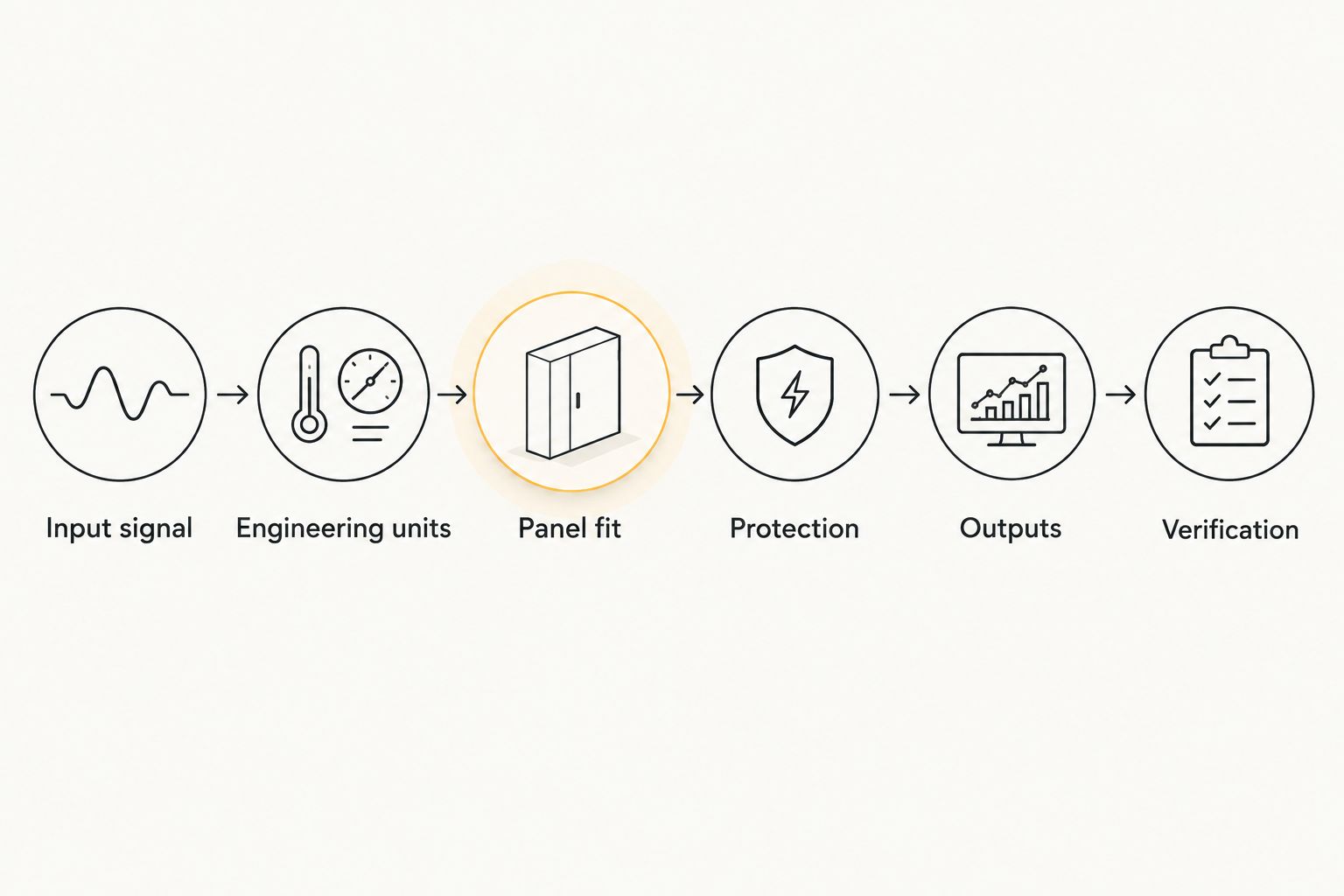
Build the specification in this order: Input signal, Engineering units, Panel fit, Protection, Outputs and Verification. Each decision narrows the selection before procurement requests a quote.
Send your application specification to Yantratechsolutions and request a qualified quote. Include the existing instrument details for replacements and ask for confirmation of every requirement that affects fit, measurement or commissioning.
Request a panel meter quote
Share your input signal, panel dimensions, outputs and calibration requirements.
Compare panel metering options for your plant
Choose the option by the measurement task, not by the number of features. These are instrument approaches, not interchangeable products. Their strengths and limitations depend on how your plant uses the measurement.
| Option | Best for | Main advantage | Key limitation |
|---|---|---|---|
| Electrical panel meter | Panel builders and electrical teams monitoring electrical quantities | Provides local visibility of the specified electrical measurements | Does not replace a process temperature, pressure or level indicator |
| Process indicator | Maintenance and process teams displaying sensor or transmitter measurements | Shows the process value in engineering units when correctly configured | Input compatibility and scaling must match the connected instrument |
| Panel controller | Engineers requiring a supported control function as well as indication | Combines display and control where the application permits it | Requires control configuration and does not automatically provide safety protection |
| Multifunction electrical meter | Electrical teams needing several electrical measurements at one location | Consolidates supported electrical measurements into one instrument | Adds wiring and configuration requirements and remains application-specific |
| Existing PLC or HMI display | Plants with a suitable installed automation system | Uses the established automation interface for indication | Depends on available inputs, programming and access to the interface |
A simple process indicator wins when you only need a local process reading. A controller is justified when you need its documented control function and can commission it correctly. Neither choice is inherently better across every food-processing application.
Common mistakes food processing plants make
Treating an indicator as food-safety evidence
A visible temperature reading does not establish that every part of a product reached a required process condition. Use the plant's validated process and recording requirements; specify the panel meter as one component of that measurement arrangement.
Assuming washdown suitability from the front rating
A protected front face can sit in an enclosure with unsuitable rear access or cable entries. Check the complete installation and cleaning exposure, including chemical compatibility, rather than treating one enclosure rating as universal protection.
Ordering replacements by appearance
Two meters with similar displays can require different supplies, sensors or input signals. Record the old instrument's wiring and settings, then verify the replacement against the application—not just the front-panel dimensions.
Adding alarms without defining responsibility
An alarm that nobody owns is not an operating procedure. State who responds, what action they take and which system handles critical shutdowns. Keep alarm indication distinct from engineered safety functions.
Bundling unlike applications into one purchase description
A single generic description for electrical panels, heating equipment and process skids invites unsuitable substitutions. Use separate line items with clear specifications, while keeping common documentation and enquiry requirements consistent.
FAQ
What's the best digital panel meter for food processing plants?
The best digital panel meter for food processing plants matches the measurement input, panel installation, cleaning exposure and required outputs. Select the instrument category first, then verify the proposed model against a written application specification.
Can an electrical panel meter display process temperature?
An electrical panel meter cannot be assumed to display process temperature. The instrument must explicitly support the relevant temperature sensor or transmitter input and the required engineering-unit scaling.
Is a 4–20 mA indicator suitable for every process sensor?
A 4–20 mA indicator is suitable only when the connected measurement arrangement provides a compatible current signal. Direct thermocouple or resistance temperature detector connections require the appropriate supported input.
Do food processing plants need washdown-rated panel meters?
Washdown protection is required where the installation is exposed to the cleaning conditions that demand it. Verify the complete enclosure, front mounting, rear terminals and cable entries against the actual exposure.
Does a panel meter need a calibration certificate?
The need for a calibration certificate depends on the measurement application and the plant's quality requirements. Specify the required evidence and acceptance criteria before ordering, and verify the complete measurement chain where necessary.
What should I include in a panel meter quotation request?
Include the measured quantity, input signal, range, units, supply, panel dimensions, environment and required outputs. Add calibration requirements, installation scope and existing instrument details for a replacement.
Can a panel meter replace a PLC or safety interlock?
A panel meter does not automatically replace a PLC or safety interlock. Use only its documented functions, and keep critical protection within the plant's engineered control and safety arrangements.
What should change in a 2026 panel meter replacement enquiry?
A 2026 replacement enquiry should reflect the current wiring, process range, cleaning conditions and documentation requirements. Reconfirm these requirements instead of copying an old purchase description without checking the installed application.
One last thing
Do not retire the old meter's configuration record when you replace the instrument. Its scaling, unit label, alarm settings and wiring details explain how the plant used the measurement. Preserve that information, then verify—not merely copy—it against the approved replacement specification.